OUR CLIENTS.
Select Partnerships.

Culture works for businesses, culture works for employees, culture works internally in companies to facilitate organizational change, stop churn and make productivity soar.
We solve the problem of churn, lack of productivity and inefficient or noncompliant internal processes. We are experts at implementing organization-wide value and role alignment. We are not like other HR companies. We think and live outside the box. Our team fits into your culture.
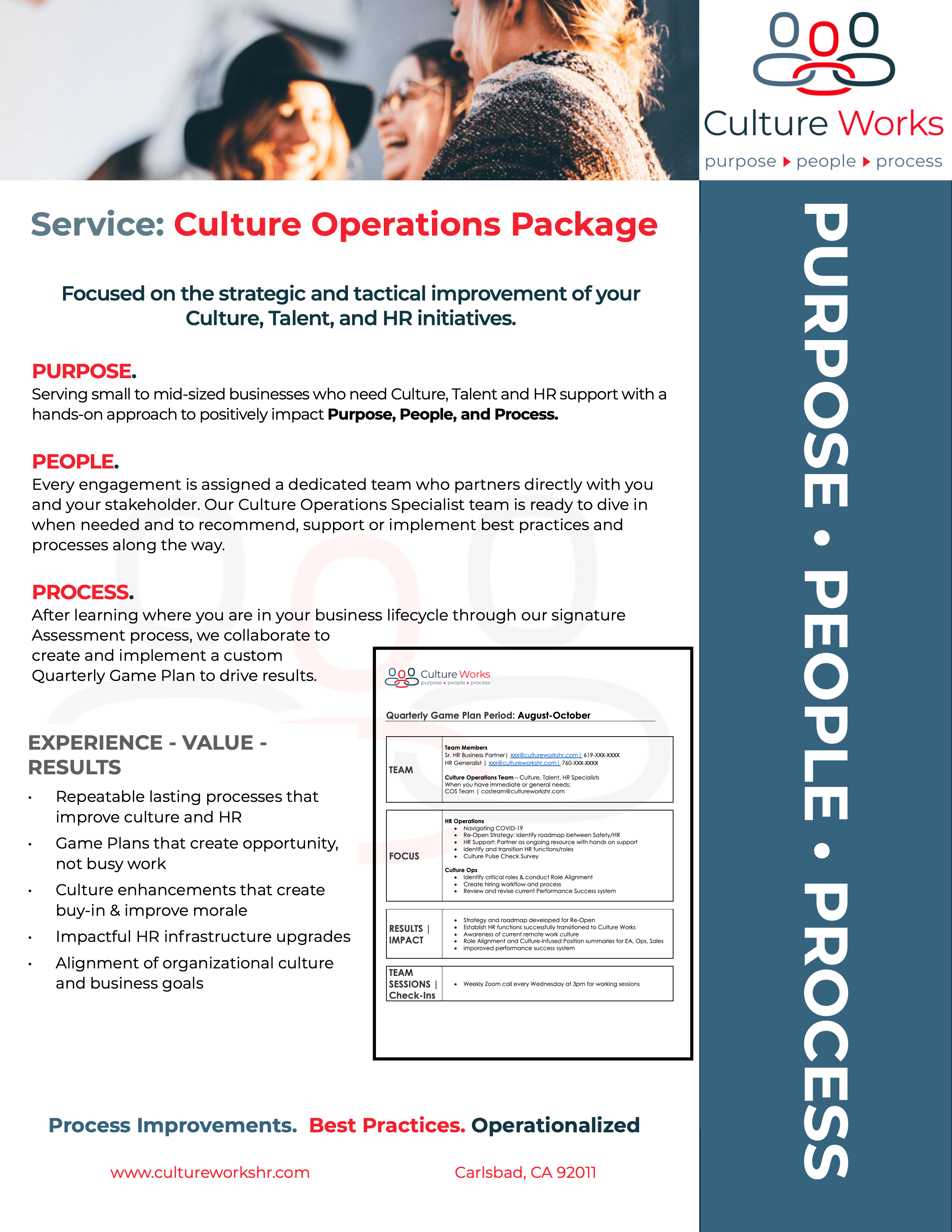
Your purpose creates our success. Our focus is culture infused QGPs. Our team impacts culture & talent by aligning & integrating people and processes.
Our team transforms role alignment which in turn increases engagement, creating an operationalized culture, aligned values and most importantly… RESULTS.

The Top Challenges HR Teams Face in 2021
NewsThe Top Challenges HR Teams Face in 2021
The year 2020 will be remembered as a year with that involved massive changes that altered the workforce as we know it. As most companies transition into remote work, and the greater responsibilities of companies to ensure diversity and inclusion remains a prevalent issue, human resources has taken on a completely different role.
Human resources is no longer simply processing employee paperwork, it’s about fostering a culture that matters, ensuring the safety and wellbeing of employees, and guaranteeing HR compliance in everything you do.
With that being said, as we look to the future of human resources, it’s important to understand some potential challenges and changes we may face.
In order to ensure a company culture that aligns with your organization’s values, you must first attract and retain high-quality talent.
As we look to 2021, the standard for attracting and retaining top talent has changed. Hiring can be one of the most challenging aspects of human resources for some companies. While compensation will still be an important part of an employee’s drive to work for your company, there are a few more aspects that need to be addressed. Some employees may feel more attached to development opportunities, flexible working conditions, or even a chance to do good in the world.
It’s important to identify what makes your company unique within the job market, in order to align with employees who have the same values. Value and role-aligned employees stay in their jobs.
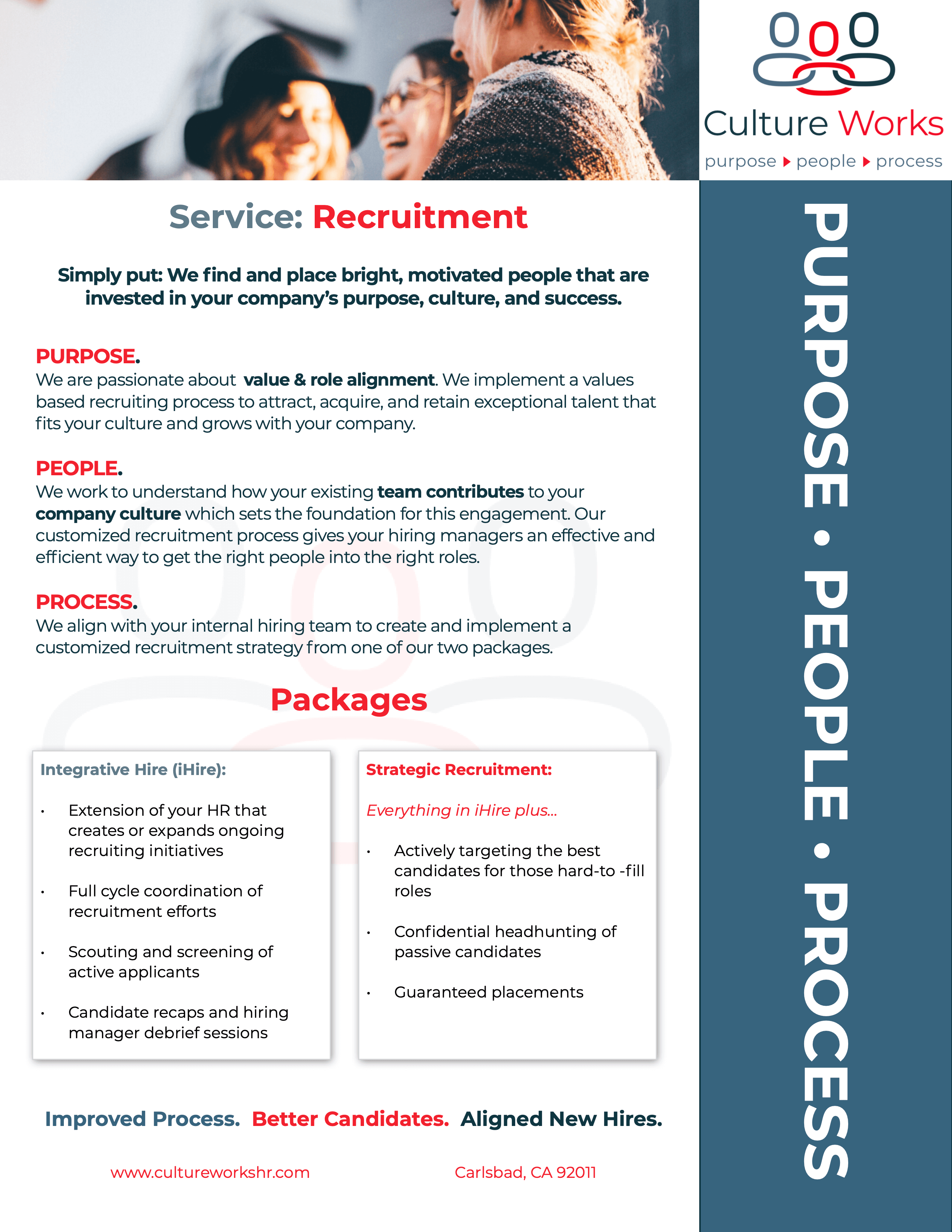
At Culture Works, we help clients create a “bench” of great talent, so when you’re ready to find a great team member you know where to start your search. We believe in efficient and effective recruiting, which all starts with your job descriptions.
Articulating your job description saves everyone time, money, and stress. In addition, we carefully review and screen each candidate, and we administer customized assessments while delivering value and role-aligned people to fit your needs.
Pay attention to high churn rates and employee turnover
Emplify’s 2020 Employee Engagement Trends report found that 73% of respondents are open to new career opportunities, 62% of those respondents suffer from burnout at work. In order to ensure your employees stay engaged and excited about their work, employee wellness needs to be a top priority.
After all the mental anguish we experienced in 2020, your employee’s health and wellbeing should be top of mind in everything you do. Plus, it will actually benefit your business in the long run, after all, employee wellbeing is intrinsically linked to productivity.
In order to put this into practice within your organization, your employees have to feel comfortable talking about their health and wellbeing. Once your employees feel comfortable about communicating their need for a mental health day, you can start developing processes to ensure that workloads are reasonable. With remote work opportunities, it is easier to offer flexible work opportunities and create a company culture that supports a strong work-life balance.
Encourage learning and development
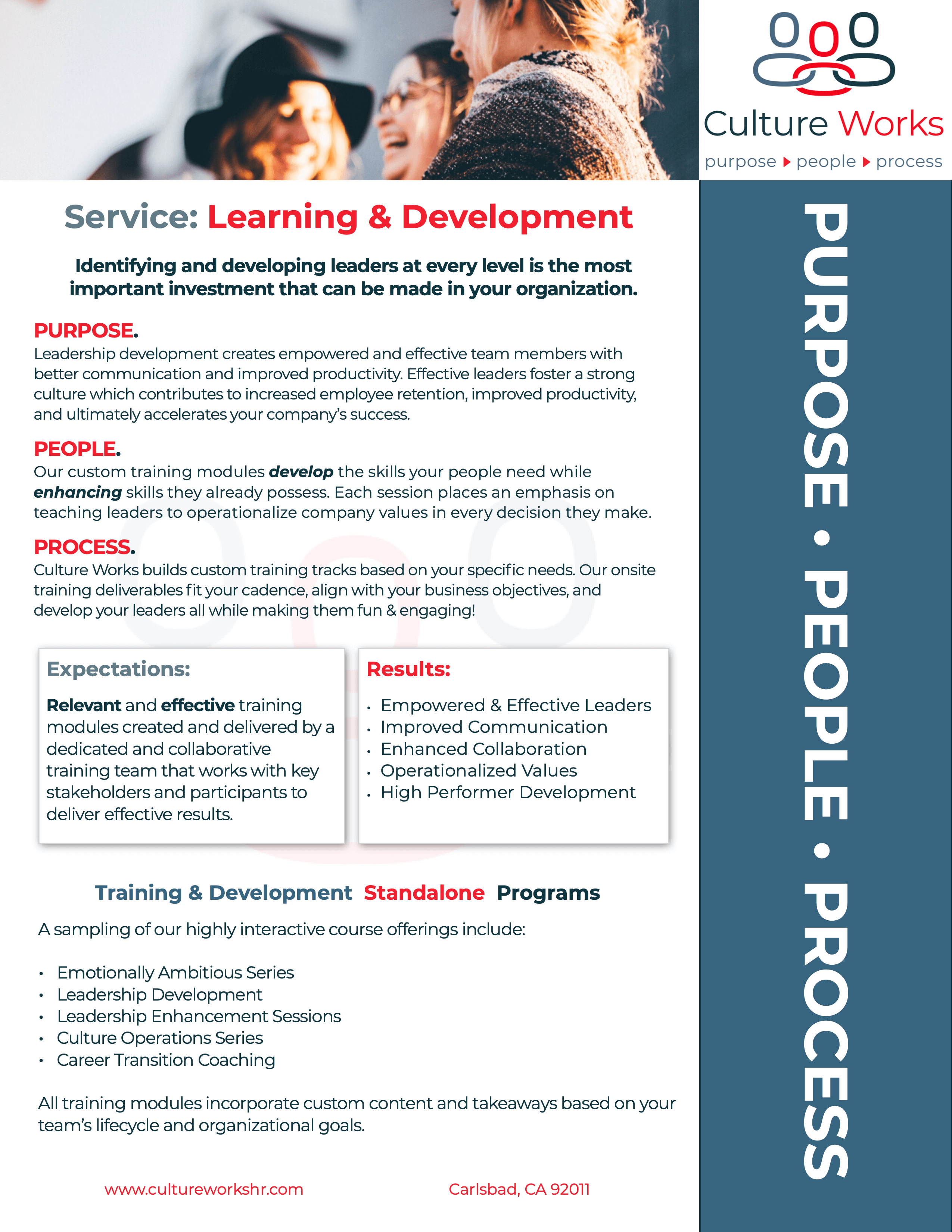
Developing the next generation of leaders is an important aspect of human resources moving into the future. Some businesses spend billions of dollars in leadership development training that their employees are dissatisfied with. It’s important to ensure that you have the proper training programs in place that align with your employee’s needs and wants.
Most employees would prefer flexible learning opportunities that utilize real-world applications as much as possible. Try to implement innovative approaches to learning new skills, such as online learning, on-the-job coaching, and virtual training.
Investing in training and development for your entry-level employees is a strategy that is gaining more momentum. If you train and develop your employees from the beginning, they are more likely to remain with your company and perform stronger in their roles later on.
Be aware of workplace bias – both unconscious and conscious
Workplace bias remains an issue that impedes the hiring, development, and promotion of underrepresented groups. While most companies have made strides in this aspect over the years, there is still quite a bit of room to improve.
In order to ensure you’re hiring employees with no bias, work to ensure you hire employees based on job-fit metrics, rather than demographics. Before you interview candidates, be sure to evaluate their skill sets and work to gain insight into their behavioral patterns based on their resume.
Once companies hire these employees, they need to focus on retaining them by ensuring their workplace is inclusive in every aspect. In order to be sure your workplace remains inclusive, you must put strong policies in place to protect employees from potentially negative experiences and behaviors. Once you’ve created these policies it’s important to train your employees on these policies to ensure employees are aware of their biases and how not to act on them.
At Culture Works, our culture operations specialists are equipped to help your organization create an inclusive company culture that aligns with the values of your company. We help operationalize this culture to create success from within.
Returning to the office shouldn’t be so d*mn hard
July 18, 2021/by Culture WorksUnlocking Job Satisfaction: A Key to Thriving Organizations
May 26, 2024/by Culture WorksIs Money the Real Motivator Behind Employee Engagement?
June 23, 2020/by Culture WorksNavigating Modern Leadership: Insights and Strategies for Success
June 9, 2024/by Culture WorksHow to Incorporate Company Culture into your ‘Corporate Gift Giving’
December 5, 2021/by Culture WorksCreating Your 2021 Vision Board
March 7, 2021/by Culture WorksHow to Avoid Culture Shock During Your Merger
April 25, 2021/by Culture Works“OMG I love you” is Not a Recruiting Process
August 10, 2020/by Culture WorksNavigating Employee Wellness During COVID-19
June 24, 2020/by Culture WorksHRIS, HCM, and HXM: What Are They and Why Do They Matter?
May 22, 2022/by Culture WorksRecent Changes to California’s Minimum Wage Requirements
June 11, 2020/by Culture WorksHow Poorly Executed Learning and Development Strategies Can Backfire
August 17, 2025/by Culture WorksWage and hour issues with a remote workforce
NewsWage and hour issues with a remote workforce
As we approach nearly a year of COVID-related closures and employees working remotely, it’s safe to say that this may be the new reality. Twitter, Square, and Facebook have all adopted an indefinite work from home policy, while other major companies have pushed their reopening to later in 2021. As most employers have discovered this year, employees can still perform their job functions effectively when working remotely.
In fact, according to the State and Work Productivity Report, 65% of employees believe that working remotely would increase productivity- and their bosses agree!
With this major shift in the usage of the physical office, employers need to be aware of the potential liability remote work holds. Specifically, wage and hour compliance with both exempt and nonexempt employees.
What’s the difference between exempt and nonexempt employees?
Exempt employees are employees who are not entitled to overtime pay, regardless of the number of hours worked in a day or week. Non-exempt employees, however, are entitled to overtime pay if the employee works more than eight hours a day, or forty hours a week (depending on the state).
Timekeeping practices and “off the clock” work for non-exempt employees.
One of the most prevalent concerns for employers with non-exempt employees working remotely is timekeeping. In a pre-COVID world, many employers never had to worry about non-exempt employees’ timekeeping, as when they were in the office, they were working. As these employees continue to work remotely, it’s important to revisit your timekeeping practice requirements, if you haven’t already!
A few steps you can take to minimize your risk and continue to adapt to the ever-changing workplace environment are as follows:
Reiterate Timekeeping Practices
If you haven’t already, ensure you reiterate timekeeping practices in writing to all employees. This should have a clear indication that timekeeping will be enforced to the same extent as when employees are working in the office. It’s important to note, that if a non-exempt employee is working outside his/her working hours, it needs to be addressed promptly!
Ensure you communicate with management and supervisor-level employees.
It’s important that managers and supervisors understand that they cannot communicate with non-exempt employees outside of their set schedules. Clear boundaries must be in place to ensure your non-exempt employees don’t need additional pay or claim they were not paid for time worked.
Update all timekeeping systems and ask employees to certify their time worked
Due to employees working at home, some timekeeping systems may need to be updated or revised. New protocols may also need to be put into place, such a reporting and certifying their time worked. Employees should be asked to record their time each day, report it to their supervisor, and certify that the amount recorded is accurate and illustrates their time worked. Should questions or claims arise regarding overtime, this record will be helpful.
Make sure your telecommuting policy is solid.
Consider creating, or revising an existing telecommuting policy to reflect your expectations around remote work. This policy should include expected hours, rest and lunch breaks, timekeeping procedures, and communication with managers procedures and protocols.
With this policy in place, it’s important not to forget meal and rest breaks must be provided and enforced in the manner they were in the office. These requirements may vary depending on the state, so ensure your state-specific guidelines are being followed.
Be aware of potential expenses incurred when working remotely.
Employers who require employees to pay or reimburse the employer for items that are business expenses could lead to a reduction of the employee’s earnings, below the required minimum wage, or overtime compensation rate. Employer’s also may not require employees to pay or reimburse the employer for items provided to a qualified individual with a disability as a reasonable accommodation while telecommuting. States, like California, require employers to reimburse employees for reasonable and necessary business expenses, so it is important to be aware of your state-specific requirements to ensure compliance.
How have “temporary” moves affected these regulations?
While the typical remote work hurdles still apply in regard to wage and hour compliance, the government mandates and public health concerns bring about a different aspect of compliance that may be of concern. Some employees have relocated during the global pandemic to areas of lower risk of infection. These “temporary” moves may cause the employer to become subject to the complexities of multi-state employment, which presents even more challenges.
Breaks and Overtime
Many states, California included, assert authority over work performed anywhere within the jurisdiction. These states have their own overtime laws that do not mirror the Fair Labor Standards Acts, so if any employee moves to one of these states new overtime requirements may be necessary.
Similarly, an employer may fail to provide or keep a record of the specific meal and rest breaks required by the statutes where an employee has undertaken remote work.
Paystubs
In some states violations of paystub rules that outline all the information an employer must include can lead to fines and significant liability for unwary employers. It’s important to understand state-by-state the paystub rules and regulations to avoid noncompliance.
Travel time
Some employers may request employees to return to the office periodically throughout the year. With these requests, the employer may be obligated to reimburse travel time and expenses if the worker has relocated somewhere more distant. As an employer, it’s important to ensure your policies surrounding travel time are clear and communicated.
As an employer working to navigate the new reality of remote work, it’s important to be aware of potential issues that may arise due to the changes. As you begin to rethink your workforce, and how to proceed into the next few years, consider bringing on a team of Culture Operations specialists to ensure your company culture, and HR compliance remains intact with the various changes.
Leadership Development: It Really Works!
July 20, 2020/by Culture WorksWhat Do the New Harassment Prevention Training Laws Mean for your Business?
January 3, 2021/by Culture WorksHow to Attract Talent the Right Way: Strategies for 2024
January 8, 2024/by Culture WorksThe Top Challenges HR Teams Face in 2021
January 17, 2021/by Culture WorksDon’t Forget Your Middle-Tier Employees- Invest in L&D
April 18, 2021/by Culture WorksHow to Manage Self
July 10, 2022/by Culture WorksTop HR Challenges in Construction: How Culture Assessments Can Lead to Lasting Improvements
November 9, 2024/by Culture WorksThe Five I’s of Onboarding
July 7, 2020/by Culture WorksThe Value of Coaching
March 2, 2025/by Culture WorksHappy Anniversary To Us: Culture Works is Two!
May 29, 2022/by Culture WorksHow to Avoid a Lack of Workplace Accountability in Your Office
June 22, 2020/by Culture Works2024 HR Trends: Revolutionizing Job Satisfaction and Workforce Dynamics
March 18, 2024/by Culture WorksUnderstanding New COVID-19 Related Requirements
COVID-19, NewsUnderstanding New COVID-19 Related Requirements
The regulations for employers regarding COVID-19 are constantly changing. Because of this, we wanted to give you a one-stop-shop to all your COVID-19 regulation related questions. Below we highlight the various changes, as well as other resources that expand on the new regulations. Please reach out to the Culture Works team with any questions or concerns, we are happy to help you navigate the various requirements!
New California Covid-19 Related Requirements Effective Immediately
This month brought updated Covid-19 related requirements for businesses in California, including Cal OSHA Regulations, the various California Regional Stay at Home Orders, and updated County Health Orders including San Diego County.
Regional Stay at Home Order
The Regional Stay at Home Order went into effect on December 3, 2020. The Orders place limitations on which businesses can remain open, and under what conditions. For detailed information on the order, including which businesses can be open, visit the About COVID-19 Restrictions webpage published by the State of California.
Cal/OSHA Emergency Regulations to Protect Workers from COVID-19
This emergency standard went into effect on the evening of November 30, 2020, and applies to most workers in California, with the following exceptions: workplaces where there is only one employee who does not have contact with other people; employees who are working from home; and employees who are covered by the Aerosol Transmissible Diseases regulation.
The new regulations require that employers implement a site-specific written COVID-19 Prevention Program (CPP) to address COVID-19 health hazards, correct unsafe or unhealthy conditions, and provide face coverings. When there are multiple COVID-19 infections or outbreaks at the worksite, employers must provide COVID-19 testing and notify public health departments. The regulations also require accurate recordkeeping and reporting of COVID-19 cases. The following resources are available to employers:
California Reopening Requirements
If your company is open for business or getting ready to reopen, make sure to become familiar with the following requirements.
California Family Rights Act Expanded to Apply to Small Businesses
Currently, California businesses with 50 or more employees must provide up to 12 weeks of unpaid job-protected leave to eligible workers under the California Family Rights Act (CFRA) and the Family and Medical Leave Act (FMLA).
Effective January 1, 2021 employers with five or more employees will be required to offer CFRA to qualifying employees. Eligible employees can take CFRA leave for multiple reasons, including but not limited to their own serious health condition; caring for a family member with a serious health condition, including grandparents, grandchildren, and siblings, in addition to parents, children, spouses, and registered domestic partners; and for the birth, adoption or foster care placement of a child (baby bonding).
All eligible employers will need to ensure that their employment policies, including leave of absence policies and employee handbooks, are updated with the new CFRA eligibility and requirements.
New Notice and Reporting Obligations for COVID-19 Workplace Exposures
Effective January 1, 2020 and through January 1, 2023 under California Assembly Bill 685, when an employer receives notice of “potential exposure to COVID-19,” the employer must provide a written notice within one business day to:
The notice must include information of their potential exposure, the disinfection and safety plan that the employer plans to carry out in accordance with CDC guidelines, and provide the employees (and their union, if any) information regarding the COVID-19-related benefits to which they may be entitled under applicable laws.
What triggers the notice requirement?
Who is a “qualifying individual”?
Detailed requirements, including what is considered an outbreak, need to be reported to the Local Health Department & can be accessed on the COVID-19 Infection Prevention Requirements (AB 685) site.
What Do the New Harassment Prevention Training Laws Mean for your Business?
NewsWhat Do the New Harassment Prevention Training Laws Mean for your Business?
California has updated the laws surrounding harassment prevention training effective Jan. 1, 2021
As of January 1, 2021, the laws regarding harassment prevention training in the workplace have changed. The California Fair Employment and Housing Act protects employees from unlawful practices and harassment. Starting in 2005, the law required employers with 50 or more employees to provide at least 2 hours of training and education on the subject of harassment and abusive conduct. This year, the requirement has been adjusted to apply to businesses with five or more employees.
Section 12950.1 of the Government code reads:
“By January 1, 2021, an employer having five or more employees shall provide at least two hours of classroom or other effective interactive training and education regarding sexual harassment to all supervisory employees and at least one hour of classroom or other effective interactive training and education regarding sexual harassment to all nonsupervisory employees in California. Thereafter, each employer covered by this section shall provide sexual harassment training and education to each employee in California once every two years.”
When do my employees need to be trained?
The provisions of the act state that both non-managerial and managerial employees must receive training by January 1, 2021. After January 1, 2021, employees must receive a training refresh every two years. Non-supervisory employees must be trained within six months of their date of hire.
In 2019, California Governor Gavin Newsom signed SB 778 to clarify the discrepancies surrounding the new training requirements for employers. These clarifications extended the deadline to 2021, as well as pointed out the necessity for employers to retrain employees that had been trained in 2018.
One important clarification that SB 778 made is that employers who conducted legally sufficient training in 2019 will not be required to provide further training until two years following.
Seasonal and temporary employees hired to work for less than six months remain the same.
What are the training requirements?
Under this new requirement, employers with five or more employees must provide harassment prevention training for all of their employees. Managerial employees are required to perform two hours of training, while non-managerial employees are required to perform one hour of training.
Employers with less than five employees or contractors are not included in this newly updated requirement.
What should be included in the training?
Employers can provide training in a live classroom setting (which may not be feasible right now), or through e-learning or live webinars. If you choose to administer training via e-learning, the training must provide the trainer’s contact information. Please see the Department of Fair Employment (DFEH)’s online courses.
The Department of Fair Employment lists a few items that must be included in the training you perform for your employees. These include:
What happens if you haven’t trained your employees in time?
If you haven’t arranged for your employees to complete the required harassment prevention training before January 1, 2021, the DFEH will work with you to ensure compliance with the law.
Harassment prevention training is an important aspect of company culture. Your employees must feel safe and secure in the workplace. When they are informed about how to handle potential harassment situations they will feel more confident in your organization to handle these scenarios.
Ways the #MeToo Movement has changed HR since January 2020
June 1, 2020/by Culture WorksFive Signs You Have a Positive Company Culture
February 28, 2025/by Culture WorksThe MOST Important Part of Hiring is Role Alignment
May 28, 2020/by Culture WorksCalifornia’s New Pay Transparency Law: What You Need to Know
March 23, 2023/by Culture WorksHow to Retain Your Top Talent During Your M&A
June 6, 2021/by Culture WorksHow to Manage Time
June 2, 2022/by Culture WorksBest Practices for Developing Emotional Intelligence and How to Bring it into the Workplace
January 1, 2024/by Culture WorksAI, HR and the Future of Workforce Management
May 4, 2025/by Culture WorksLeadership Development: It Really Works!
July 20, 2020/by Culture WorksWhat Should Business Owners and Managers Consider If They Want to Stay Competitive for Talent Acquisition?
October 17, 2024/by Culture WorksNavigating Employee Wellness During COVID-19
June 24, 2020/by Culture WorksImplementing Effective Performance Success Systems in High-Growth Industries
September 15, 2024/by Culture WorksHow to Make Your New Year’s Resolutions Last
NewsHow to Make Your New Year’s Resolutions Last
How to make your New Year’s Resolutions last longer than your 5-day juice cleanse.
The New Year has arrived! I think we all can take a massive sigh of relief as we head into 2021. Here’s hoping 2021 has better things in store for us!
With that being said, it’s time to reflect on the past year and create new resolutions for 2021. While surviving 2020 was an accomplishment in and of itself, it’s time to look forward to the upcoming year with optimism and start setting goals for the year ahead! How can you set a resolution that improves your life long-term?
Resolutions have a pretty notorious reputation for being made, and then quickly forgotten in 5 days. Which is where we come into play. Here are a few tips to help your resolutions last well beyond your 5-day juice cleanse.
Start by setting a simple goal.
However big or small, simple goals are easier to keep. Choose one area of your life you would like to focus on, and create an achievable goal. Make your goal clear and concrete. You need to know exactly what you’re planning to change and why.
Your goals may be simple, however they will also likely get you out of your comfort zone to create new healthy habits that improve your life for years to come! Try implementing the SMART goal formula to improve your goal setting. SMART stands for specific, measurable, attainable, relevant, and time-bound
Set a plan.
Once you’ve set your goals, make a plan. Create a few small simple goals within your larger goal to set a realistic plan of action. Once you’ve achieved one of those small goals, you being to build your confidence, which motivates you to achieve more.
Ensure you are set up for success before you begin your new plan. If your resolution is to eat healthier, be sure your pantry and fridge are free from unhealthy food. If your resolution is to run a marathon, be sure you have the proper shoes and attire.
Anticipate potential problems.
There will be obstacles, as there are with any goal, so be prepared for when they come up. When you make a list of the potential problems, you will be better equipped to handle them as they arise. Once you’ve created the list, think up a few ways you can solve them!
Treat yourself
Don’t forget to reward yourself. Once you reach your milestones, plan a few rewards you can enjoy. Whether it’s a massage, a day off work, or your favorite dinner out. Choose rewards that align with your goals.
Don’t be afraid to ask for help.
If, for whatever reason, you fall off the wagon on your goals, your support system is key. Surround yourself with people who are trustworthy and supportive, and explain your goals so they can be there for you. Inform them of ways they can help when things get challenging.
Don’t give up!
Slip-ups are inevitable at some point in the year, don’t let it get you down! Feel proud of your past achievements and look beyond that small hurdle. Those with higher self-esteem and confidence are positioned better to succeed. Forgive yourself for any steps backward, and continue to push toward your goals.
Implementing a few of these tips into your resolution-making this year will ensure your 2021 is full of self-improvement! Our team at Culture Works would like to wish you a happy and safe New Year!
How Recruiters Can Navigate the Candidate’s Market
July 16, 2023/by Culture WorksWhat Should Business Owners and Managers Consider for Current and Future Talent Development?
April 14, 2025/by Culture WorksWhat Should Business Owners and Managers Consider If They Want to Stay Competitive for Talent Acquisition?
October 17, 2024/by Culture WorksSmall Businesses: How to Know When You Need HR
November 28, 2021/by Culture Works2024 HR Trends: Revolutionizing Job Satisfaction and Workforce Dynamics
March 18, 2024/by Culture Works4 Quick Tips to Engaging a Remote Workforce as a Leader
April 13, 2020/by Culture WorksWhat Metrics Should Companies Care About?
October 24, 2025/by Culture WorksTurning Strategy into Action: Why Operational HR is the Unsung Hero of Business Success
May 9, 2025/by Culture WorksHow to Engage Employees and Talent Strategically
December 30, 2025/by Culture WorksYour Due Diligence Checklist: How to Ensure a Smooth Transition During Your M&A
May 16, 2021/by Culture WorksA Day in the Life of a Culture Works Client
January 24, 2021/by Culture WorksWhat is Culture Accountability?
November 11, 2024/by Culture WorksOur Employees Share Their Favorite Holiday Traditions!
NewsHappy Holidays from the Culture Works team! This holiday season may look different than most, however it is still a great time to take a break from work and spend time with family (in-person or virtually!) Now is time time to prioritize connecting with loved ones, and staying present in the moment.
Happy Thanksgiving from the Culture Works Team!
News, UncategorizedHappy Thanksgiving from the Culture Works Team!
I think we can all agree, 2020 has thrown us some serious curveballs. However, there is still so much to be thankful for. According to Harvard Health, the practice of gratitude is strongly associated with greater happiness, and I think we can all agree we would love some of that right now.
A study done by Dr. Robert A. Emmons and Dr Michael E. McCullough made an effort to explain this correlation. They had three groups each write about various topics: gratitude, frustrations, and various events with no positive or negative association. After 10 weeks, the group who wrote about gratitude noted that they felt more optimistic and better about their lives.
Surprisingly enough, during this study, those who practiced gratitude actually exercised more frequently and went to the physician less than those who focused on aggravation. While this doesn’t completely describe a cause and effect relationship, we can logically deduce that gratitude and happiness are related.
With that being said, this Thanksgiving, we asked our team to share a few things they’re grateful for. This year has been challenging for all of us, and our ongoing gratitude practice is truly what keeps us sane. Here are a few things our team at Culture Works are grateful for:
Kristi:
“I am grateful for the laughter and love shared between my husband, son, family, and friends. I am grateful for the people that have stood by me, supported me, and loved me unconditionally through my craziest year ever. I am grateful for our family’s health, wellness, faith, and the law of attraction working out for us. I am immensely grateful for the clients and partnerships that have allowed our business to grow which ultimately impact our purpose and our team member’s families to keep going through a pandemic.”
Jim:
“I’m grateful for my family.”
Claudia:
“This year has presented so many challenges to humanity, yet I find that I have many things to be grateful for:
Kimberly:
Melisa:
Erica:
“I am thankful for my family, my health, and my joy. I’m thankful to be resilient in uncertain times and to have a wonderful friend group who supports me at my best and worst.
Happy Thanksgiving!”
Michelle:
“This time of year and all year I am grateful for friendships. Strong, dedicated, empathetic, non-judgmental friends who are intentional. Friends who understand every day what can be thrown at you as a mother, as a partner, as an employee, and as a woman. Friends who will call you, celebrate, cry, laugh, and drink with you at the drop of a hat. Friends who celebrate each other’s successes and grab a hand when someone is down. Friendships that last seasons and lifetimes, I am grateful for them all.”
Stephenie:
“This year, I am most grateful for my relationships with friends and family. For those that I love, and those I love spending time with, those who have worked hard to put in the effort to maintain connections as we’re forced apart, and the ways that we find to tell each other how much we appreciate each other – that’s been everything this year.”
Cherie:
“I am grateful that I was able to create success and opportunities during a time when most were struggling.”
Jenn:
“This year more than ever I am grateful for time. This year forced us to slow down. This year forced us to spend more time with the people we love. It removed some of the things that we did just to fill our time instead of connecting with our loved ones. So this year, I am grateful for the extra time that I have been given to connect on a deeper level with the ones I love most.”
Howie:
“I am grateful for the mistakes I have made and how I’ve learned and grown from them. I am grateful for my family, the bond that we share, and the gift of watching my children grow into their own selves. I am grateful to hear music, learn new things, and to enjoy the beauty of nature.”
How to Instill Company Culture Remotely (Yes, it’s Possible!)
July 4, 2021/by Culture WorksRecruiting Tips: How to Find Talent in a Competitive Market
December 4, 2025/by Culture WorksWhat Do the New Harassment Prevention Training Laws Mean for your Business?
January 3, 2021/by Culture Works5 Challenges for HR in the Manufacturing Industry
November 23, 2025/by Culture WorksSigns Your Corporate Culture is a Liability
January 31, 2021/by Culture WorksHR Solutions for Growing Real Estate Firms: Fractional vs. In-House
February 23, 2025/by Culture WorksNew California HR Law Updates
January 27, 2021/by Culture WorksWhen do you need an Employment Law Attorney vs. HR Generalist?
October 3, 2021/by Culture WorksThe Five I’s of Onboarding
July 7, 2020/by Culture WorksCouples Therapy: Organizational Development and HR
August 29, 2021/by Culture WorksHow to Manage Time
June 2, 2022/by Culture WorksWhat You Need to Know about HR Law… But First, Coffee!
August 15, 2021/by Culture WorksHow to Integrate Purpose into Your Workplace
News, UncategorizedHow to Integrate Purpose into Your Workplace
3 HELPFUL REMOTE COMMUNICATION TIPS
April 9, 2020/by Culture WorksElevating HR in the Inland Empire: Cultivating Success with Culture Works
June 9, 2024/by Culture WorksPurpose and Profit: Do the two go hand in hand?
August 3, 2020/by Culture WorksEverything Small Business Owners Need to Know About Our Basic Package
April 9, 2023/by Culture WorksReturn to Work Roadmap: What to Consider Before you Reopen
June 10, 2020/by Culture WorksWhat is a Game Plan?
October 28, 2024/by Culture WorksSmall Businesses: How to Know When You Need HR
November 28, 2021/by Culture WorksHow to Turn Supervisors into Managers: A Practical Guide
September 22, 2024/by Culture WorksHow to Bring Emotional Intelligence into the Workplace
January 16, 2026/by Culture Works2024 HR Trends: Revolutionizing Job Satisfaction and Workforce Dynamics
March 18, 2024/by Culture WorksWhat Are the Elements of a Successful Recruiting Strategy?
February 14, 2021/by Culture WorksWhat should be top of mind for your HR Manager
November 7, 2021/by Culture WorksIt’s Time Bring in Culture Operations Specialists
NewsIt’s Time Bring in Culture Operations Specialists
Company culture has become such an important part of a company’s identity. With 94% of executives believing that a distinct workplace culture is important to business success, culture has become a widespread high-priority. However, your business’ success doesn’t rely solely on building that culture, you need to begin operationalizing the internal processes that support and sustain an effective company culture over time. It’s time to bring in culture operations specialists.
Let’s begin with what culture really means.
When people think of company culture they typically think of ping pong tables in the common room, team happy hours, and on-tap kombucha in the kitchen. Although these added perks are fun and exciting in a work environment, they do not define culture for companies. Culture is about inspiring innovation and fostering community within your company. Culture isn’t optional, it’s essential to the success of your business.
Leadership may define culture as the daily execution of the purpose and values of the company. While those are essential to the backbone of your organization, they often have not been operationalized in ways that impact everyday life for your employees.
Operationalizing culture means integrating your company’s purpose into yours and your employees’ everyday life.
So, how exactly do you operationalize culture?
Operationalizing culture involves a tactical and strategic improvement of your company’s processes and infrastructure. At Culture Works, we work to integrate your purpose into everything you do as a company. It’s not enough to post a sign outlining the company’s purpose, it’s vital that you show everyone by example how to live those values.
Our teams craft specific plans to cater to your company’s needs. Through our Quarterly Game Plans, we create a roadmap for producing results. Our QGPs address challenges in the workplace and how to overcome them. One of the many ways we begin our engagements is with the variety of Assessments, we offer. Depending on your company’s specific needs, these assessments guide your GamePlan.
With your Quarterly Game Plan in place, we can effectively partner with your HR department to implement it. This implementation process guides all of your processes to move in the right direction, utilizing incremental strategic shifts.
What are the results?
Repeatable, lasting processes that improve culture and HR, increase retention and engagement and make your recruiting efforts more effective. You will see impactful HR infrastructure upgrades and an alignment of culture and business goals.
With improved processes and procedures you will also see greater employee buy-in and an improvement in morale. Because of this, you will see your employees more motivated and excited about your company and their work. Employees stay with companies where they feel engaged, appreciated, and supported and new employees are actively seeing those elements in their next position!
Want to start operationalizing your culture to achieve greater growth and success for your company? Call us today to learn more about how Culture Works can help your business!
How Learning and Development Can Transform Your Company Culture
July 27, 2025/by Culture WorksElevating HR in the Inland Empire: Cultivating Success with Culture Works
June 9, 2024/by Culture WorksThe Five I’s of Onboarding
July 7, 2020/by Culture WorksWhen Does Fractional HR Make Sense?
October 17, 2024/by Culture WorksHow to Manage Time
June 2, 2022/by Culture WorksHow to Turn Supervisors into Managers: A Practical Guide
September 22, 2024/by Culture WorksFostering Employee Retention through Training, Upskilling, and Reskilling
November 14, 2025/by Culture WorksIs Money the Real Motivator Behind Employee Engagement?
June 23, 2020/by Culture WorksWhat should be top of mind for your HR Manager
November 7, 2021/by Culture WorksThe Best Ways to Keep Employees Engaged and Excited About Work
June 8, 2020/by Culture WorksThe Importance of Work-Life Balance: Strategies for Employers
June 23, 2024/by Culture WorksThe Top Challenges HR Teams Face in 2021
January 17, 2021/by Culture Works