When it comes to fostering growth within your organization, the way you support and motivate your people makes all the difference. Two terms often used in leadership conversations—responsibility and accountability—may seem interchangeable, but they represent very different concepts.
Understanding and acting on that difference is key to building a strong, results-driven culture.
Responsibility vs. Accountability: What’s the Difference?
While both are important, the distinction comes down to assignment vs. ownership:
- Responsibility is task-oriented. It’s assigned. Someone is told what to do.
- Accountability is outcome-oriented. It’s owned. Someone takes it upon themselves to ensure a result is achieved.
Think of responsibility as being told to run the play. Accountability is showing up ready to win the game.
Responsibility alone can lead to finger-pointing, miscommunication, or a check-the-box mentality. But when you foster accountability, your team feels empowered to take ownership of their work and its impact. The result? Higher engagement, more collaboration, and better performance.
Why Accountability Matters
In a culture of accountability:
- People are proud of their work and take ownership of outcomes.
- Project timelines and goals are top of mind—not just for managers, but for every team member.
- Blame is replaced with collaboration, and setbacks become shared challenges to overcome.
- The company’s success feels personal—because everyone contributes to it.
How to Build a Culture of Accountability
Accountability doesn’t happen by accident. It starts with intentional leadership. Here’s how to foster it in your organization:
- Invest in Your People
To build accountability, you need to invest in your team beyond tasks and deadlines. Start by listening. Create space for honest feedback, and treat feedback as a growth tool—not a punishment.
Encourage employees to invest in themselves, too—whether that means learning new skills, pursuing passion projects, or maintaining healthy boundaries. Model the behavior you want to see: continuous improvement, ownership of mistakes, and a willingness to adapt.
- Build Clear Processes and Aligned Goals
Eliminate ambiguity. When employees know exactly what’s expected—and how their work connects to larger business goals—they’re far more likely to step up.
Align every project and task to measurable outcomes. When someone can draw a straight line between what they do and how it impacts the business, they’re more motivated to go above and beyond.
Encourage cross-department collaboration. When teams work together and understand the bigger picture, accountability becomes a shared value, not just an individual burden.
- Lead with Transparency
Be honest about both wins and losses. When leadership owns up to challenges and shares the “why” behind big decisions, trust grows.
Say what you’ll do—and then do it. Trust is a two-way street. If you trust your employees to lead, they’ll trust you to lead well in return.
Final Thought
Company culture isn’t just a buzzword. It’s the product of daily decisions, clear communication, and consistent follow-through. When you focus on building a culture of accountability, you empower your team to lead from wherever they sit.
How Culture Works Can Help
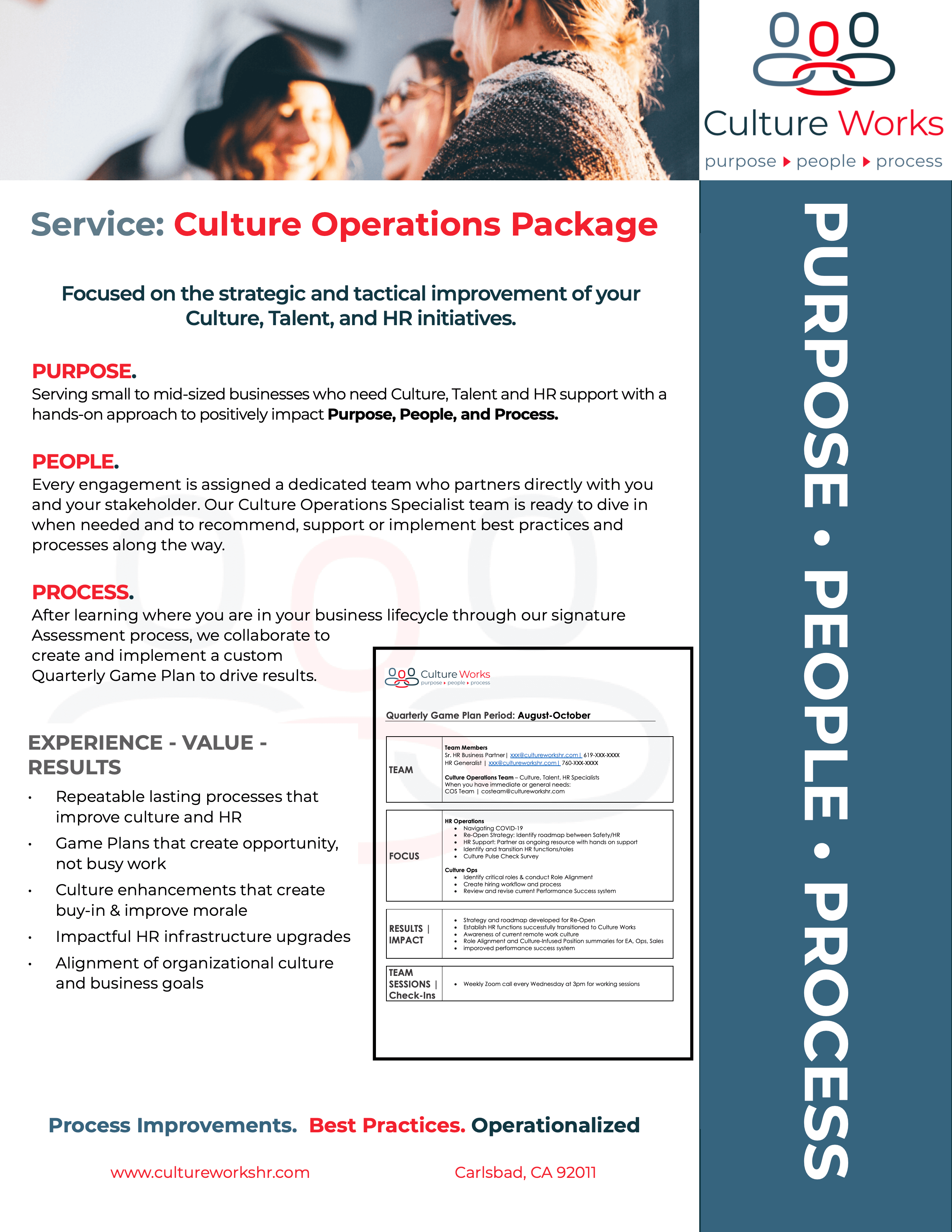
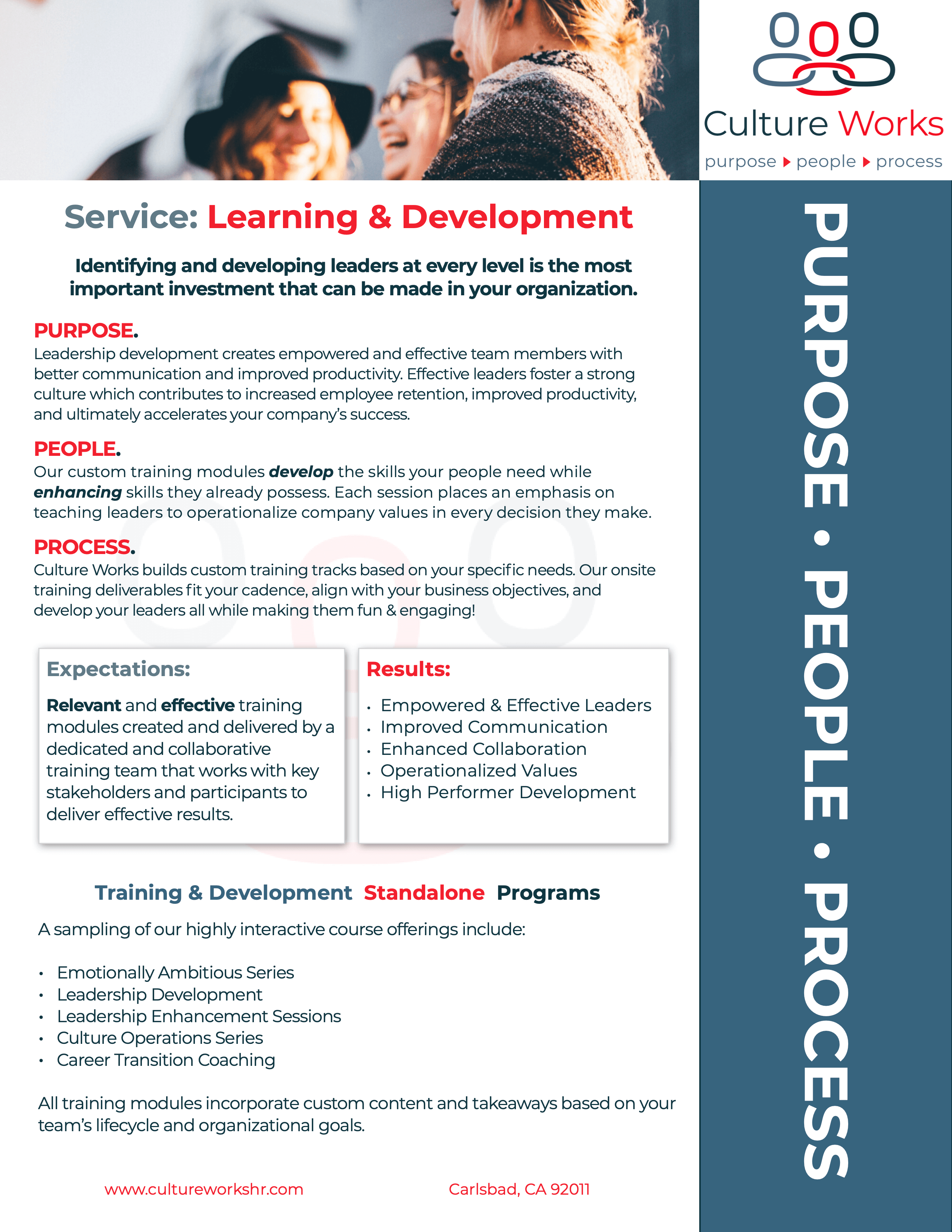
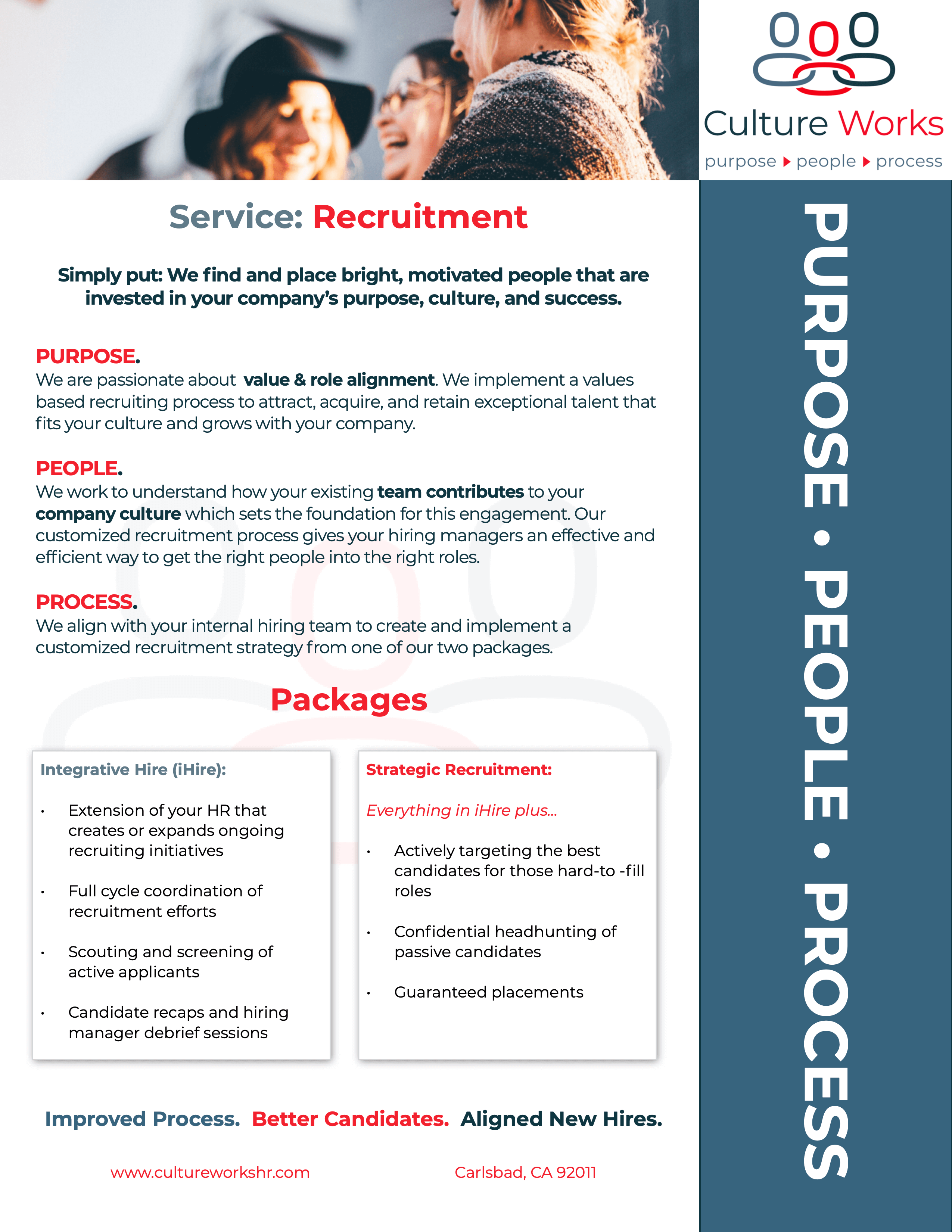
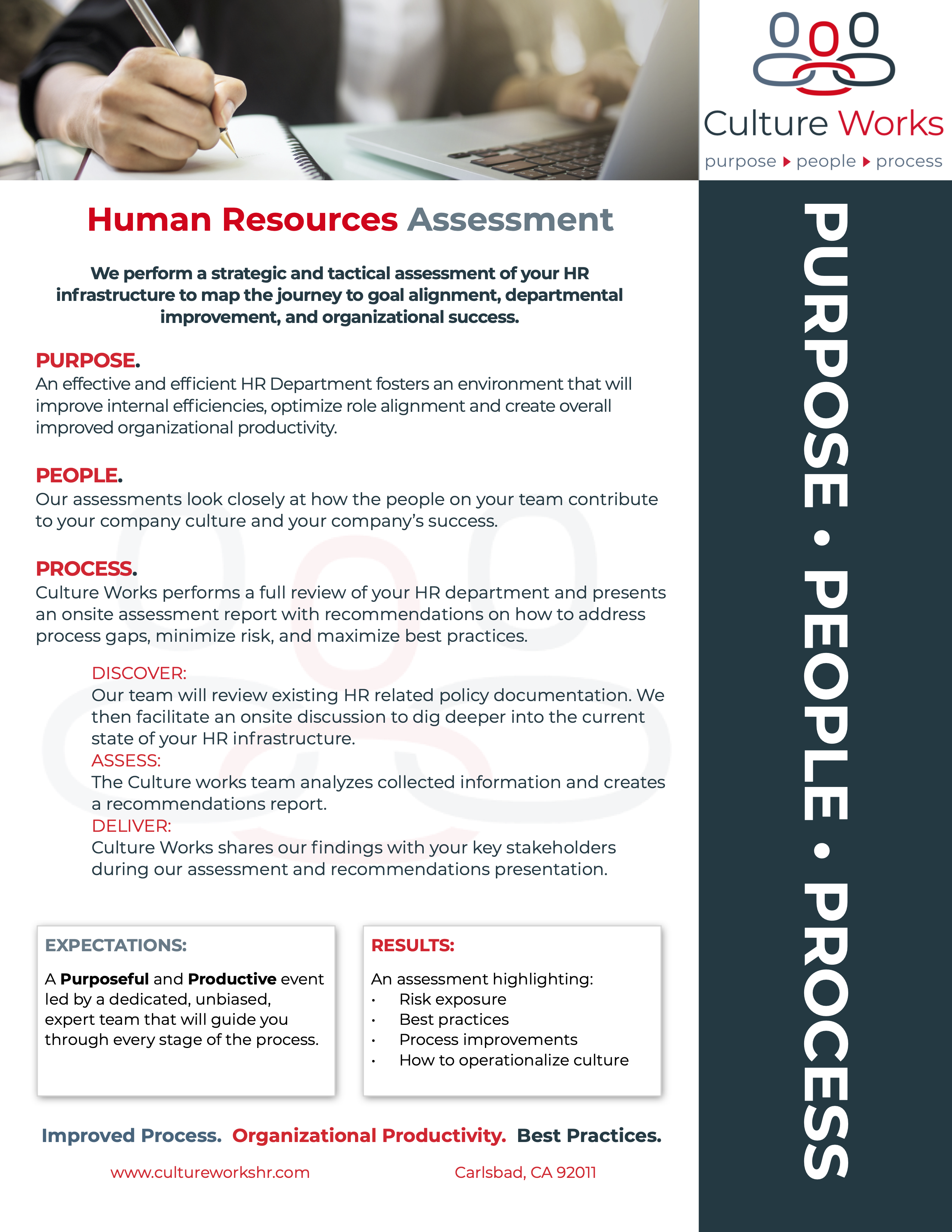
At Culture Works, we want to partner with your company to create success for your team– whatever that looks like for your specific company. Our passionate HR team has the experience you need in culture ops and hospitality to create success. Our approach is centered upon the importance to humanize, customize, and simplify. We believe in what we do, and we want to help your company operationalize culture, talent, and HR to create ongoing success.
Read on to learn more about what we do.