In the professional sphere, the term DEI—Diversity, Equity, and Inclusion—often gets tossed around like a trendy buzzword. But what lies beneath this acronym? Is it just another corporate jargon, or does it hold a deeper meaning?

Kristi Pastore, Founder of CEO of Culture Works, shares her insights:

Defining DEI

DEI is more than just an acronym; it embodies a profound shift in workplace culture. It’s about intentionally creating an environment where diversity flourishes, equity is the standard, and inclusion becomes the norm. This transformation requires a holistic approach that goes beyond policies—it necessitates a fundamental shift in mindset and behavior.

Reframing the Narrative

So, what should DEI truly stand for? The answer lies in the practices of good people, cultivating a vibrant culture, and HR practitioners implementing what they know best.

Diversify Right

Diversity isn’t merely about ticking boxes for representation; it’s about attracting exceptional talent through strategic acquisition. It involves understanding who fits the role based on skills and expertise, not merely gender or race. Consistent, fair, and unbiased hiring processes, familiar to all, are the key.

Equity: The Fairness Quotient

Equity translates to fairness—especially in compensation and rewards. It’s about valuing individuals for the contribution they bring and aligning their compensation to reflect that. Ensuring pay parity across similar roles within and outside the organization is what equity truly embodies.

Inclusion: Building a Cohesive Culture

Building an inclusive workplace culture involves more than just buzzwords. It’s about operationalizing core values, creating systems that foster performance, establishing a culture operations playbook, nurturing innovation within teams, and continuous training to develop both technical and emotional intelligence.

The Essence of DEI

When we unravel DEI from its buzzword facade, we find a commitment—a commitment to create workplaces where diversity thrives, where fairness prevails, and where everyone feels included and valued for their uniqueness.

Final Notes

The buzz surrounding DEI might be overwhelming, but at its core, it’s a call for better practices, culture, and inclusivity. It’s about creating environments where every individual, irrespective of their background, feels they belong and are valued for their contribution.

DEI isn’t just a trendy phrase—it’s a roadmap to a better, more equitable future in the workplace.

Need a Little Help with Recruitment?

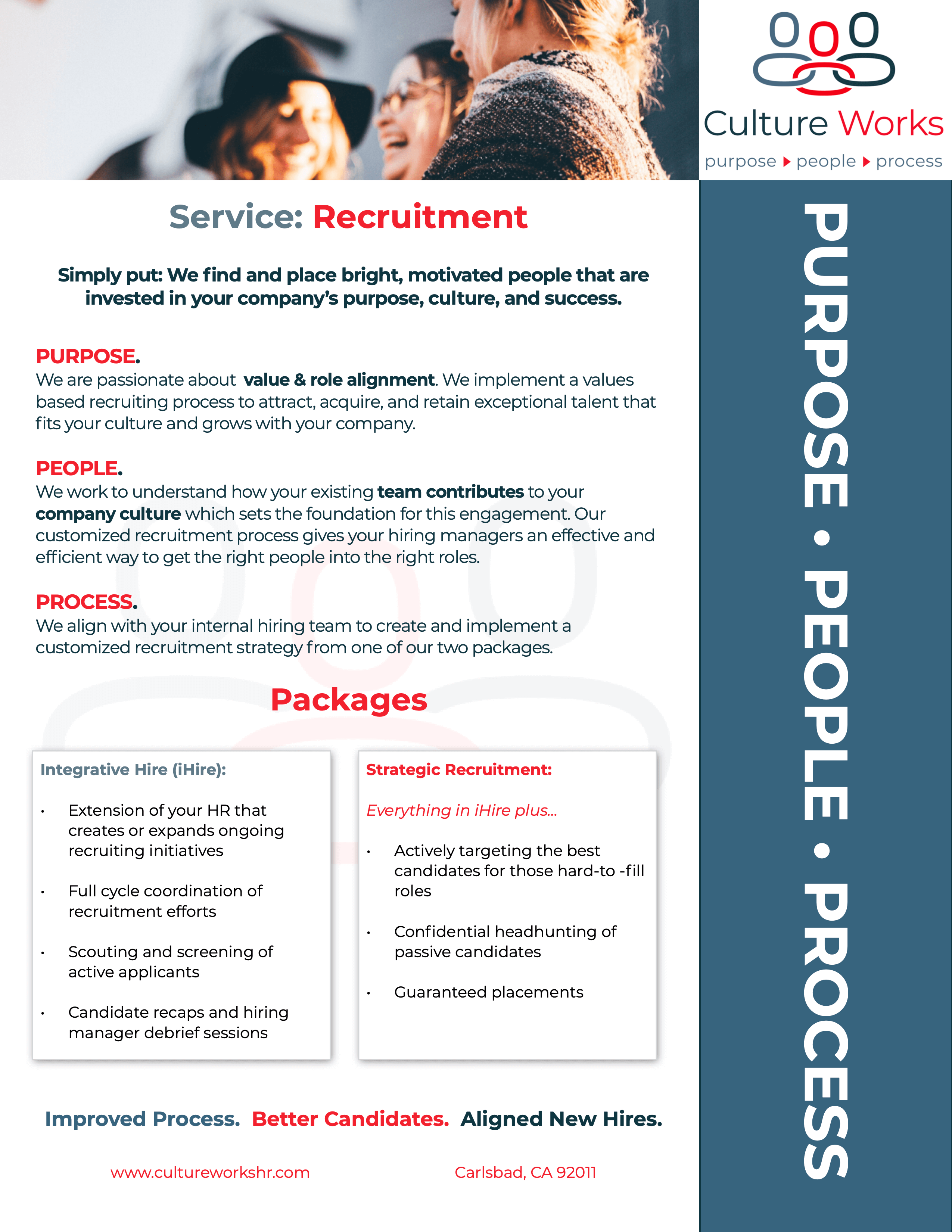
Taking the time to hire the right people will have a host of benefits in the long run. Finding the best fit may not be as easy as a gut feeling and a round of interviews. Luckily, Culture Works is here to help.

At Culture Works, our team is focused on value and role alignment. Our team creates processes for your hiring manager to implement, that make the hiring process efficient and effective. We carefully review and screen each candidate, administer customized assessments, and deliver value and role-aligned people to fit your needs.Read on to learn more about what we do. Then, read on to learn why hiring the right people can lead your business to success in a recession.

Business operating systems (BOS) make companies more efficient, operationalize culture and drive them toward their business goals. How? This structure helps organizations clarify responsibilities, identify ownership and performance accountability, establish processes for operations and resolving issues,  and create awareness of cultural expectations and progress reports.

In today’s ever-evolving professional landscape, one thing remains constant: the importance of KSAs (Knowledge, Skills, and Abilities). At our Fractional HR Partner company, we believe that KSAs can be cultivated and fine-tuned at every level of your organization. It’s time to invest in upskilling and reskilling to foster confidence, collaboration, and camaraderie among your workforce. 

But why exactly are KSAs so crucial? Let’s dive into the specifics.

Why Are KSAs Important?

KSAs serve as the bedrock of success in the workplace. They not only boost confidence but also foster teamwork, creating a collaborative and thriving environment. Developing a comprehensive plan to upskill and reskill talent across the board is paramount for long-term success. Here’s the lowdown:

Experience Can Be Gained: In the world of KSAs, experience is a valuable currency that can be acquired with time and effort.

Knowledge Can Be Learned: The power of knowledge lies in its accessibility; it’s yours for the taking.

Competencies Can Be Driven: Building competencies is within your control.

The Most Important KSAs to Upskill or Reskill

Curiosity:

  • Be Nosey: Don’t be afraid to ask questions. Curiosity drives learning.
  • Have a Desire to Learn: Cultivate a thirst for knowledge.
  • Build Confidence: Don’t hesitate to seek answers to what you’re unsure about or what piques your interest.

Critical Thinking:

Critical thinking is the compass that helps us navigate right from wrong. Encourage your teams to:

  • Provide Vision and Goals: Set a direction, but also empower your teams to think independently.
  • Perform Objective Analysis: Look at facts without bias.
  • Comprehend Information: Grasp the big picture.
  • Apply Facts and Evidence: Put knowledge into action.
  • Evaluate Issues: Judge situations objectively.
  • Form Individual Ideas and Opinions: Encourage diversity of thought.

Communication:

Effective communication is the glue that holds teams together. It comes in three essential flavors:

  • Written: Be clear, concise, and action-oriented. Provide context and data for direction and expectations.
  • Interpersonal: Foster empathy and relationships.
  • Active Listening: Seek to understand rather than merely replying.
  • Verbal: Articulate the “why” and use words to motivate, influence, and inspire progress.

Final Notes

In today’s dynamic work environment, cultivating KSAs isn’t a luxury; it’s a necessity. By focusing on curiosity, critical thinking, and communication, you’re setting your team on a path toward innovation and sustainable success. The investment in upskilling and reskilling your team’s KSAs will yield confidence, collaboration, and camaraderie, paving the way for generational triumph. Don’t wait; start building those KSAs today!

Learn More About Culture Works

Maintaining solid company culture during this time can be difficult. But fostering culture is vital to the success of your business. Contact us to see how we can help you optimize your HR department and build a successful company during this transition period.

In the ever-evolving world of HR and recruitment, it’s high time we ditched the outdated notion of treating candidates as mere warm bodies to fill seats. Today, we’re unraveling the art of crafting a holistic talent strategy that goes far beyond the ordinary.

The Compensation Conundrum

When it comes to talent acquisition, it’s all about devising a comprehensive strategy. Think of it as your company’s secret sauce—a blend of compensation, structure, career progression, and perks that will leave candidates drooling (figuratively, of course).

But don’t stop at the basics like medical and vision benefits; consider the full package. What does your compensation plan look like? How’s the structure designed? What about career development? These are the ingredients that will make your strategy sizzle.

Culture Matters, But It’s Not Magic

Many companies turn to us with the hope that culture can single-handedly solve all their problems. While a strong culture can indeed prevent issues, it won’t magically make existing problems disappear.

At Culture Works, we take a different approach. We delve into understanding the culture you aspire to be, going beyond the words written on your office walls. It’s about how that culture feels and what it looks like. We align your talent strategy with your long-term vision, ensuring you attract candidates who resonate with your values, behaviors, and actions.

The HR Foundation

To truly revolutionize your talent strategy, it’s essential to fortify your HR operations foundation. This means looking at your compensation structure and strategy as part of the whole package.

You can’t have one without the other. Your strategy encompasses the entire compensation package, including rewards, performance paths, and the roadmap to take your team from point A to Z. It’s about ensuring that your job descriptions align with the mindset of the individuals you want to attract.

The Title Trap

Let’s face it; we’ve all seen cases where titles don’t match the actual job. It’s a historical hiccup in HR and succession planning. Misaligned titles set people up for failure rather than success.

At Culture Works, we’re all about setting people up for success. We aim for 80% role alignment and 100% value alignment. How do we bridge that 20% gap? Through performance, training, and development, we pave the way for individuals to reach their full potential.

The Growth Mindset

In our talent strategy, we seek individuals with a growth mindset—those who are eager to grow and develop. They acknowledge that they’re a work in progress and are open to receiving the guidance they need.

Our strategy revolves around figuring out the right compensation to attract such individuals. It’s about looking at the bigger picture and realizing that recruitment is more than just placing a body in a seat.

Final Notes

In the realm of talent strategy, it’s time to break free from outdated practices. Embrace a holistic approach that considers compensation, culture, and the unique growth potential of every individual. At Culture Works, we’re your partners in this journey, helping you craft a talent strategy that goes beyond filling seats—it’s about creating a thriving, dynamic team ready to conquer the future.

In the construction industry, efficient workforce management is the cornerstone of any successful project. However, managing a construction workforce is not always an easy task. But don’t stress, we have a solution – enter fractional HR.

In this blog, we’ll define fractional HR and explore how it can help ensure operations run smoothly. Let’s dive in.

Understanding Fractional HR

With a fractional HR partner like Culture Works, you gain access to a dedicated team of HR and back-office administration specialists who can help you stay compliant and navigate complex HR issues. You also save time and money by leveraging the expertise of seasoned professionals who can help you manage your HR needs more efficiently. So, whether you need assistance with recruiting, onboarding, compliance, or anything in between, your HR partner can help your business grow and thrive.

How Fractional HR Works in Construction Companies

Fractional HR involves collaborating with external HR professionals, often through specialized consulting firms, to handle various HR functions on an as-needed basis. Here’s a closer look at how fractional HR operates within the dynamic realm of construction:

Tailored to Project Phases and Needs

Construction projects go through distinct phases, each with its own set of HR requirements. Fractional HR allows construction companies to customize their HR support according to these phases. 

Flexible Scalability

One of the standout advantages of fractional HR is its flexibility. Construction projects often experience fluctuations in workforce demands. Fractional HR providers can quickly scale up or down their support to align with these changes. 

Expertise Where It Counts

Construction HR encompasses a diverse range of functions, from recruitment and training to compliance management and safety protocols. Fractional HR brings specialized expertise to the table. External HR professionals well-versed in the intricacies of the construction industry can provide insights, strategies, and best practices that directly address the unique challenges this sector faces. This expertise not only ensures smoother operations but also minimizes risks associated with regulatory non-compliance and workforce management.

Cost-Effective Solution

Fractional HR offers construction companies an economical alternative to hiring full-time, in-house HR staff. The overhead costs of maintaining an HR department—such as salaries, benefits, and training—can be significantly reduced with fractional HR. Construction businesses can channel their financial resources into core operations, while still benefiting from top-tier HR support on demand.

Integration with Technology

In today’s digital age, technology plays a crucial role in HR management. Fractional HR often leverages advanced HR software and tools to streamline processes, improve communication, and enhance data management. These technologies facilitate seamless collaboration between the construction company, the fractional HR provider, and the workforce, ensuring that crucial information is accessible and up to date.

A Collaborative Partnership

Successful implementation of fractional HR hinges on effective collaboration between the construction company and the external HR provider. Open communication, defined roles, and a clear understanding of expectations are vital. Regular updates, feedback loops, and the ability to adjust strategies as project dynamics change are integral to a productive partnership.

The Benefits for Construction Companies

Cost-Effective Expertise: Fractional HR offers access to seasoned HR professionals without the financial commitment of hiring full-time staff. This is particularly advantageous for construction businesses that may not require constant HR oversight but still need strategic guidance during crucial phases.

Flexibility and Agility: Construction projects often experience fluctuations in workforce demands. Fractional HR provides the flexibility to ramp up or scale down HR support based on project requirements, ensuring the right personnel are in place when needed most.

Specialized Knowledge: The construction industry has unique HR challenges, from managing transient workforces to compliance with safety regulations. Fractional HR experts familiar with these challenges can tailor solutions that align with the industry’s specific needs.

Focus on Core Competencies: By outsourcing HR tasks, construction companies can redirect internal resources toward their core competencies – building and delivering exceptional projects.

Risk Mitigation: Fractional HR professionals can assist with risk management strategies, including ensuring compliance with labor laws, handling worker’s compensation claims, and minimizing legal liabilities.

Let’s take a look at how these benefits impacted our client!

Case Story: Transforming Culture and Operations through Fractional HR Partnership

Unitis, a construction company, sought a transformative partnership with fractional HR experts to address their key challenges in compliance, culture management, and operational efficiency. The partnership was built around the following areas of focus:

Culture Accountability: The construction company aimed to integrate its core values into the organizational culture. They recognized the importance of having an impartial resource to champion these values and drive commitment throughout the workforce.

Culture Operations: The company desired to optimize team performance and clarity by aligning roles, responsibilities, and compensation structures. They also aimed to develop personalized development plans and impactful job ads to attract the right candidates.

HR Operations: The goal was to enhance operational effectiveness through efficient processes, comprehensive onboarding, and improved employee engagement. They also aimed to establish purposeful and productive company meetings and ensure up-to-date policies and procedures.

Impact & Results

Culture Accountability:

  • Successfully launched company values, fostering a shared sense of purpose and guiding principles.
  • Introduced an incentive program to promote commitment to values and recognized Values Champions.
  • Built a culture of recognition and commitment to the company’s principles.

Culture Operations:

  • Optimized team performance with finalized job descriptions and compensation structures.
  • Conducted a 9-box activity for personalized development plans and impactful job ads.
  • Enhanced recruitment process, attracting qualified candidates.

HR Operations:

  • Enhanced operational efficiency through collaborative process development.
  • Streamlined onboarding with comprehensive training forms and 30-60-90 day check-ins.
  • Transformed company meetings for increased productivity and engagement.
  • Revised handbook policies and procedures to reflect best practices.
  • Improved candidate selection with enhanced interview guides.
  • Gathered valuable insights through multiple employee engagement surveys.
  • Implemented attendance policy and resolved workplace issues effectively.

Check out the full case study of our journey with Unitis, here.

Learn More About Culture Works

At Culture Works, our values make us who we are.

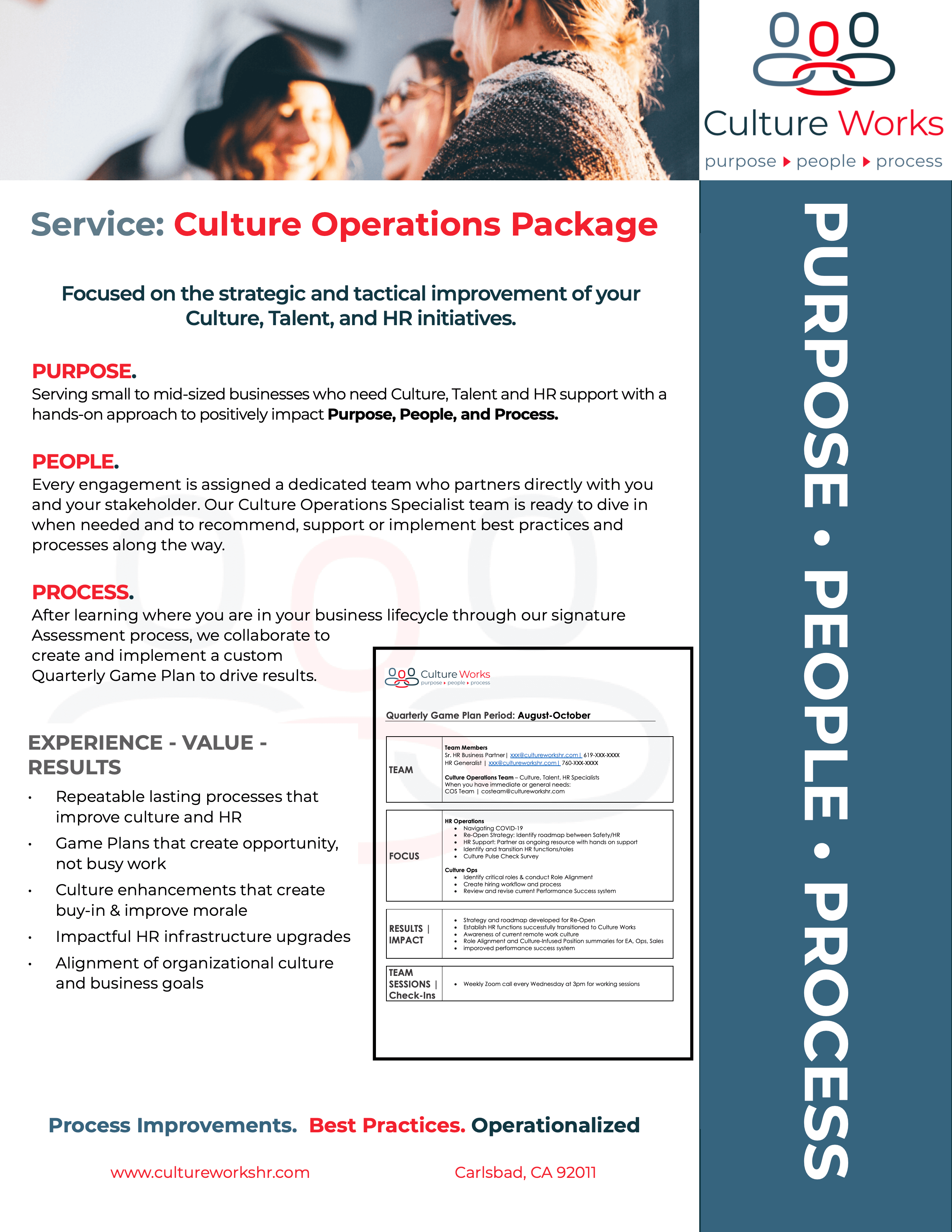
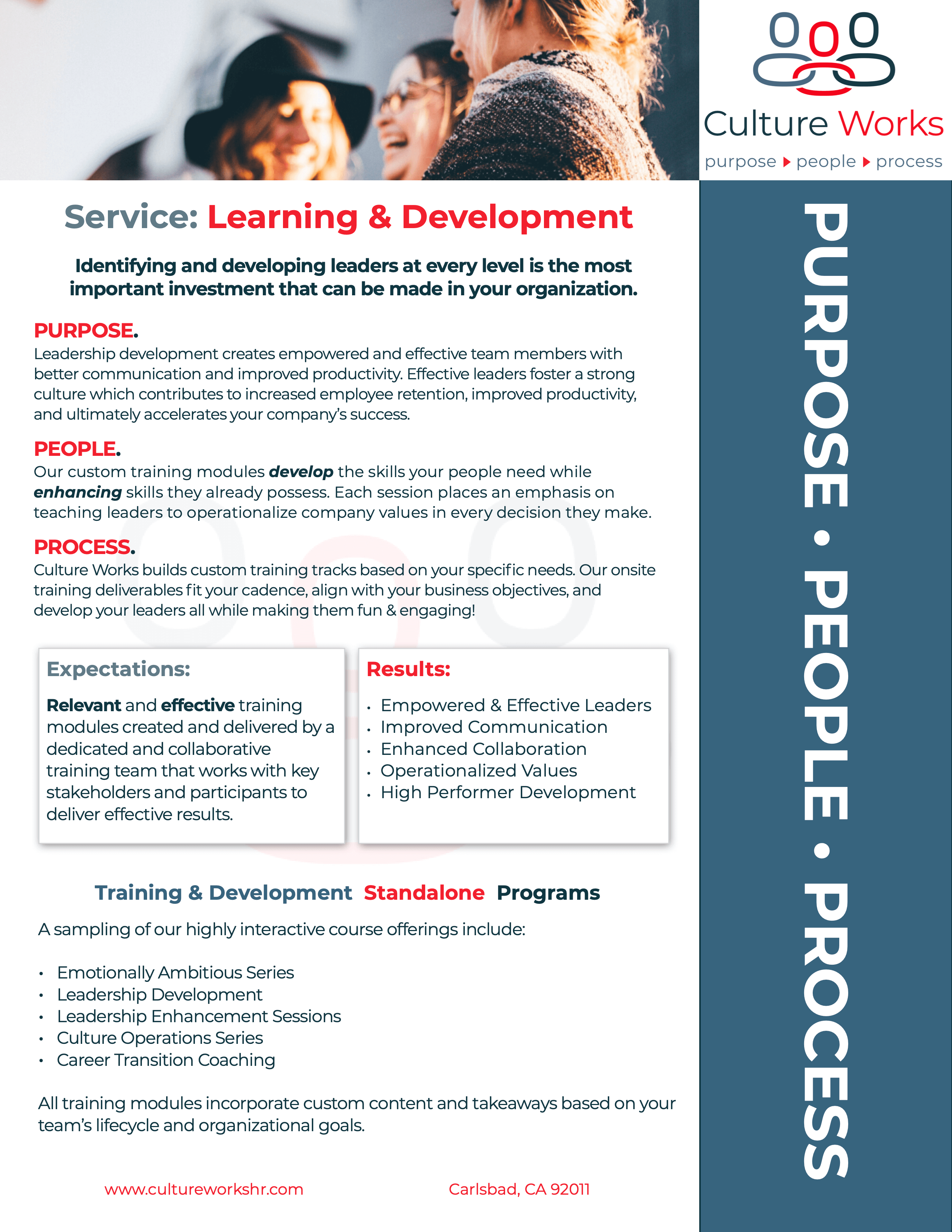
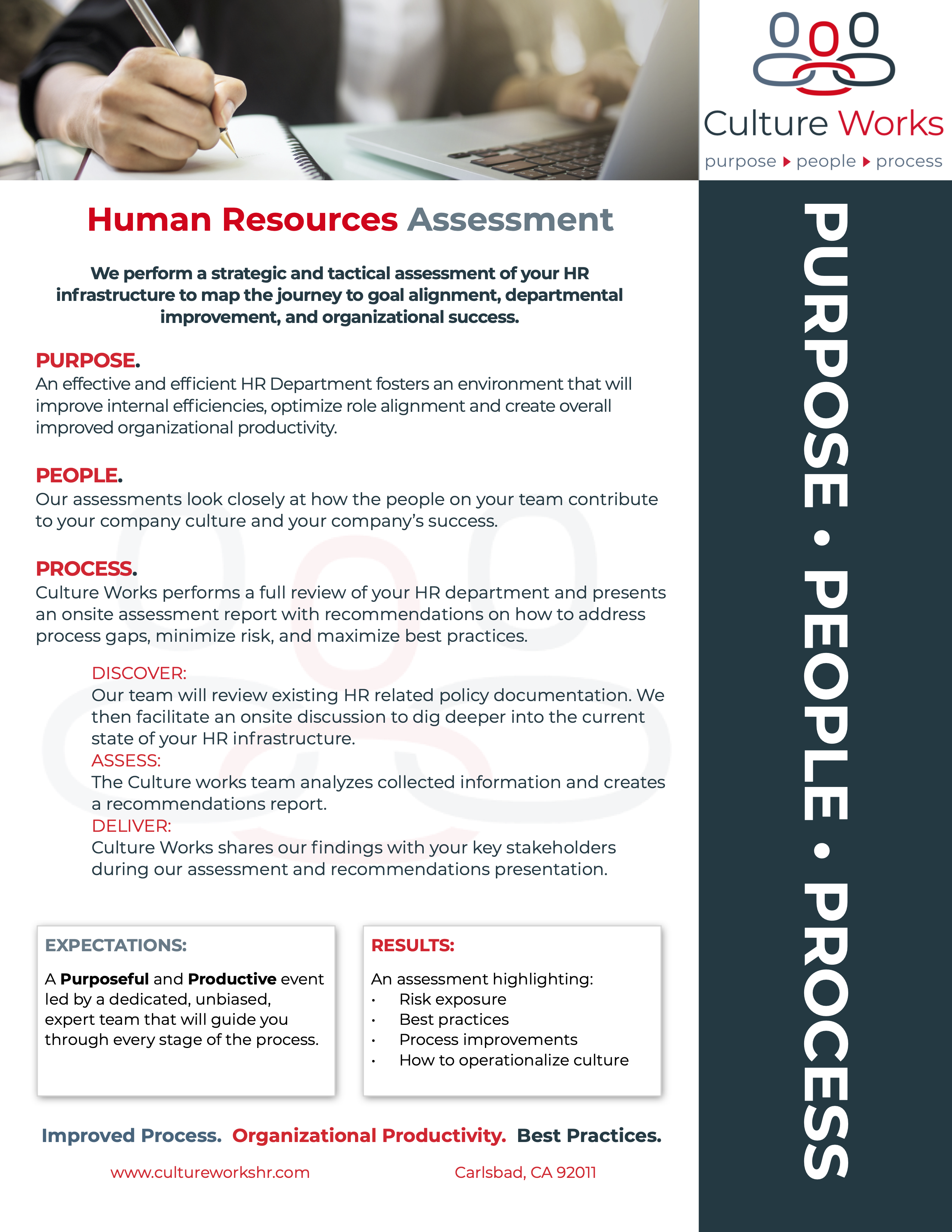
We are a trusted resource working with companies to improve their processes, operationalize their company culture, invest in their people through leadership training, and bring purpose into everything they do.

Our services provide the processes to operationalize culture in your organization:

  • Intentional Culture Works for businesses
  • Collaborative Culture Works for employees
  • Healthy Culture Works internally in companies to facilitate organizational change, and
  • Values-Driven Culture Works to make productivity soar and reduce churn

Read on to learn how people partners are the new HR.

In today’s cutthroat job market, employers can’t just flash a paycheck and toss in the occasional “TGIF” to keep employees from quitting (yeah, sorry, reality check).

Since the Great Resignation – the period in which over 47 million people resigned from their jobs in 2021 – employees now have commitment issues, and who can blame them? Loyalty’s a two-way street, folks.

Fact: The revolving door syndrome is real. On average, companies see 18%  of their workforce doing a disappearing act annually. About 13% of that is employees giving the peace sign voluntarily (we’re not talking about the cool kind).

So, what’s an employer to do in this brave new world? Step up that game, pronto.

Your standard incentives? Not cutting it. You need more than stale coffee and the occasional pizza day to keep the A-team on board. Here are five killer moves to seal the deal with top-notch talent.

A Culture of Engagement and Purpose

Modern employees want more than just a paycheck; they are looking for a sense of purpose and engagement in their work. Companies that foster a culture of engagement by aligning employees’ values with the organization’s mission are more likely to attract and retain talent. 

Employees want to be part of something meaningful, where their contributions are recognized and valued. We’re talking about a work ecosystem where contributions are high-fived, and employees’ voices are more than just an echo in the hallway. Regular chats around the water cooler (or Slack channel) keep the lines open, while opportunities to fine-tune their skills give them the tools to conquer challenges.

Regular communication, opportunities for skill development, and a supportive work environment all contribute to a culture that resonates with employees and keeps them committed for the long term (which is really a win-win for everyone involved.)

Flexible Work Arrangements

The rise of remote work and flexible schedules has reshaped employee expectations. Offering flexible work arrangements isn’t just a fancy perk anymore; it’s a signal that you’re all about that work-life balance. You’re waving the flag that says, “Hey, we get it – life’s a juggling act, and we’re here to make it a bit easier.”

Whether it’s remote work options, flexible hours, or compressed workweeks, providing flexibility can enhance job satisfaction and attract a wider pool of candidates. Flexibility not only accommodates individual preferences but also empowers employees to manage their responsibilities effectively.

Professional Growth and Learning Opportunities

Employees value continuous learning and opportunities for professional growth. Employers who invest in training, skill development, and career advancement show a genuine commitment to their employees’ long-term success.

Offering workshops, online courses, mentorship programs, and clear pathways for advancement can entice talented individuals to join and remain loyal to your organization. When employees see a future within your company, they are more likely to stay and contribute their best efforts.

Competitive Compensation and Benefits

While culture and growth opportunities are important, competitive compensation and benefits remain foundational. Employees should feel fairly rewarded for their contributions. Offering competitive salaries, performance-based bonuses, and comprehensive benefits packages demonstrates that your company values its workforce. Strive to stay informed about industry salary standards to ensure your compensation remains attractive.

Think of it this way: when employees see their hard work translating into tangible rewards and a comprehensive benefits package, it’s a clear signal that their contributions are valued. It’s not just about a paycheck – it’s about feeling appreciated and recognized for their dedication.

Staying informed about industry salary standards is crucial. By offering competitive salaries and performance-based bonuses, you’re letting your employees know that you’re invested in their well-being and success. It’s a tangible way to show that you’re not just talking the talk; you’re walking the walk when it comes to valuing your workforce.

Empowerment and Autonomy

It’s more than just showing up for work; it’s about giving your team the power to drive. Today’s employees want more control in their roles – the opportunity to make decisions and the freedom to shape their path. Companies that entrust their team with responsibility, believe in their ability to lead, and offer room for creativity are the ones that succeed in the loyalty game.

Imagine an environment where ideas are respected, not brushed aside. Where mistakes are stepping stones, and employees are given the space to turn concepts into reality. Empowerment isn’t just a buzzword; it’s the force that keeps the wheels of loyalty and dedication turning.

And autonomy? It’s the special ingredient that boosts job satisfaction and productivity. When employees have the flexibility to adapt their work style, manage their schedules, and take charge of projects, it’s like giving them a pass to success. Because when you show faith in their skills, they’re motivated to go above and beyond.

Not sure how to get started implementing these ideas? Let’s chat about how fractional HR can help. 

How Fractional HR Can Help With Employee Retention

Tailored Engagement: Fractional HR pros understand your team inside-out. They create personalized strategies, ensuring each employee aligns with your company’s values and mission. By boosting open dialogue and a sense of belonging, Fractional HR defuses issues before they bubble up, spiking job satisfaction and retention.

Career Growth Blueprint: With Fractional HR, your organization crafts individualized career roadmaps. These blueprints detail skill-building, training, and potential career paths, giving employees a clear route to climb your company ladder.

Guiding Mentorships: Fractional HR sets up mentorship programs, pairing employees with experienced pros. This fosters a sense of belonging while tapping into your company’s long-term prosperity.

Rewards That Resonate: Fractional HR whips up rewards aligned with both industry standards and worker desires. From performance bonuses to inventive recognition schemes, these perks stoke motivation and underline your dedication to their welfare.

Wellness: Beyond Basics: Fractional HR joins forces with your firm to construct wellness programs that go beyond the ordinary. These cover mental health support, work-life balance, and personal development, creating a nurturing space where employees feel cherished.

Ahead of the Curve: Fractional HR pros stay in tune with workforce shifts and expectations. They nimbly tweak strategies to accommodate new initiatives, keeping you steps ahead in meeting employee needs and holding onto star talent.

Learn More About Culture Works

At Culture Works, we want to partner with your company to create success for your team– whatever that looks like for your specific company. Our passionate HR team has the experience you need in culture ops and hospitality to create success. Our approach is centered upon the importance to humanize, customize, and simplify. We believe in what we do, and we want to help your company operationalize culture, talent, and HR to create ongoing success. 

Read on to learn more about what we do

In today’s job market, finding the right talent for your organization requires more than just assessing skills and experience. Cultural fit and cultural add have emerged as crucial factors in creating a thriving workplace. 

In this blog post, we will explore the distinction between cultural fit and cultural add and discuss how Fractional HR can assist you in finding role alignment that leads to a vibrant, productive and successful work environment.

Cultural Fit and Cultural Add: What Exactly is the Difference?

When it comes to hiring, cultural fit and cultural add are two essential concepts that shape the dynamics and success of an organization. Cultural fit refers to the alignment between a candidate’s values, beliefs, and behaviors and those of the organization. It ensures that individuals seamlessly integrate into the existing company culture and share common values, work ethics, and goals. Cultural fit is crucial for building a cohesive and harmonious team, where employees feel a sense of belonging and work towards a shared vision.

On the other hand, cultural add focuses on the unique perspectives, experiences, and qualities that candidates bring to enhance the organization’s culture. It recognizes the value of diversity and seeks individuals who can contribute fresh ideas, innovative thinking, and different viewpoints. Cultural add embraces the notion that a diverse workforce brings forth a wider range of strengths, skills, backgrounds, and expertise, leading to increased creativity, adaptability, and problem-solving capabilities within the organization.

How to Find the Balance Between Culture Fit and Culture Add

Finding the right balance between cultural fit and cultural add is crucial for creating a dynamic and inclusive work environment. Here are some strategies to help you navigate this balancing act:

Define your organizational values and culture: Start by clearly defining your organization’s core values, mission, and desired culture. This serves as a foundation for evaluating both cultural fit and cultural add. Consider the behaviors, attitudes, and work styles that align with your values and contribute to a positive workplace culture.

Conduct Fair Practices with a Consistent Hiring Process: Recognize the importance of cultural add in fostering an inclusive, collaborative and strengths based company culture. Create a recruitment strategy that seeks candidates from various backgrounds, industries, and environments who can bring unique perspectives, experiences, and skills to your organization. After the recruitment strategy is created, it’s important to create a solid hiring process where every stage in the process conducts fair and consistent practices. .

Assess cultural fit during the hiring process: Incorporate cultural fit assessment into your hiring process. Develop interview questions that delve into candidates’ values, beliefs, and preferred work environments. Look for alignment between their individual values and your organization’s values. Consider their past experiences and how they have demonstrated behaviors that align with your desired culture. 

Identify Performance Trends:  Performance accountability and the success of doing it well can be measured! Performance expectations and how people operate to be accountable should align with both cultural add and cultural fit components. Understanding past or current performance trends can identify highly transferable skills between industries and roles which bring a great ROI to the organization. It’s equally important to identify the type of motivation and performance accountability required for each individual as well as the organization as it relates to its own company goals. Define company goals, performance expectations, KPIs and individual ROI anticipated to ensure every level is purpose driven and can align the impact of their role to the value within the organization. This is true Role Alignment!

Conduct behavioral and situational interviews: Use behavioral and situational interview techniques to assess both cultural fit and cultural add. Ask candidates to provide examples of how they have contributed to a positive culture in previous roles or how they have embraced diversity and brought innovative ideas to the table. This allows you to evaluate their potential contributions to your organization’s culture.

Involve current employees in the hiring process: Include current employees, especially those who will work closely with the new hire, in the interview and evaluation process. Their insights and perspectives can provide valuable input on whether a candidate will fit well within the existing team dynamics and contribute to the organization’s culture positively.

Provide cultural orientation and onboarding: Once you have hired candidates who demonstrate both cultural fit and cultural add, ensure they receive proper cultural orientation and onboarding. This includes introducing them to your organization’s values, norms, and work practices. Help them understand the expectations and behaviors that contribute to a thriving workplace culture.

Foster open communication and feedback: Create a culture of open communication where employees feel comfortable providing feedback and sharing their perspectives. Encourage dialogue about cultural fit and cultural add within the organization. Regularly check in with employees to gauge their satisfaction and ensure that the work environment remains inclusive and supportive.

Continuously evolve your culture: Recognize that culture is not static and should evolve as your organization grows and adapts. Regularly assess your culture and make adjustments as needed. Embrace new ideas and encourage employees to challenge the status quo, fostering a culture of innovation and continuous improvement.

By implementing these strategies, you can find the right balance between cultural fit and cultural add. This will help you build a thriving workplace where employees feel a sense of belonging, contribute their unique perspectives, and work towards a shared vision of success.

Achieving Role Alignment: The Key to Building a Thriving Workplace Culture with Cultural Fit and Cultural Add

Beyond technical skills and experience, role alignment is crucial for long-term success. Role alignment ensures that an employee’s values, goals, and working style align with the specific requirements and expectations of the position. When employees are well-aligned with their roles, they are more engaged, productive, and likely to thrive within the organization. Role alignment sets the foundation for a high-performing and cohesive team.

The Role of Fractional HR in Finding Role Alignment

Fractional HR professionals possess the expertise to evaluate candidates for cultural fit, analyzing their values, attitudes, and compatibility with the existing company culture. They take a proactive approach in identifying candidates who bring diverse perspectives and can contribute to the organization’s growth and innovation. Fractional HR works closely with hiring managers to develop customized strategies that align job requirements with the desired cultural fit and cultural add, ensuring a comprehensive evaluation process.

Strategies for Finding Role Alignment

To achieve role alignment, organizations can implement several strategies. First, it is essential to define and communicate company values clearly. This helps attract candidates who resonate with the culture and are likely to align with the desired role. Conducting behavioral interviews enables organizations to assess how candidates have demonstrated values and behaviors relevant to the position, providing insights into their potential fit. Additionally, involving multiple stakeholders, including Fractional HR professionals, in the hiring process ensures a well-rounded assessment and increases the chances of finding the right fit.

The Benefits of Role Alignment

Prioritizing role alignment yields numerous benefits for both employees and organizations. When employees feel a strong alignment between their values and their role, they are more motivated, engaged, and committed to their work. Role alignment also fosters synergy and collaboration within teams, as individuals understand and appreciate each other’s contributions, leading to a harmonious and productive work environment. Ultimately, by focusing on role alignment, organizations can optimize talent utilization, drive innovation, and achieve better overall performance.

Final Notes

Finding the right talent goes beyond assessing skills and experience. Cultural fit and cultural add, along with role alignment, play critical roles in creating a thriving workplace. Fractional HR professionals bring the expertise needed to evaluate and facilitate role alignment, ensuring a perfect match for your organization. 

By prioritizing role alignment, organizations can foster a vibrant and successful workplace where employees thrive, contribute their best, and drive collective success. Embrace the power of cultural fit, cultural add, and role alignment to create an environment where both individuals and organizations can flourish.

Need a Little Help Hiring in a Competitive Market?

Taking the time to hire the right people will have a host of benefits in the long run. Finding the best fit may not be as easy as a gut feeling and a round of interviews. Luckily, Culture Works is here to help.At Culture Works, our team is focused on value and role alignment. Our team creates processes for your hiring manager to implement, that make the hiring process efficient and effective. We carefully review and screen each candidate, administer customized assessments, and deliver value and role-aligned people to fit your needs.Read on to learn more about what we do. Then, read on to learn why hiring the right people can lead your business to success in a recession.

Young female applicant or candidate in a meeting with an employer having a discussion

In today’s highly competitive job market, finding and attracting top talent has become increasingly challenging for businesses. As organizations strive to build effective teams and drive growth, many are turning to fractional HR partners to gain a competitive edge. These experts possess valuable insights and strategies for navigating the candidate market successfully. 

In this blog post, we will shed light on how businesses can enhance their recruitment processes and secure the best candidates.

First, Is it a Candidate’s Market or a Recruiter’s Market in 2023? 

In the United States job openings shot up to a whopping 11 million at the end of 2022. So, what does this mean for employers? It’s a candidate’s market, folks! Surprisingly, despite the surge in job opportunities, the number of layoffs and discharges has barely budged, hanging around 1.5 million and 1% respectively. In some sectors like finance and insurance, layoffs have decreased. 

What Exactly Does a Candidate’s Market Mean For Employers in 2023?

It essentially implies that job seekers have the upper hand. With an abundance of job openings and a limited pool of available talent, candidates have more options and bargaining power. Employers need to up their game to attract and retain top talent. Wondering exactly how to do that? Don’t worry – We got you covered! Let’s dive in.

How Recruiters Can Navigate the Candidate Market in 2023

Tapping into Extensive Networks

Fractional HR partners have established extensive networks within various industries and sectors. These connections allow them to access a wide pool of talented individuals who may not be actively seeking new opportunities but are open to the right offer. By partnering with these specialists, businesses can tap into their networks, gaining access to passive candidates who may possess the skills and experience required for key roles.

Utilizing Data-Driven Approaches

Fractional HR partners leverage data-driven approaches to gain a deeper understanding of the candidate market. They analyze market trends, competitor insights, and candidate behavior to identify potential talent hotspots and develop targeted recruitment strategies. By leveraging data, businesses can make informed decisions, refine their candidate search, and optimize their recruitment efforts to attract top-notch candidates.

Crafting Compelling Employer Branding

Creating a compelling employer brand is crucial for attracting high-quality candidates. Fractional HR partners can provide valuable guidance in crafting an authentic employer brand that resonates with the desired talent pool. They assist in highlighting the organization’s unique selling points, company culture, and career development opportunities, effectively communicating why candidates should choose to work for the organization. By presenting a strong employer brand, businesses can differentiate themselves and attract top talent who align with their values and goals.

Streamlining the Hiring Process

The recruitment process can often be lengthy and cumbersome, resulting in missed opportunities and candidate drop-offs. Fractional HR partners bring expertise in streamlining the hiring process, ensuring efficient candidate screening, interviewing, and selection. They help identify bottlenecks, implement time-saving technologies, and optimize workflows, reducing time-to-hire and enhancing the overall candidate experience. Streamlining the hiring process not only attracts candidates but also helps businesses secure top talent before competitors do.

Employing Innovative Sourcing Techniques

In today’s digital age, traditional methods of sourcing candidates may not be sufficient. Fractional HR partners stay abreast of the latest sourcing techniques and innovative recruitment tools. From leveraging social media platforms and professional networks to utilizing AI-powered applicant tracking systems, these specialists employ cutting-edge approaches to identify and engage with potential candidates. By adopting these techniques, businesses can expand their candidate reach and stay ahead in the competitive candidate market.

How Role Alignment Supports Successful Hiring

When it comes to successful hiring, role alignment plays a crucial role in ensuring long-term success and employee satisfaction. Role alignment refers to the process of aligning the responsibilities and expectations of a given role with the skills, experience, and goals of the person hired for that role. It goes beyond simply matching job titles and qualifications; it’s about finding the right fit between the candidate and the organization.

Identifying the Right Candidates

By establishing clear role alignment, businesses can better identify the candidates who possess the necessary skills and qualifications for the position. This helps in screening out candidates who may not be the right fit, saving time and resources in the hiring process.

Enhancing Employee Engagement and Satisfaction

When a candidate’s skills, experience, and goals align with the responsibilities and expectations of the role, it leads to higher employee engagement and satisfaction. Employees who find meaning and fulfillment in their work are more likely to be motivated, productive, and committed to the organization’s success.

Improving Retention Rates

Role alignment significantly contributes to employee retention. When employees feel that their skills are being utilized effectively and their goals are aligned with the organization’s objectives, they are more likely to stay with the company for the long term. This reduces turnover rates and the costs associated with hiring and training new employees.

Boosting Team Performance

When every team member’s role is well-aligned with their skills and goals, it creates a harmonious work environment that fosters collaboration and synergy. Each team member understands their responsibilities and can contribute effectively to the team’s overall performance and success.

Partnering with Fractional HR partners for Role Alignment:

Fractional HR partners play a vital role in achieving role alignment during the hiring process. They work closely with businesses to understand their organizational goals, culture, and the specific requirements of each role. With their expertise, these specialists help in crafting accurate job descriptions, conducting thorough candidate assessments, and matching candidates with the roles that align with their skills and aspirations.

Need a Little Help Hiring in a Competitive Market?

Taking the time to hire the right people will have a host of benefits in the long run. Finding the best fit may not be as easy as a gut feeling and a round of interviews. Luckily, Culture Works is here to help.

At Culture Works, our team is focused on value and role alignment. Our team creates processes for your hiring manager to implement, that make the hiring process efficient and effective. We carefully review and screen each candidate, administer customized assessments, and deliver value and role-aligned people to fit your needs.Read on to learn more about what we do. Then, read on to learn why hiring the right people can lead your business to success in a recession.

High angle view of group of female entrepreneurs communicating while working on laptop in the office

Employee turnover can be a daunting challenge for businesses, causing disruptions and incurring various costs. Understanding the true impact of employee turnover is essential for organizations to make informed decisions and implement effective strategies to mitigate turnover rates. 

In this article, we will delve into the different costs associated with employee turnover and explore how Fractional HR services can help.

Employee Turnover Costs: Let’s Talk Numbers

When it comes to retaining top talent, understanding why employees leave, the impact it has on businesses, and how organizations can make a change is key. Today, we’re taking a closer look at some eye-opening statistics:

The Scoop on General Employee Turnover

Wondering what a good employee turnover rate looks like? On average, companies experience an 18% turnover rate in their workforce every year.

Around 6% of staff members usually leave due to downsizing or poor performance, which is known as involuntary turnover. While it helps shape recruiting strategies, voluntary turnover takes the spotlight when it comes to retention.

Voluntary turnover, where employees choose to leave on their own, accounts for approximately 13% of annual employee loss for most companies.

For a deeper dive, it’s essential to assess how many individuals are leaving key positions. On average, high performers have a turnover rate of 3%, while top-notch companies manage to keep this number close to zero.

Interesting Insights into Tenure:

Let’s talk about how long people stick around in their roles. According to the Bureau of Labor Statistics (BLS), the median number of years wage and salary workers have been with their current employer stands at 4.1 years, similar to the figures from 2018.

However, tenure varies significantly across age groups. BLS data reveals that workers aged 55 to 64 have a median tenure of 9.9 years, while those aged 25 to 34 only stay for about 2.8 years. 

In January 2020, 54% of workers aged 60 to 64 had been with their employer for at least a decade, compared to just 10% of workers aged 30 to 34.

Occupation and industry also play a role in tenure. Workers in management and professional roles tend to stay the longest, with a median tenure of 4.9 years. On the other hand, those in the service industry, often younger individuals, have the lowest median tenure at 2.9 years. Food service workers have the shortest median tenure, lasting around 1.9 years.

The Turning Point at One Year:

Pay close attention to the one-year mark if you’re aiming to reduce turnover. Surprisingly, ten times more employees quit after their first year compared to those who leave after five years.

Understanding these statistics sheds light on the challenges companies face in retaining their valuable employees. By delving into the reasons behind turnover and analyzing these numbers, organizations can take proactive steps to improve employee satisfaction, engagement, and ultimately, long-term loyalty.

Direct Costs of Employee Turnover:

Recruitment and Hiring Expenses: 

These include advertising job openings, conducting interviews, and screening candidates. It also involves the costs of background checks, pre-employment assessments, and any relocation expenses for new hires. 

For mid-sized businesses, recruitment costs can range from $4,000 to $7,000 per hire, while small businesses may spend between $1,000 and $2,500 per hire.

Onboarding and Training:

Organizations invest time and resources in training new employees, which can include orientation programs, job-specific training, and mentorship. These costs are lost when an employee leaves shortly after being hired.

Mid-sized businesses typically spend around $1,000 to $2,500 on training and onboarding per employee, while small businesses may allocate $500 to $1,500 per employee.

Productivity Loss: 

When an employee departs, there is a temporary decline in productivity as the position remains vacant or is filled by a less experienced employee. Other team members may also experience decreased productivity due to increased workload or the need to train new employees.

Studies show that the cost of productivity loss due to turnover can range from 50% to 200% of an employee’s annual salary. For mid-sized and small businesses, this cost can have a significant impact on overall performance and profitability.

Indirect Costs of Employee Turnover

Knowledge and Expertise Loss: 

Departing employees take with them valuable knowledge, skills, and institutional memory, which can be challenging to replace. It may result in a decline in productivity, lower team morale, and increased errors or inefficiencies.

Customer Impact: 

Employee turnover can negatively affect customer relationships. Clients may experience disruptions in service, inconsistency in communication, or a decline in overall satisfaction, potentially leading to customer attrition.

Employee Morale and Engagement:

High turnover rates can negatively impact the morale and engagement of remaining employees. Constantly witnessing colleagues leaving can create a sense of instability, decreased motivation, and decreased trust in the organization.

Recruitment and Onboarding Delays: 

The time required to find suitable replacements and bring them up to speed can cause delays in project timelines, hinder growth initiatives, and impact overall business performance.

How Fractional HR Can Help with Employee Turnover

Recruitment and Talent Acquisition: 

Fractional HR services can assist with the recruitment process, leveraging their expertise and networks to find qualified candidates efficiently. They can streamline the hiring process, conduct thorough background checks, and provide guidance on competitive compensation packages.

Onboarding and Training Support: 

Fractional HR providers can develop comprehensive onboarding programs and training materials that facilitate a smooth transition for new hires. This ensures that employees are equipped with the necessary skills and knowledge to contribute effectively from the start.

Employee Engagement and Retention Strategies: 

Fractional HR services can help organizations implement strategies to improve employee engagement, satisfaction, and retention. This can include conducting surveys, implementing recognition programs, and providing career development opportunities.

HR Analytics and Insights: 

Fractional HR providers often have access to sophisticated HR analytics tools, enabling organizations to track and analyze turnover rates, identify patterns, and make data-driven decisions to address underlying issues.

Compliance and Legal Support: 

Fractional HR services can assist with ensuring compliance with employment laws and regulations, reducing the risk of legal issues associated with employee turnover.

Final Notes

Employee turnover can have significant financial and operational implications for businesses. By understanding the true cost of turnover and leveraging fractional HR services, organizations can implement effective strategies to reduce turnover rates, improve employee retention, and ultimately enhance their overall performance and success.

Need a Little Help Hiring the Right People?

Taking the time to hire the right people will have a host of benefits in the long run. Finding the best fit may not be as easy as a gut feeling and a round of interviews. Luckily, Culture Works is here to help.

At Culture Works, our team is focused on value and role alignment. Our team creates processes for your hiring manager to implement that make the hiring process efficient and effective. We carefully review and screen each candidate, administer customized assessments, and deliver value and role-aligned people to fit your needs.

Read on to learn more about what we do. Then, read on to learn how to build trust with your employees.


a man and a woman sitting at a table with laptops

When an employee is underperforming, it can be tough to know how to handle the situation. While terminating their employment may seem like the best course of action, it’s important to follow proper procedures to avoid legal issues.

Hire So You Don’t Have to Fire 

The best way to avoid having to fire someone is to hire the right people in the first place. This means creating effective job descriptions, conducting thorough interviews, and checking references and backgrounds.

To create an effective job description, focus on the specific skills and experience required for the position. Use clear, concise language to avoid confusion and make it easy for applicants to understand what’s expected of them.

During the interview process, ask open-ended questions that allow the candidate to demonstrate their problem-solving and communication skills. Take notes and compare them against the job description to ensure that the candidate meets all the necessary qualifications.

Don’t forget to check references and conduct background checks to ensure that the candidate has a good track record and is a good fit for your organization.

By taking the time to hire the right people, you can save yourself the headache of having to let someone go later on.

How to Retain Good Employees

Retaining good employees is crucial for the success of any business. Not only does it reduce recruitment and training costs, but it also boosts morale and productivity. Here are some effective strategies for retaining top talent:

Offer competitive compensation and benefits: One of the most important factors in employee satisfaction is fair compensation and benefits. Ensure that your pay and benefits packages are in line with industry standards.

Provide growth opportunities: Employees want to feel like they’re advancing in their careers. Offer training and development programs to help them build new skills and advance within the company.

Recognize employee achievements: Regular recognition of employee achievements can go a long way in boosting morale and motivating employees to perform their best. Consider implementing a recognition program that rewards outstanding performance.

Hire Slow Fire Fast

The old adage “hire slow, fire fast” is more relevant today than ever. Taking the time to find the right person for the job can save you time, money, and headaches in the long run. However, when an employee is not performing, it’s important to act quickly to avoid further damage to the team or business.

To hire slow, make sure to:

  • Create effective job descriptions that clearly outline job duties, expectations, and required skills.
  • Conduct thorough interviews that assess both technical skills and cultural fit.
  • Check references and conduct background checks to ensure that candidates are honest and reliable.

To fire fast, make sure to:

  • Clearly communicate expectations and goals to employees, and provide feedback on performance.
  • Document performance issues and provide opportunities for improvement.
  • If improvement is not seen, terminate employment quickly and professionally to avoid any legal issues or damage to the team.

How to Have Difficult Conversations

Managing a team often requires having tough conversations with employees, but it’s never easy. Here are some tips to make the process smoother:

First, make sure you are actively listening to the employee’s concerns and perspective. Empathize with them and try to see things from their point of view. Then, provide clear feedback and discuss any issues or performance problems in a non-judgmental manner.

When giving feedback, be specific about the issue and how it is affecting the employee’s performance. Offer concrete examples and suggest ways to improve, such as additional training or support.

It’s also important to document all conversations with the employee, including any agreements made and follow-up steps. This can help avoid misunderstandings or disputes later on.

How to Fire an Underperforming Employee 

Firing an employee is never easy, but sometimes it’s necessary to maintain the productivity and morale of the team. Here are some steps to follow:

Provide Clear Feedback

Before considering firing an underperforming employee, it’s important to provide them with clear feedback about their performance issues. Schedule a meeting with the employee to discuss the specific areas in which they are falling short and set goals and timelines for improvement. Be sure to document all interactions with the employee to have a clear record of the feedback provided.

Consult with HR

Consulting with HR is an important step in the termination process to ensure that you are following proper procedures and documentation. HR can provide guidance on the company’s policies and any legal considerations that need to be taken into account.

Conduct the Termination Meeting

When conducting the termination meeting, it’s important to be professional and respectful. Explain the reasons for the termination and offer any support or resources to help the employee transition. It’s crucial to avoid discriminatory or retaliatory actions and to document all aspects of the termination process. Have a witness present during the meeting, and prepare a script ahead of time to ensure that you cover all necessary points.

Minimize Risk of Legal Issues

Firing an employee can be a risky process, as it can open up the possibility of legal action. To minimize the risk of legal issues, ensure that the termination is based on performance and not any discriminatory or retaliatory actions. Document all aspects of the termination process, including the reasons for the termination and any support offered to the employee.

Explore All Other Options

Firing an employee should be a last resort after all other options for improvement have been exhausted. Before considering termination, explore all other options, such as additional training or coaching, changes in job responsibilities, or providing additional support or resources.

Remember, firing an underperforming employee is never an easy decision, but sometimes it’s necessary for the productivity and morale of the team. By following proper procedures and communication, you can minimize the risk of legal issues and maintain a positive workplace culture.

Need a Little Help Hiring the Right People?

Taking the time to hire the right people will have a host of benefits in the long run. Finding the best fit may not be as easy as a gut feeling and a round of interviews. Luckily, Culture Works is here to help.

At Culture Works, our team is focused on value and role alignment. Our team creates processes for your hiring manager to implement that make the hiring process efficient and effective. We carefully review and screen each candidate, administer customized assessments, and deliver value and role-aligned people to fit your needs.Read on to learn more about what we do. Then, read on to learn how to build trust with your employees.

Count me in!

Practical steps you can take to make your company culture (and yourself) even better.

Signup for our newsletter below to stay up-to-date on our latest HR news & insights!

LINKS

CONTACT

(760) 334-4094

info@cultureworkshr.com

29970 Technology Drive
Murrieta, CA 92563

HOURS

Mon-Fri: 7:00-4:00
Sat: Closed
Sun: Closed

CONNECT WITH US!

© 2026 Culture Works – all rights reserved

site design by digitalstoryteller.io

© 2024 Culture Works – all rights reserved
site design by digitalstoryteller.io