The Inland Empire spans from the urban vibrancy of Ontario to the serene landscapes of Riverside and its diverse array of communities. At Culture Works, we’re your committed HR partner throughout this dynamic region, whether in bustling city centers or tucked away in its varied neighborhoods.

We understand the unique landscape of the Inland Empire and are here to support your HR needs wherever your business operates.

At Culture Works, we redefine Human Resources beyond a service; we’re dedicated partners in harmonizing purpose and culture within your organization. We humanize, customize, and simplify HR processes, aligning them with your unique needs.

Inland Empire HR Expertise, Nationwide Support

We’re experts beyond the Inland Empire – it’s just one area where we excel. Through remote HR support, our tailored solutions fit seamlessly into your operations, no matter where you do business.

We specialize in transforming HR by integrating culture and purpose into your organization. Our HR solutions are streamlined to match your company’s values and goals, fostering growth and innovation.

From creating a purpose-driven culture to setting up efficient systems, our focus on leadership training, talent strategy, and role alignment ensures a noticeable impact on every part of your company.

At Culture Works, we create HR solutions uniquely tailored to your organization, simplifying complexities to boost efficiency and drive growth.

Cultivating a Thriving Workplace in the Inland Empire

At Culture Works, we understand that building a thriving workplace goes beyond talent retention. We’re committed to creating an environment where your employees thrive and feel deeply engaged.

Employee Engagement & Development

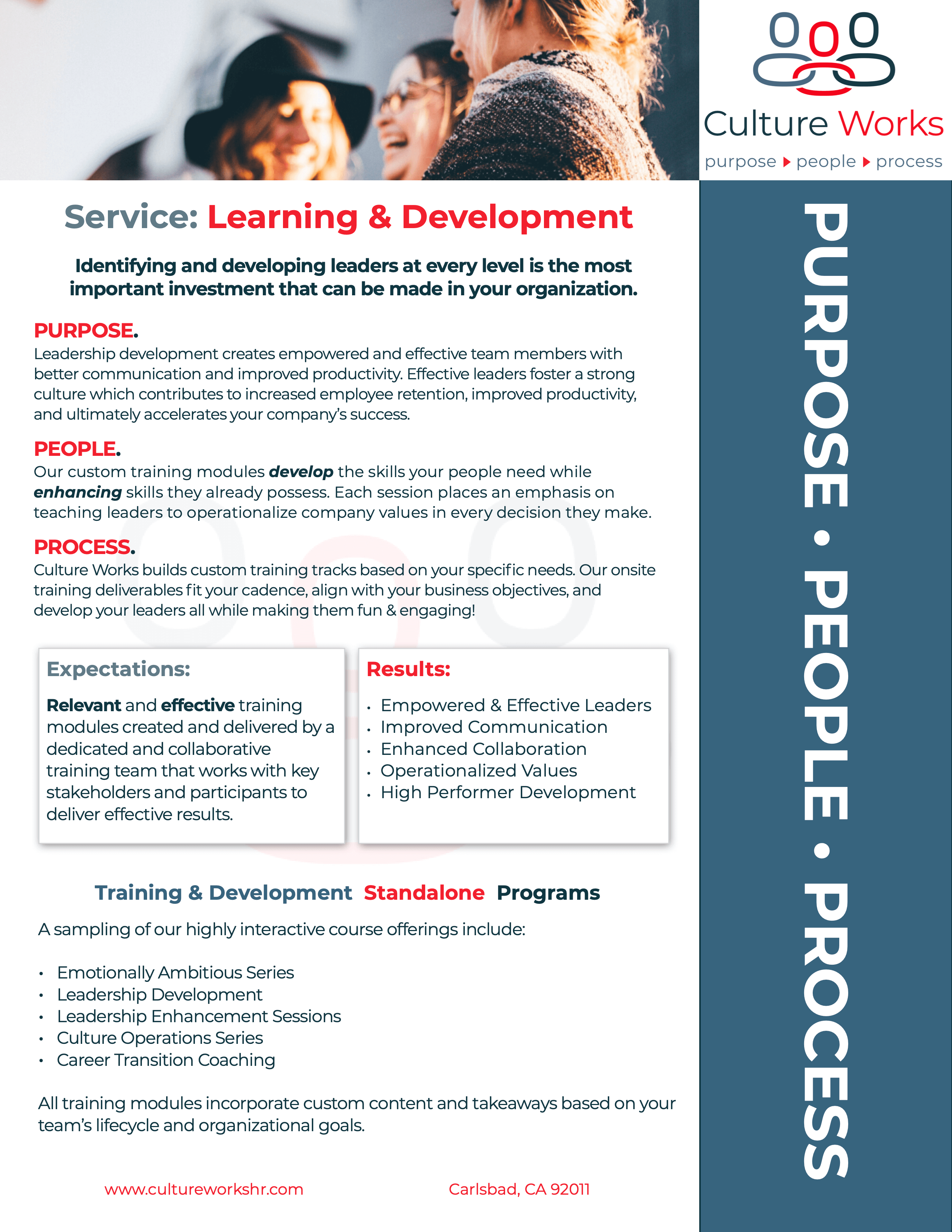
Investing in your team’s growth and engagement is fundamental to success in the Inland Empire. We craft initiatives that go beyond retention, focusing on continuous development. Our tailored programs foster employee engagement, cultivate leadership skills, and create pathways for career growth, ensuring your workforce remains motivated and committed.

Culture Cultivation for Success

A strong workplace culture is the bedrock of every successful organization. We specialize in cultivating cultures that inspire, aligning values, and behaviors with your company’s mission. By embedding these cultural traits into every aspect of your operations, we foster an environment where employees feel valued and motivated to contribute their best.

Talent Attraction and Integration

Finding the right talent is only the beginning. Our strategies ensure a seamless integration of new hires into your company culture. From designing efficient onboarding processes to creating pathways for quick acclimatization, we set the stage for new employees to thrive and make meaningful contributions from day one.

Industry Expertise Tailored for the Inland Empire

Partnering as your HR ally in the dynamic Inland Empire, we offer specialized knowledge and custom-tailored solutions across pivotal sectors such as:

Logistics & Distribution

In the Inland Empire, logistics and distribution thrive due to its strategic position for transportation. Our HR solutions focus on optimizing workforce efficiency, enhancing supply chain operations, and addressing industry-specific challenges, ensuring smooth warehouse management and streamlined delivery systems.

Manufacturing

With a robust manufacturing presence in the Inland Empire, our HR expertise focuses on boosting productivity, streamlining operations, and addressing workforce challenges. We tailor strategies for talent acquisition, specialized training programs, and skill-specific recruitment to support the region’s diverse production landscape.

Technology & Innovation

The Inland Empire’s tech and innovation sectors thrive, and our HR support is tailored accordingly. We specialize in attracting tech-savvy talent, fostering innovation cultures, and implementing agile HR practices to keep pace with the industry’s rapid changes. Our aim is to empower tech-driven companies to innovate and grow within the region.

Our dedicated team delivers tailored HR insights in these critical sectors, empowering your business to thrive amid the unique challenges and opportunities present in the Inland Empire.

At Culture Works, we’re dedicated to aligning your company culture with purpose, empowering your people, and streamlining your processes for operational success.

Looking for HR support in the Inland Empire? Contact Culture Works today. Let’s collaboratively shape a culture that drives success for your organization.

Our team offers HR support in the following areas:

  • Riverside
  • San Bernardino
  • Ontario
  • Rancho Cucamonga
  • Fontana
  • Moreno Valley
  • Corona
  • Temecula Valley
  • And surrounding communities

Learn More About Culture Works

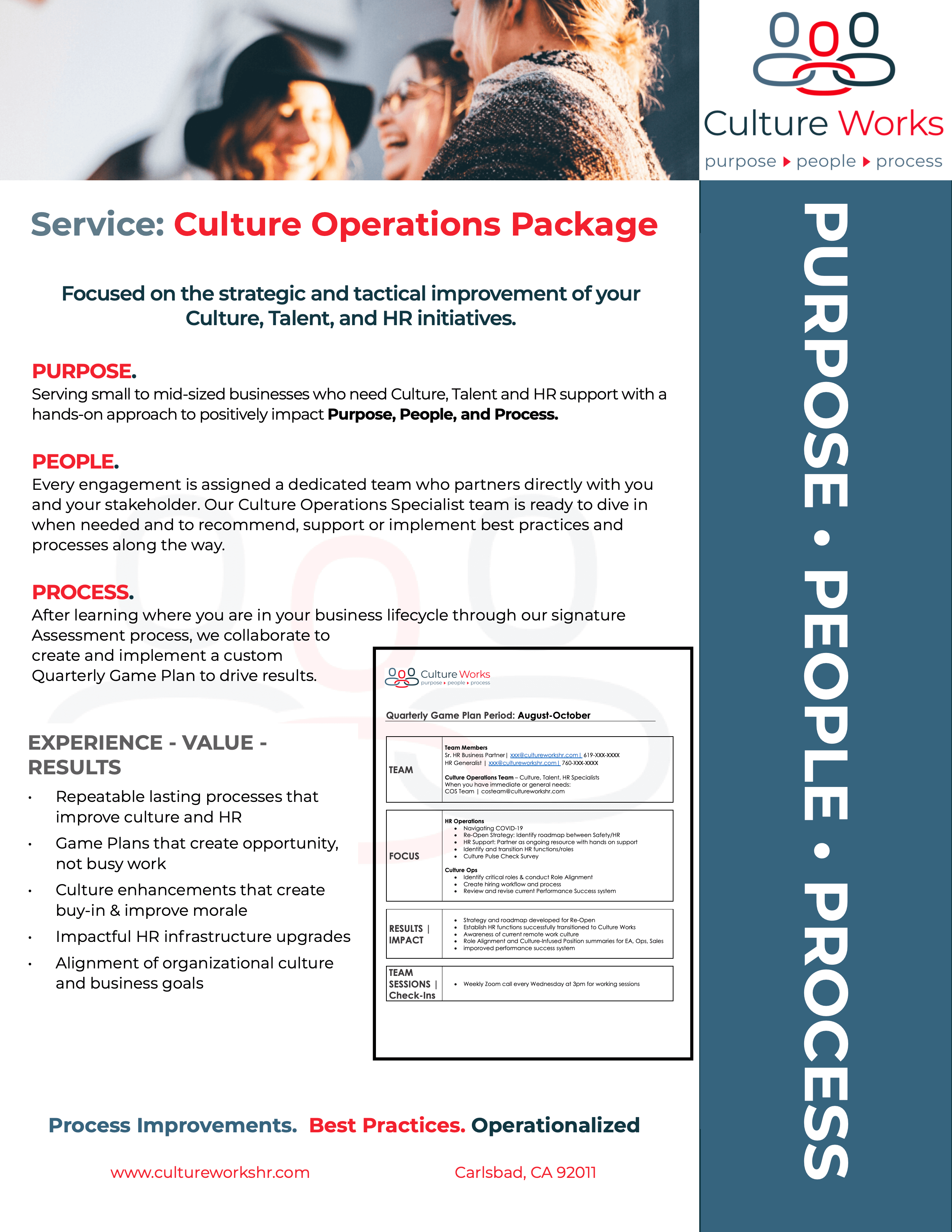
At Culture Works, we want to partner with your company to create success for your team– whatever that looks like for your specific company. Our passionate HR team has the experience you need in culture ops and hospitality to create success. Our approach is centered upon the importance of humanizing, customizing, and simplifying. We believe in what we do, and we want to help your company operationalize culture, talent, and HR to create ongoing success. Read on to learn more about what we do. Then, read on to learn why hiring the right people can lead your business to success in a recession.

In today’s rapidly evolving workplace, job satisfaction stands out as a cornerstone of success. It’s not merely a fleeting emotion but a fundamental aspect that influences both the individual and the organization succeeding. 

Let’s delve into why job satisfaction matters and how organizations can harness its power to foster growth and excellence.

Why Job Satisfaction Matters

Job satisfaction isn’t merely a feel-good metric; it’s a strategic imperative that can profoundly impact the success and sustainability of businesses. Extensive research has uncovered a direct correlation between job satisfaction and various crucial markers of organizational triumph. When employees feel fulfilled and engaged in their roles, the benefits extend far beyond individual contentment, shaping the very fabric of organizational success.

1. Revenue Growth

One of the most compelling reasons why job satisfaction matters lies in its undeniable link to revenue growth. Studies consistently show that employees who report high levels of job satisfaction are three times more likely to contribute significantly to revenue growth within their companies. When individuals feel valued, motivated, and fulfilled in their roles, they are more likely to invest their energy and creativity into driving business outcomes, ultimately resulting in increased profitability and financial success.

2. Sustainability Outlook

A positive outlook on gross sustainability is another critical aspect strongly influenced by job satisfaction. Satisfied employees are three and a half times more likely to possess a positive perspective on the long-term sustainability of their organization. This optimistic outlook reflects a deeper sense of commitment and alignment with the company’s mission and values, laying a robust foundation for enduring success and resilience amidst challenges and uncertainties.

3. Operational Efficiency

Operational efficiency is a cornerstone of organizational excellence, and job satisfaction plays a pivotal role in its attainment. Research indicates that satisfied employees are six times more likely to excel in efficiency metrics, driving improvements in productivity, quality, and overall performance. When individuals feel motivated, supported, and engaged in their work, they are better equipped to streamline processes, collaborate effectively, and innovate solutions, leading to enhanced operational efficiency across the board.

Factors Contributing to Job Satisfaction

Understanding the multifaceted drivers of job satisfaction is essential for organizations committed to creating environments where employees can thrive. While the specifics may vary from one individual to another, certain common factors consistently emerge as crucial contributors to overall satisfaction and engagement in the workplace. Let’s delve deeper into each of these pivotal elements:

1. Work-Life Balance

Striking a harmonious balance between professional responsibilities and personal life is more than just a perk; it’s a fundamental necessity for overall well-being. Employees who feel empowered to prioritize their personal commitments alongside their work obligations are better equipped to manage stress, maintain productivity, and sustain long-term satisfaction in their roles. 

Organizations that actively support work-life balance through flexible scheduling, remote work options, and wellness initiatives foster a culture of respect for employees’ holistic well-being.

2. Recognition and Compensation

Feeling valued and fairly compensated for one’s contributions is a cornerstone of job satisfaction. Beyond monetary rewards, recognition of achievements, efforts, and contributions plays a significant role in reinforcing employees’ sense of worth and motivation. Transparent and equitable compensation structures, accompanied by regular feedback and appreciation, demonstrate an organization’s commitment to acknowledging and rewarding the efforts of its workforce, ultimately fostering a culture of appreciation and loyalty.

3. Opportunities for Growth

Employees are inherently driven by a desire for personal and professional growth. Organizations that provide clear pathways for skill development, advancement, and career progression empower their employees to realize their full potential and achieve their career aspirations. Whether through mentorship programs, training initiatives, or promotional opportunities, investing in employee development not only enhances job satisfaction but also strengthens organizational capability and resilience in an ever-evolving marketplace.

4. Positive Work Culture

A supportive work culture characterized by trust, camaraderie, and inclusivity lays the foundation for sustained job satisfaction and engagement. When employees feel valued, respected, and supported by their peers and leaders, they are more likely to collaborate effectively, communicate openly, and contribute meaningfully to shared goals. 

Cultivating a positive work culture involves fostering open communication, promoting teamwork, and actively addressing issues of diversity, equity, and inclusion to create a workplace where everyone feels welcomed and appreciated.

5. Safety and Inclusion

Ensuring a safe and inclusive workplace where every voice is heard and respected is paramount for employee morale and satisfaction. Employees thrive in environments where they feel physically and psychologically safe to express themselves, share ideas, and take calculated risks without fear of judgment or reprisal. 

By prioritizing workplace safety, promoting diversity and inclusion, and fostering a culture of respect and empathy, organizations not only enhance job satisfaction but also cultivate a sense of belonging and collective responsibility among their workforce.

Creating a Culture of Job Satisfaction

Achieving high levels of job satisfaction requires proactive efforts on the part of organizational leaders. Here are some strategies to cultivate a satisfying work environment:

Redefine the Employee Experience: Take a holistic approach to redesigning the employee experience, focusing on enhancing engagement, well-being, and career development.

Recognition and Rewards: Implement robust recognition and reward programs to acknowledge and celebrate employee achievements and contributions.

Feedback Mechanisms: Encourage open communication and feedback loops, actively soliciting input from employees and taking action based on their insights.

Career Development Opportunities: Provide clear pathways for career advancement and invest in employee training and development initiatives.

Alignment of Goals and Values: Foster alignment between organizational goals, vision, and values, ensuring that every member of the team understands their role in achieving shared objectives.

Final Notes

Job satisfaction isn’t a luxury but a strategic necessity for organizations aspiring to thrive in today’s competitive landscape. By prioritizing the well-being and fulfillment of their employees, companies can unlock a wealth of benefits, including increased productivity, innovation, and resilience. 

As we navigate the complexities of the modern workplace, let’s remember the profound impact of job satisfaction and strive to create environments where everyone can flourish.

Learn More About Culture Works 

At Culture Works, we want to partner with your company to create success for your team– whatever that looks like for your specific company. Our passionate HR team has the experience you need in culture ops and hospitality to create success. Our approach is centered upon the importance of humanizing, customizing, and simplifying. We believe in what we do, and we want to help your company operationalize culture, talent, and HR to create ongoing success. Read on to learn more about what we do. Then, read on to learn why hiring the right people can lead your business to success in a recession.

As leaders climb the corporate ladder, a significant challenge emerges: the Disconnect Dilemma. This phenomenon sees executives drifting away from the daily reality of their workforce. With this detachment comes a concerning lack of insight into the struggles and challenges faced by employees—a dangerous game of losing touch with the company’s heartbeat.

This Disconnect Dilemma rears its head in three key areas: Job Satisfaction, Leadership Awareness, and Work-Life Balance.

In this blog, we will delve into the Disconnect Dilemma, exploring its impact on organizational dynamics and offering practical strategies to bridge the gap between executives and frontline employees.

Identifying the Disconnect

In our exploration of the Disconnect Dilemma, startling statistics paint a clear picture of the issue within organizations. Only 21% of professionals feel satisfied with ongoing communication and collaboration, while 30% consider performance reviews a waste of time. Shockingly, nearly half of organizations overlook discussing company goals during these reviews. 

These numbers reveal a significant gap between what leaders perceive and the reality faced by frontline employees. It’s like two ships passing in the night! So, how do we bridge this gap? Let’s take a look.

Addressing the Challenge

So, how can executives bridge this gap and reconnect with their frontline employees? We recommend:

Implement a Robust Performance Review System

A well-designed and effectively implemented performance review system can foster open communication and provide valuable feedback to employees. Executives should ensure that performance reviews are structured, training is provided, and feedback is constructive.

Prioritize Ongoing Communication

Regular communication channels between executives and frontline employees are essential for fostering a sense of connection and alignment. Executives should make it a priority to engage in ongoing dialogue, whether through team meetings, one-on-one discussions, or digital communication platforms.

Foster Collaboration

Collaboration is key to bridging the gap between executives and frontline employees. Executives should create opportunities for cross-functional collaboration, encourage idea-sharing, and actively involve frontline employees in decision-making processes.

Make Employee Engagement a Priority

Executives must prioritize employee engagement and make efforts to understand the needs and concerns of frontline staff. By actively listening to employee feedback, addressing concerns, and recognizing achievements, executives can demonstrate their commitment to employee well-being and satisfaction.

Areas to Evaluate:

Job Satisfaction

The heartbeat of any organization lies in the job satisfaction of its workforce. When executive leadership loses touch with the day-to-day operations, the ripple effect can be felt in employee morale. Job satisfaction plummets when leadership appears

indifferent to the challenges faced by their teams. The Disconnect Dilemma manifests as a breeding ground for discontent, leading to diminished productivity, increased turnover, and a pervasive sense of disillusionment among employees.

Out-of-Touch Leadership

In the fast-paced corporate landscape, staying abreast of industry trends, employee concerns, and market dynamics is paramount. However, when the executive leadership team become out of touch with the ground reality, decision-making

can suffer. The Disconnect Dilemma jeopardizes strategic initiatives, as executives may make decisions based on outdated or incomplete information. This not only hampers the company’s ability to adapt but also erodes the trust that employees and stakeholders place in leadership.

Work-Life Balance

Owners, Shareholders, and CEOs set the tone for the corporate culture, and their approach to work-life balance reverberates throughout the organization. The Disconnect Dilemma often results in a skewed perception of workload and expectations. Employees may feel pressure to match the relentless pace set by leadership, leading to burnout and a compromised work-life balance. Striking a harmonious equilibrium between professional and personal life becomes elusive when leaders themselves are disconnected from the struggles faced by their teams.

Final Notes

The Disconnect Dilemma poses a significant challenge for organizations, as leaders risk detachment from their workforce’s reality. To combat this, leadership can prioritize open communication, foster collaboration, and actively engage with frontline employees. By bridging the gap between executives and staff, organizations can create a more connected and cohesive workplace culture.

Need Help With Your Company Culture?

At Culture Works, we want to partner with your company to create success for your team– whatever that looks like for your specific company. Our passionate HR team has the experience you need in culture ops and hospitality to create success. Our approach is centered upon the importance of humanizing, customizing, and simplifying. We believe in what we do, and we want to help your company operationalize culture, talent, and HR to create ongoing success. Read on to learn more about what we do.

The difference between Human Capital and Human Resources

Understanding your human capital while operationalizing human resources (HR) is essential to success creating a company culture that thrives.

At Culture Works, we’re not just a fractional HR firm – we’re champions of Conscious Capitalism. In a world where profitability often overshadows purpose, we’re committed to guiding businesses towards a more holistic approach. 

Let’s explore what Conscious Capitalism means for us and how it can transform your organization.

Understanding Conscious Capitalism

Conscious Capitalism is a mindset that prioritizes people, purpose, and profit equally. It’s about recognizing the interconnectedness of stakeholders and aligning business practices with a higher purpose. At Culture Works, we believe that fostering a conscious approach leads to sustainable success.

The Guiding Principles

Our ethos at Culture Works is built on four guiding principles:

Higher Purpose

At Culture Works, we believe that every business has the potential to make a meaningful impact beyond just generating profits. We help businesses define and pursue a higher purpose that goes beyond the bottom line. Whether it’s contributing to social causes, fostering environmental sustainability, or enhancing the well-being of communities, we empower our clients to align their actions with their values and create positive change in the world.

Stakeholder Focus

Our approach to business is centered around prioritizing the needs and interests of all stakeholders involved. From employees and clients to partners and the wider community, we recognize that every individual and group impacted by a business has a stake in its success. By actively engaging with and addressing the concerns of these stakeholders, we create a culture of collaboration, trust, and shared value that drives sustainable growth and prosperity.

Conscious Culture

 A healthy organizational culture is the bedrock of any successful business. At Culture Works, our fractional HR solutions are designed to cultivate a culture of transparency, trust, and inclusivity within organizations. We work closely with our clients to foster open communication, encourage diversity and inclusion, and nurture a sense of belonging among employees. By prioritizing employee well-being and satisfaction, we help create workplaces where everyone can thrive and contribute their best.

Conscious Leadership

Leadership sets the tone for organizational culture and behavior. That’s why our HR experts at Culture Works lead by example, embodying principles of empathy, integrity, and ethical decision-making in all that we do. We partner with business leaders to develop their leadership skills, cultivate a values-driven approach to decision-making, and foster a culture of accountability and responsibility. By nurturing conscious leadership at all levels of the organization, we lay the groundwork for sustainable success and positive impact.

The Benefits:

By embracing Conscious Capitalism, businesses unlock a host of benefits that contribute to their overall success and sustainability:

Enhanced Employee Engagement and Satisfaction

 When businesses prioritize purpose, people, and the planet alongside profit, it creates a sense of meaning and fulfillment for employees. Workers are more likely to feel connected to the company’s mission, leading to higher levels of engagement, productivity, and job satisfaction. Additionally, fostering a culture of transparency, trust, and inclusivity promotes a sense of belonging among employees, further boosting morale and retention rates.

Increased Customer Loyalty and Brand Reputation

 Conscious Capitalism resonates with today’s socially-conscious consumers who seek out companies that align with their values. By demonstrating a commitment to ethical business practices, social responsibility, and environmental sustainability, businesses can attract and retain loyal customers who view them as trustworthy and socially responsible brands. This positive brand perception not only strengthens customer loyalty but also enhances brand reputation and differentiation in the marketplace.

Improved Financial Performance and Long-Term Sustainability

Contrary to the misconception that Conscious Capitalism sacrifices profitability, research has shown that companies that prioritize purpose and people often outperform their competitors financially in the long run. By focusing on creating shared value for all stakeholders, businesses can drive innovation, increase operational efficiency, and mitigate risks. 

Moreover, investing in employee well-being, community development, and environmental stewardship fosters a positive ecosystem that contributes to long-term business sustainability and resilience in the face of economic challenges.

Final Notes

As your fractional HR partner, Culture Works is dedicated to helping your business thrive through Conscious Capitalism. Together, we can create a workplace culture that inspires, empowers, and drives sustainable success. Let’s embark on this journey towards a brighter future, where purpose and profit go hand in hand.

Learn More About Culture Works

At Culture Works, we want to partner with your company to create success for your team– whatever that looks like for your specific company. Our passionate HR team has the experience you need in culture ops and hospitality to create success. Our approach is centered upon the importance to humanize, customize, and simplify. We believe in what we do, and we want to help your company operationalize culture, talent, and HR to create ongoing success. Read on to learn more about what we do.

As a business owner navigating the dynamic landscape of California, embracing the potential of remote work is more than just a trend – it’s a strategic move toward success. 

In this comprehensive guide, we’ll explore the intricacies of remote work tailored to the California business environment. 

Why Consider Going Remote: Transforming California’s Business Landscape

In a state known for innovation, California businesses are redefining the workplace by embracing remote work. Beyond being a response to challenges, remote work has become a strategic tool for boosting productivity, retaining top talent, and fostering flexibility. This guide is a practical resource for navigating the complexities of remote work in the California business environment.

Enhancing Productivity:

Remote work isn’t a temporary fix; it’s a method to enhance productivity. Businesses in California adopting remote work have witnessed increased efficiency and output. By eliminating daily commutes and allowing employees to tailor their work environment, businesses create a setting conducive to creativity and high performance.

Talent Retention:

In a competitive market, retaining top talent is crucial. Remote work is a key factor for businesses in California to keep skilled professionals. Offering remote flexibility signals a commitment to employee well-being, a significant factor in retaining valuable talent.

Flexibility in Business Operations:

The Californian business landscape values adaptability. Remote work aligns seamlessly with this mindset, providing businesses the flexibility to respond swiftly to changing circumstances. Whether adapting to market trends or scaling operations efficiently, remote work fosters a flexible and resilient business model.

In a state where innovation is standard, going remote isn’t just a choice; it’s a strategic move to transform the future of work.

Legal Considerations for Remote Work in California: Navigating Compliance and Regulations

As you delve into the realm of remote work for your California-based business, it’s essential to understand the legal landscape that accompanies this shift. While remote work offers flexibility and efficiency, adherence to California’s labor laws and regulations is paramount.

Compliance with Labor Laws:

California boasts robust labor laws that prioritize employee rights. When implementing remote work, ensure that your policies align with state regulations. Familiarize yourself with wage and hour laws, meal and rest break requirements, and the intricacies of overtime pay to maintain legal compliance.

Workplace Safety and Ergonomics:

Even in a remote setting, employers are responsible for the safety and well-being of their employees. Explore guidelines for ensuring a safe and ergonomic home office environment. Addressing these concerns demonstrates a commitment to your employees’ welfare and helps mitigate potential legal issues.

Data Security and Privacy:

Remote work often involves the exchange of sensitive information. Understand California’s data protection laws and implement secure practices for handling and transmitting data. This includes safeguarding employee and client information, adhering to privacy regulations, and implementing secure communication channels.

Employee Classification:

With remote work, there may be implications for employee classification. Ensure that your remote team members are correctly classified as employees or independent contractors based on their job responsibilities. Misclassification can lead to legal challenges and financial penalties.

Tax Implications:

Remote work may have tax implications for both employers and employees. Familiarize yourself with California’s tax laws related to remote work scenarios. This includes understanding payroll tax obligations, potential changes in state tax withholding, and addressing any multi-state tax considerations.

Remote Work Agreements:

Crafting clear and comprehensive remote work agreements is crucial. These agreements should outline expectations, working hours, communication protocols, and any specific policies related to remote work. Having well-defined agreements helps mitigate disputes and ensures that both parties are on the same page.

Consulting Legal Professionals:

For nuanced legal matters related to remote work, consulting legal professionals specializing in California employment law is advisable. They can provide tailored advice based on your business’s specific circumstances, helping you navigate potential legal pitfalls and ensuring compliance with state regulations.

By addressing these legal considerations, you lay a solid foundation for implementing remote work successfully in your California-based business. This proactive approach not only fosters a compliant and secure work environment but also positions your business for long-term success in the evolving landscape of remote work.

Creating a Remote-Ready Culture: Strategies for Success

As you embark on the journey of integrating remote work into your California-based business, establishing a remote-ready culture becomes paramount. Cultivating an environment that promotes collaboration, communication, and employee well-being is key to unlocking the full potential of remote work. Here are strategies to ensure success in creating a remote-ready culture:

Clear Communication Channels:

Remote work thrives on effective communication. Implement clear and accessible communication channels to keep your team connected. Utilize collaboration tools, video conferencing platforms, and project management systems to facilitate seamless communication. Establish regular check-ins to discuss progress, address concerns, and maintain team cohesion.

Set Clear Expectations:

Define expectations regarding work hours, availability, and deliverables. Clearly outline deadlines and project milestones to ensure everyone is on the same page. Setting transparent expectations helps in avoiding misunderstandings and fosters a sense of accountability among team members.

Prioritize Employee Well-Being:

Remote work should prioritize employee well-being. Encourage a healthy work-life balance by promoting regular breaks and respecting non-working hours. Provide resources for mental health support, and ensure employees feel supported in managing their workload. A focus on well-being contributes to increased job satisfaction and overall productivity.

Foster a Culture of Trust:

Trust is the foundation of successful remote work. Empower your team by trusting them to manage their tasks and deliverables. Avoid micromanagement and instead focus on outcomes. When employees feel trusted, they are more likely to take ownership of their work and contribute to the success of the business.

Promote Virtual Team Building:

Even in a remote setting, team building remains crucial. Organize virtual team-building activities to strengthen interpersonal connections. This could include virtual happy hours, online games, or collaborative projects. Building a sense of camaraderie fosters a positive team culture, essential for remote teams.

Invest in Professional Development:

Remote work offers opportunities for continuous learning and professional development. Provide resources and support for skill-building initiatives. This not only enhances the capabilities of your team but also contributes to their job satisfaction and engagement.

Flexible Policies and Adaptability:

Flexibility is a hallmark of remote work. Implement policies that embrace flexibility, allowing employees to structure their work in a way that suits them best. Remain adaptable to changing circumstances, ensuring your business can navigate challenges effectively.

Encourage Feedback and Collaboration:

Create avenues for feedback and collaboration. Encourage open communication where employees feel comfortable sharing their thoughts and ideas. Foster a collaborative environment where input is valued, leading to innovative solutions and continuous improvement.

By incorporating these strategies into your business’s remote work culture, you pave the way for a successful and thriving virtual workplace. A remote-ready culture not only enhances employee satisfaction but also positions your business for long-term success in the evolving landscape of work.

Navigating Technology for Remote Success: Tools and Tips

As your California-based business embraces the transformative journey of remote work, navigating the technological landscape becomes integral for sustained success. Implementing the right tools and strategies ensures seamless operations and enhances the overall remote work experience. Here’s a comprehensive guide to help you navigate technology for remote success:

Choose the Right Collaboration Tools:

Selecting the appropriate collaboration tools is essential for effective remote work. Platforms like Slack, Microsoft Teams, or Zoom facilitate real-time communication, file sharing, and virtual meetings. Ensure your team is comfortable with the chosen tools and provide training if needed.

Implement Project Management Systems:

Project management systems like Asana, Trello, or Monday.com help streamline tasks, track progress, and enhance overall project visibility. These tools are instrumental in maintaining organization and accountability within remote teams.

Enhance Cybersecurity Measures:

With the increase in remote work, cybersecurity has become a critical consideration. To safeguard sensitive business data, implement robust cybersecurity measures, including VPNs, secure communication channels, and multi-factor authentication.

Cloud-Based Solutions for Accessibility:

Leverage cloud-based solutions for data storage and accessibility. Platforms such as Google Workspace or Microsoft 365 ensure that documents are accessible to team members from any location, fostering collaboration and flexibility.

Provide Training for Technology Adoption:

Offer training sessions to familiarize your team with the adopted technologies. This will reduce the learning curve, enhance efficiency, and ensure that everyone is proficient in utilizing the tools essential for remote collaboration.

Ensure Tech Support Availability:

Establish a reliable tech support system to address any technical issues promptly. Quick resolutions to technical challenges contribute to a smooth remote work experience and prevent disruptions in productivity.

Encourage Digital Well-Being:

Promote practices that support digital well-being. Encourage employees to take breaks, set boundaries for work-related communications, and provide resources for managing screen time. Prioritizing digital well-being contributes to a healthy and sustainable remote work environment.

Explore Innovative Virtual Team Building:

Go beyond traditional team-building activities by exploring innovative virtual options. Virtual escape rooms, online workshops, or collaborative virtual projects can foster team cohesion and create a sense of connection among remote team members.

Facilitate Remote Onboarding:

Develop a streamlined process for remote onboarding of new team members. Utilize video conferencing for virtual introductions, provide comprehensive digital onboarding materials, and assign mentors to help newcomers integrate seamlessly into the remote work culture.

Monitor and Optimize Remote Workflows:

Regularly evaluate and optimize remote workflows. Solicit feedback from your team to identify areas for improvement. This iterative approach ensures that your remote work processes remain efficient and aligned with the evolving needs of your business.

By incorporating these technological strategies into your remote work framework, your California-based business can navigate the complexities of the digital landscape successfully. Embracing technology not only enhances productivity but also positions your business for sustained growth in the ever-evolving world of remote work.

Need Help with Your Remote Operations?

At Culture Works, we recognize that company culture will look different for each organization. But Alan Webster says it best, “Without communication and the team effort it permits, the successful completion of any important project can be jeopardized.” So, keep faith and continue to work toward that perfect culture-remote balance. 

Chat with us today about your unique company culture!

In 2024, employers are starting to see the importance of prioritizing their company’s most valuable asset – its people. Why? Employee satisfaction and engagement means higher productivity, longer retention rates and more. 

However, improving employee satisfaction is not as easy as adding in some superficial perks or implementing a one-size-fits-all approach.  Instead, it requires a nuanced understanding of individual needs and a tailored approach to address them effectively.

In this blog, we will explore the top insights from a global survey of over 300 professionals, shedding light on the challenges and trends that organizations are currently facing as well as some solutions. Let’s dive in!

First, We Need to Talk About the State of Job Satisfaction

Check this out: Did you know that only 22% of the professionals surveyed rated their job satisfaction as excellent?

Even more alarming, non-supervisory employees reported even lower levels at 13%. This underscores the urgent need for organizations to address the factors influencing job satisfaction.

Why is improving job satisfaction so important? Let’s take a look at some stats. 

Companies excelling in job satisfaction reap significant benefits:

  • They are 3 times more likely to achieve significant revenue growth.
  • They are 6 times more likely to have best-in-class efficiency.
  • They are 3.5 times more likely to have employees with a positive outlook on future success.

These findings underscore the direct correlation between a people-centric culture, high performance, and desired business outcomes.

But where to begin? Contrary to popular belief, improving job satisfaction isn’t about casual Fridays or pizza parties. Instead, it starts with understanding the core contributors to job satisfaction:

  • Work-life balance (51%)
  • Salary (47%)
  • Meaningful work (38%)
  • Recognition & appreciation (34%)
  • Opportunities for growth (33%)
  • Relationships with employees (31%)
  • Relationships with leaders (27%)
  • Feeling safe and included (20%)

Now that we’ve discussed the importance of job satisfaction, let’s take a look at the HR trends for 2024 and how these trends can help companies improve employee satisfaction, engagement, and productivity. 

Trend 1: Redefining the Employee Experience

The way employees experience their work environment is changing. Some companies have done this by allowing employees to work remotely, focusing more on helping them balance their work and personal lives and finding new ways to support their mental and financial well-being.

Employers have the opportunity to proactively shape the employee experience by implementing strategic adjustments within the workplace.

While factors like flexible working hours, remote work, and competitive salaries undeniably contribute to employee satisfaction, certain constraints may limit employers or leaders in these areas. Nevertheless, there are strategic adjustments within the workplace that wield substantial influence:

  1. Solicit regular feedback.
  2. Listen and act on employee feedback.
  3. Ensure employees understand how their efforts impact company goals.
  4. Express gratitude.
  5. Recognize accomplishments publicly.

In embracing these changes, employers have the opportunity to shape a more positive and supportive environment for their employees. By implementing strategic adjustments within the workplace, they can foster a culture of appreciation and satisfaction, ultimately leading to a more engaged and productive workforce.

Trend 2: Bridging the Gap Between Leaders and Employees

In today’s workplace, a significant divide exists between the perceptions of executives and those of other employees regarding various aspects, such as job satisfaction, development opportunities, and more. Executives consistently rate the performance of their companies significantly better than non-executives, a phenomenon referred to as the ‘disconnect effect.’ For instance:

  • Executives rate job satisfaction, communication, efficiency, and innovation significantly higher than non-executives.
  • Executives feel 2.5 times more strongly about the adequacy of opportunities for skill and career development.
  • Executives are nearly 3 times more satisfied with steps taken to address well-being and mental health.
  • Executives feel over 3 times more satisfied with the current level of communication and collaboration.

This gap can detrimentally affect organizational performance and workplace culture, potentially leading to reduced engagement and productivity. Addressing this requires bridging the communication divide.

To start, companies can:

Establish Open Communication Channels: Create platforms for employees to share feedback, concerns, and ideas, such as town hall meetings or digital suggestion boxes.

Encourage Two-Way Dialogue: Urge leaders to actively listen to employee feedback and engage in meaningful conversations, responding transparently to concerns.

Implement Regular Check-Ins: Encourage managers to have regular one-on-one meetings with team members to discuss goals, challenges, and career aspirations.

Provide Leadership Training: Offer training programs to enhance leadership skills, such as communication and empathy, and help them better connect with their teams.

Promote Accountability: Hold leaders accountable for fostering transparent communication. Recognize and reward leaders who actively engage with their teams.

Lead by Example: Senior leaders should demonstrate active engagement with employees, fostering a culture of openness and learning.

By taking these steps, organizations can foster a more inclusive, collaborative, and engaged workplace culture, bridging the gap between leaders and employees.

Trend 3: Turning the Performance Review on Its Head

The evolving landscape of performance reviews is pivotal in shaping job satisfaction within a company. As revealed by surveys, many professionals perceive traditional performance reviews as inadequate or even detrimental to their job satisfaction. 

A staggering revelation shows that only one-third of professionals actively value and participate in performance reviews, with another 38% finding them somewhat helpful, leaving nearly 30% deeming them not useful or a complete waste of time.

So what can companies do to make performance reviews more valuable and contribute to job satisfaction? Consider these strategies:

Regular Feedback: Provide ongoing feedback rather than relying solely on annual reviews.

Development Focus: Shift reviews to prioritize employee growth and career advancement.

Open Communication: Encourage two-way dialogue during reviews to address concerns and gather input.

Clear Expectations: Ensure employees understand their roles and performance expectations.

Manager Training: Train managers to deliver effective feedback and conduct constructive discussions.

Recognition: Incorporate recognition into reviews to acknowledge employee contributions.

Implementing these approaches can enhance the value of performance reviews and boost job satisfaction.

Trend 4: Catalyzing Communication to Improve Collaboration

Did you know that only 21% of professionals are truly satisfied with how their company communicates and collaborates? It’s a shocking statistic, but what’s even more eye-opening is the impact it has on business growth. Those who are happiest with communication and collaboration are a staggering 5 times more likely to work for companies that experienced growth last year.

But here’s the kicker: communication gaps are rampant, especially in traditional office settings. In fact, 40% of professionals consider these gaps the biggest challenge at work. Surprisingly, these challenges persist whether you’re working from home or in the office. It’s not about the location; it’s about bridging the divide.

So, what’s causing all this chaos? It boils down to people problems. Clear communication, conflicting priorities, and departmental silos are causing more headaches than tech troubles or time zone issues.

But fear not! There are solutions to bridge this communication gap:

Continuous Coaching and Feedback: Forget annual reviews; make feedback a regular thing. By offering continuous coaching and feedback, you keep the lines of communication open and ensure everyone stays on track.

Regular Check-Ins: Encourage managers and peers to touch base regularly. These check-ins aren’t just about work; they’re about building relationships and fostering collaboration.

Social Time: Don’t underestimate the power of a coffee break or a virtual happy hour. Designate time for social interactions to strengthen personal connections among team members.

Psychological Safety: Create an environment where employees feel safe expressing themselves and challenging the status quo. When people feel heard and valued, they’re more likely to speak up and contribute their best ideas.

Remember, it’s not just about improving communication and collaboration; it’s about putting people first. When employees feel heard and respected, they’re more engaged, productive, and ultimately, happier at work. And that’s a win-win for everyone.

Trend 5: Prioritizing Training and Development to Boost Performance

Training and development are not just checkboxes on a list of HR activities; they are the backbone of a thriving workforce. By investing in the growth and development of employees, organizations not only equip them with the skills needed to excel in their roles but also demonstrate a commitment to their professional success and well-being. This, in turn, has a profound impact on employee engagement, retention rates, and overall talent management strategies.

However, despite the recognized importance of training and development, a concerning trend persists: only a meager 27% of professionals strongly feel that their company provides adequate growth opportunities. This lack of perceived investment in employee development can lead to disengagement and a sense of stagnation among workers, hindering their motivation and productivity.

The key to addressing this challenge lies in understanding the specific needs and aspirations of employees. It’s not enough to offer generic training programs; organizations must tailor their initiatives to address the unique skill gaps and career aspirations of their workforce. This includes investing in skills development, leadership training, and fostering a culture of inclusion and belonging.

But how can organizations improve their training and development efforts to boost employee satisfaction and engagement?

Customize Training Programs: Take a personalized approach to training by offering programs that cater to the diverse learning needs and career goals of employees. This might include providing access to online courses, workshops, mentorship opportunities, and hands-on projects tailored to individual interests and skill levels.

Promote Leadership Development: Recognize the importance of nurturing future leaders within the organization by offering leadership development programs. Provide aspiring leaders with the tools, resources, and mentorship needed to develop their leadership skills and advance their careers.

Create a Culture of Continuous Learning: Encourage a mindset of lifelong learning by promoting ongoing skill development and professional growth. Provide employees with opportunities to expand their knowledge, acquire new certifications, and stay up-to-date with industry trends.

Foster Inclusion and Belonging: Build a culture where all employees feel valued, respected, and included. Offer diversity and inclusion training to raise awareness and promote empathy among team members, creating a supportive environment where everyone can thrive.

Provide Regular Feedback and Recognition: Establish a feedback-rich culture where employees receive constructive feedback on their performance and progress. Recognize and celebrate achievements and milestones to motivate continued learning and growth.

By prioritizing training and development initiatives that are tailored to the needs of employees, organizations can create a learning environment that fosters engagement, satisfaction, and ultimately, high performance. After all, investing in the growth and development of employees isn’t just good for business—it’s essential for building a workforce that is agile, resilient, and ready to tackle the challenges of tomorrow.

A Final Thought on Humanity in the Workplace:

As we delve into the dynamics of training and development, it’s crucial to recognize the profound impact individuals have on organizational success. Employees are not merely cogs in a machine; they are architects of innovation and the heartbeat of a thriving workplace. Acknowledging, hearing, and valuing individuals unlock limitless possibilities, turning them into dedicated catalysts for positive change.

Learn More About Culture Works

At Culture Works, we want to partner with your company to create success for your team– whatever that looks like for your specific company. Our passionate HR team has the experience you need in culture ops and hospitality to create success. Our approach is centered upon the importance of humanizing, customizing, and simplifying. We believe in what we do, and we want to help your company operationalize culture, talent, and HR to create ongoing success. Read on to learn more about what we do. Then, read on to learn why hiring the right people can lead your business to success in a recession.

Strategic employee engagement isn’t just a buzzword; it’s a fundamental aspect of organizational success. It involves crafting an environment where employees feel valued, heard, and inspired to contribute their best. By understanding and implementing effective strategies, companies can nurture a culture that fosters growth, cultivates a sense of belonging, and aligns everyone with the company’s goals.

Let’s explore practical strategies that go beyond conventional approaches, enabling organizations to genuinely connect with their employees and build a workforce that’s not just productive but genuinely invested in the company’s success.

1. Culture Operations: Shaping the Heart of Your Organization

Culture Operations serve as the backbone of a company’s ethos. They encompass the daily practices and processes that breathe life into your organization’s culture. When streamlined effectively, they infuse shared values, purpose, and a sense of belonging into every facet of the workplace.

2. Performance Accountability: Building a Culture of Ownership

Performance Accountability sets the stage for a culture where responsibility and ownership thrive. It defines clear goals and expectations, ensuring that every individual understands their role in contributing to the company’s success. This accountability fuels a sense of purpose and fosters a results-driven environment.

3. Performance Success Systems: Catalyzing Growth and Development

Performance Success Systems revolutionize how organizations approach feedback and development. It transcends traditional annual reviews, fostering continuous, two-way conversations that prioritize growth and improvement. These systems cultivate an environment where feedback is integral to professional development and drives organizational success.

Other Tips to Improve Employee Engagement:

Now that we’ve covered fundamental steps, let’s pivot to discussing additional strategies that can further enhance employee engagement. First among these is the crucial emphasis on prioritizing employee mental health.

Prioritizing Employee Mental Health

Taking care of your employees’ mental health isn’t just a passing concern—it’s a critical aspect of nurturing a productive workforce. Providing resources like an Employee Assistance Program (EAP) offers confidential support for personal and work-related issues. Consider integrating wellness programs that equip employees with tools to manage stress and prioritize mental well-being.

Fostering Open Communication

Creating a culture of open communication hinges on providing a safe and judgment-free space for employees to express themselves. Encourage an environment where diverse perspectives are welcomed, fostering innovation, fresh ideas, and constructive feedback that keep the company agile and dynamic.

Revamping Job Positioning and Marketing

With an abundance of options available to candidates, highlighting what sets your company apart is crucial. Craft job postings that emphasize your company’s unique qualities, focusing on culture and vision rather than just benefits or compensation. Employ engaging and approachable language in postings to attract diverse talent.

Transparent Company Culture

Acknowledging and being transparent about your company’s imperfections builds trust with both employees and customers. Embracing transparency showcases self-awareness and a commitment to positive change, fostering collaboration between leadership and employees to overcome challenges and achieve shared goals.

Empower Employees’ Ideas

Recognizing and empowering employee ideas can transform workplace dynamics. Encourage employees to take ownership of their contributions and lead initiatives stemming from their ideas. This not only demonstrates respect but also nurtures a culture of innovation and creativity.

Flexibility and Autonomy

Implementing remote-first, hybrid, or flexible work policies gives employees the autonomy to balance work and life, fostering increased productivity and job satisfaction. Such flexibility benefits both employees and employers, creating a conducive work environment.

Lead Through Example

Leading by example remains a cornerstone of engaging employees. Model the behaviors and values you expect from your team. By exhibiting accountability, respect, and support, you cultivate trust and foster a culture where everyone is motivated to contribute.

Recognize Individuality

Understanding that employees are unique individuals is crucial. Tailor leadership approaches to meet individual needs, recognizing diverse work styles, communication preferences, and career aspirations. Encourage open communication to grasp individual concerns and adapt your leadership style accordingly.

Learn More About Culture Works

At Culture Works, we want to partner with your company to create success for your team– whatever that looks like for your specific company. Our passionate HR team has the experience you need in culture ops and hospitality to create success. Our approach is centered upon the importance of humanizing, customizing, and simplifying. We believe in what we do, and we want to help your company operationalize culture, talent, and HR to create ongoing success. Read on to learn more about what we do. Then, read on to learn why hiring the right people can lead your business to success in a recession.

As we step into 2024, the dynamics of attracting top talent continue to shift, driven by evolving candidate preferences and market demands. Here’s how your firm can navigate these changes and excel in attracting the best talent this year.

Understanding 2023 Trends and Projected Shifts: Unlocking the Candidate’s Wishlist

As we step into the fast-paced realm of talent acquisition in 2024, it’s crucial to rewind the tape and decode the trends that ruled the game in 2023 – trends that are shaping the landscape for the year ahead. Think of it as peeking into the crystal ball of candidates’ desires and aspirations.

Higher Salaries: The Golden Ticket

In 2023, the call for higher salaries echoed louder than ever in the talent market. Candidates, driven by the value they bring to the table, sought compensation that not only matched but exceeded industry standards. And guess what? This golden desire for competitive compensation isn’t fading away anytime soon.

Remote Work: Breaking Down the Cubicle Walls

Remote work wasn’t just a trend; it became a lifestyle in 2023. The allure of flexibility, work-life balance, and freedom from the cubicle have continued to be a strong demand with candidates. Brace yourselves because the remote work revolution is far from over – it’s an evolving norm set to dominate the candidate wishlist in 2024.

Emphasis on Career Development: Fuel for Aspiration

In the quest for professional fulfillment, candidates in 2023 sought more than just a job; they craved a launchpad for their career trajectory. Opportunities for growth, skill enhancement, and a clear path for advancement became non-negotiables. And mark our words, this thirst for career development will continue shaping candidate decisions in 2024.

Positive Company Culture: The Glue That Sticks

A revelation dawned upon the talent landscape in 2023 – job seekers weren’t just seeking a role; they were seeking a community and a culture that extended beyond values printed on a poster. A workplace that embraced diversity, fostered inclusivity, and championed employee well-being became the magnetic force. Prepare yourselves; this magnetism of positive company culture will be a deciding factor for candidates in 2024.

Stability: Building Blocks of Trust

Amidst the ever-changing tides, job seekers sought one thing that stood unwavering – stability. Companies showcasing financial security, growth prospects, and a promise of longevity caught the attention. Stability remains the cornerstone of trust, and its significance will persist as a top contender in the candidate checklist for 2024.

How to Attract Talent the Right Way

In the relentless quest for top-tier talent, businesses navigate a dynamic landscape where attracting the best requires a strategic blend of intentional compensation, remote work flexibility, career development, positive culture, and stability.

Intentional Compensation Planning: Paying Talent Their Worth

Competitive salaries aren’t just numbers; they’re the siren song that attracts top talent. Align compensation with industry standards to reflect the value candidates bring to the table.

Remote Work Opportunities: Where Flexibility Meets Productivity

Remote work isn’t a perk; it’s a lifestyle. Emphasize your company’s remote or hybrid work policies and technological infrastructure that supports a seamless remote work experience.

Investing in Career Development: Fueling Growth for All

Growth isn’t just a buzzword; it’s the lifeline of top talent. Offer clear career progression paths, mentorship programs, and continuous learning opportunities.

Nurturing a Positive Company Culture

A positive culture isn’t a luxury; it’s the heartbeat of your workplace. Showcase inclusivity, diversity initiatives, and employee well-being programs that create a supportive environment.

Emphasizing Stability: Building Trust Brick by Brick

Stability isn’t just a word; it’s the bedrock of trust. Highlight the company’s goals, stability efforts, and growth trajectory to instill confidence in potential candidates.

Execution Strategies: Operationalizing Your Recruiting Efforts

Plan Deployment: Highlight the significance of effectively communicating talent strategies in job postings and employer branding efforts.

Implementing Talent Strategies: Discuss the importance of personalizing candidate experiences and fostering a positive journey throughout the recruitment process.

Optimizing Hiring Processes: Exploring the need for continual evaluation and refinement of recruitment processes based on collected metrics.

Assessing Talent Attraction: Metrics that Define Success

Measuring the efficacy of recruitment strategies isn’t just about numbers; it’s about understanding the journey from candidate to productive team member. Metrics serve as guideposts, revealing insights into where strategies excel and where adjustments are vital for sustained success.

Reducing Time to Hire: Accelerating Recruiting Efficiency

Speed matters in securing top talent. Streamlining processes, minimizing delays, and swift decision-making not only impress candidates but also ensure efficient utilization of resources.

Efficient Integration: Enhancing Productivity from Day One

The quicker new hires assimilate into the company’s culture and workflow, the sooner they contribute meaningfully. Efficient integration and onboarding enhance productivity and foster a sense of belonging.

Understanding Offer Dynamics: Refining Recruitment Strategies

Analyzing why candidates accept or decline offers unveils invaluable insights. It provides clarity on the appeal of the offer package, the company’s image, and the efficacy of the hiring process, guiding refinements.

Aligning Swiftly: Seamlessly Integrating with Culture and Goals

Rapid alignment with company values and objectives is pivotal for new hires. Initiating mentorship opportunities, robust orientation programs, and transparent communication aids in swift integration, ensuring alignment with company culture and goals.

Final Notes

Mastering talent attraction in 2024 demands a comprehensive understanding of evolving candidate preferences and the implementation of robust strategies. By aligning compensation plans, emphasizing remote work opportunities, nurturing growth, fostering a positive culture, and showcasing stability, your firm can stand out in attracting top talent and shaping a competitive advantage in the talent acquisition landscape.

Need a Little Help Hiring the Right People?

Taking the time to hire the right people will have a host of benefits in the long run. Finding the best fit may not be as easy as a gut feeling and a round of interviews. Luckily, Culture Works is here to help.

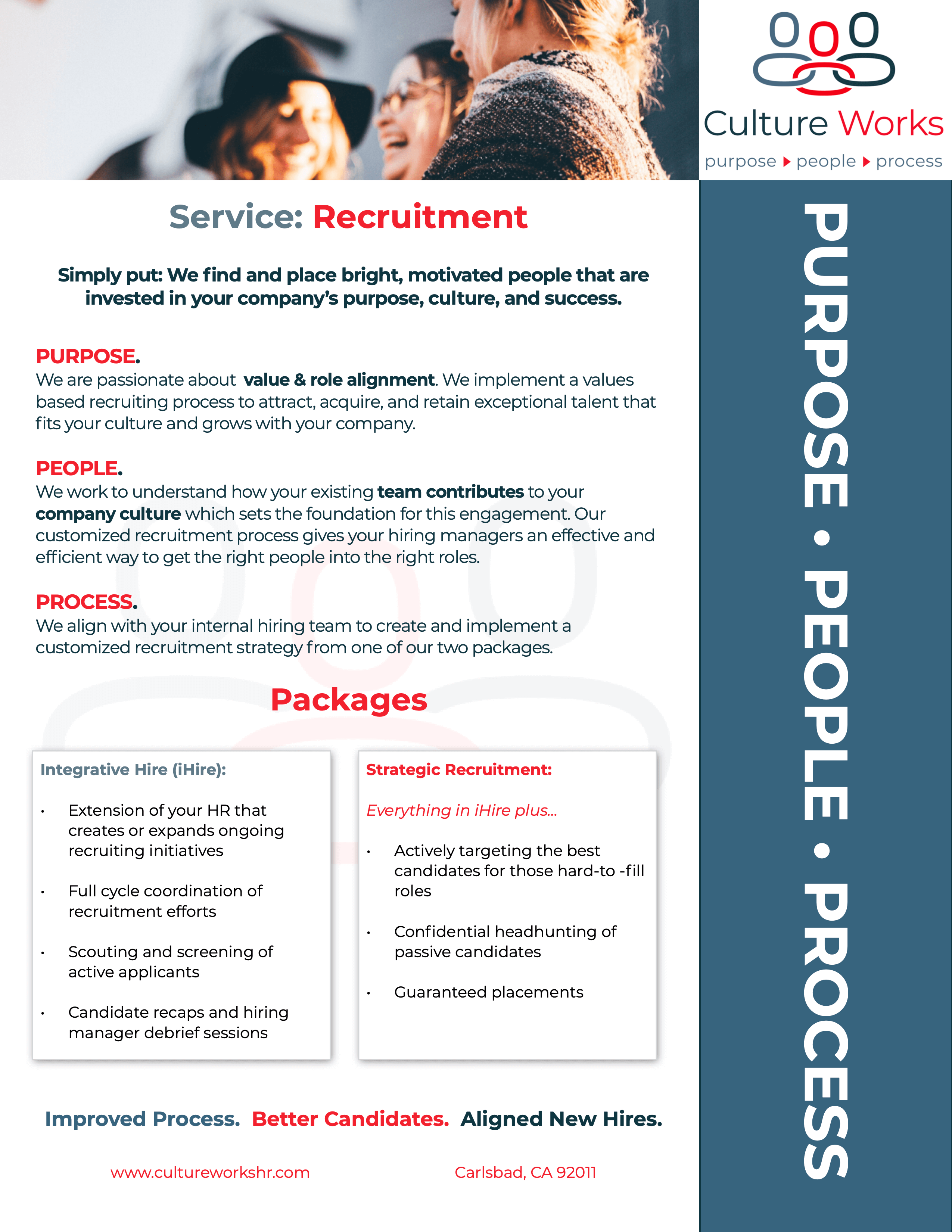
At Culture Works, our team is focused on value and role alignment. Our team creates processes for your hiring manager to implement that make the hiring process efficient and effective. We carefully review and screen each candidate, administer customized assessments, and deliver value and role-aligned people to fit your needs.

Read on to learn more about what we do. Then, read on to learn how to build trust with your employees.

In a recent survey conducted among hiring managers, a staggering 75% highlighted the importance of an employee’s emotional intelligence (EI or EQ) over their IQ. The reason? Emotional intelligence directly correlates with higher productivity and increased job satisfaction—ultimately playing a pivotal role in retaining valuable talent within organizations.

Emotional intelligence revolves around perceiving and effectively managing emotions, a skill that can be honed and integrated into various facets of life, particularly in the workplace.

However, embedding emotional intelligence into the workplace isn’t as simple as hosting a Friday afternoon workshop accompanied by acai bowls (though, we wouldn’t oppose that idea!). Developing EQ involves cultivating and consciously maintaining healthy habits—an ongoing process that demands effort and dedication.

Here are some actionable strategies for refining and nurturing these invaluable skills within the professional sphere.

What is Emotional Intelligence?

First things first, what is emotional intelligence? EQ can be broken into four different levels:

  • Perceiving emotions
  • Reasoning with emotions
  • Understanding emotions, and
  • Managing emotions

What are the Best Practices for Developing Emotional Intelligence?

1. Self-Awareness

Reflection and Assessment: Encourage individuals to introspect, so they understand their emotions, strengths, and areas for improvement.

Mindfulness Practices: Promote techniques that encourage reflection, such as debriefs, meditation, or journaling, to foster self-awareness and emotional regulation.

2. Social Influence

Empathy Cultivation: Foster understanding and empathy towards colleagues’ emotions and perspectives, promoting a collaborative and inclusive environment and diversity of thought. 

Effective Communication: Encourage clear, empathetic communication to bridge emotional gaps to build stronger relationships.

3. Solutions Management

Conflict Resolution Skills: Equip employees with the ability to navigate conflicts constructively, focusing on resolution rather than escalation.

Stress Management Techniques: Provide resources and strategies to manage stress, fostering a conducive and healthy work environment.

How to Develop Emotional Intelligence in the Workplace

Now that we’ve reviewed what emotional intelligence is and how it leads to success let’s dive into how you can bring it into your company culture.

Educate Your Team on EQ

How can employees practice emotional intelligence if they don’t know what it is? We suggest educating your team on what EQ is, how they can practice and strengthen their EQ skill set, and how these skills can contribute to their success.

Consider presentations, workshops, or classes. Read on to learn more about our culture operations packages!.

Assess Your Team’s Needs

Leaders can focus efforts by investing time in reviewing where the company culture excels and where it can be improved. For instance, leaders may notice that the giving and receiving of feedback can be improved in their workplace, and implementing the right methods can positively impact company culture by meeting the needs of their team. 

Read on to find more information about our wellness resources.

Prioritize Active Listening

Simply put, active listening is the practice of making a cognizant effort to pay attention and fully engage in a conversation. This can take the form of paraphrasing to show understanding, using nonverbal cues such as nodding and eye contact, as well as practicing curiosity to guarantee alignment in communication.

Provide Purposeful Feedback

Feedback is an essential part of improving a company and company culture, but can get tricky. To provide feedback using a high level of emotional intelligence, we recommend being in a mindset that the feedback is an opportunity to feed forward. Leaders and teams can get better together, collectively, if they lean into this mindset by using some of the following tips. 

Ask Questions

By opening with a question, those who are giving feedback encourage a discussion rather than starting with a negative statement. This can help those who are receiving feedback feel heard and that they can participate in the conversation instead of simply being told they’re doing something wrong.

Describe a Specific Behavior

When giving feedback, leaders should discuss specific behaviors or examples to pinpoint where an employee’s opportunity to learn and grow is. If the feedback given is too vague, the employee may not know what to improve or how to improve. 

Provide Context

Those providing feedback should explain the full context of the situation, including the impact it has on the business or their team. This gives the individual receiving feedback an understanding of why they are receiving these notes and how they can adjust their behavior.

For example, if an employee doesn’t understand the context or impact of a particular behavior, they may feel surprised or that they are being nit-picked. When provided with context, an employee can understand why the behavior may not be beneficial and, therefore, be more open to adjusting.

Try To Understand Their Perspective

Feedback should be a discussion. By asking questions and stepping into the employee’s shoes, those providing feedback can understand why the other person made specific choices.

Further, those receiving feedback would likely appreciate the opportunity to explain themselves in an open, safe space, so as to not feel attacked.

Leaders Should Model Behaviors

Leaders can inspire the rest of the team by actively sharpening their own EQ skills. For instance, management can use active listening skills and make an effort to accept criticism themselves and respond accordingly. In addition, leaders who can provide clear direction and articulate the needs and expectations inspire and encourage teams to identify and commit to the needs and wants so collective change can happen. 

Want Help Bringing Emotional Intelligence Into the Workplace? We Got You!

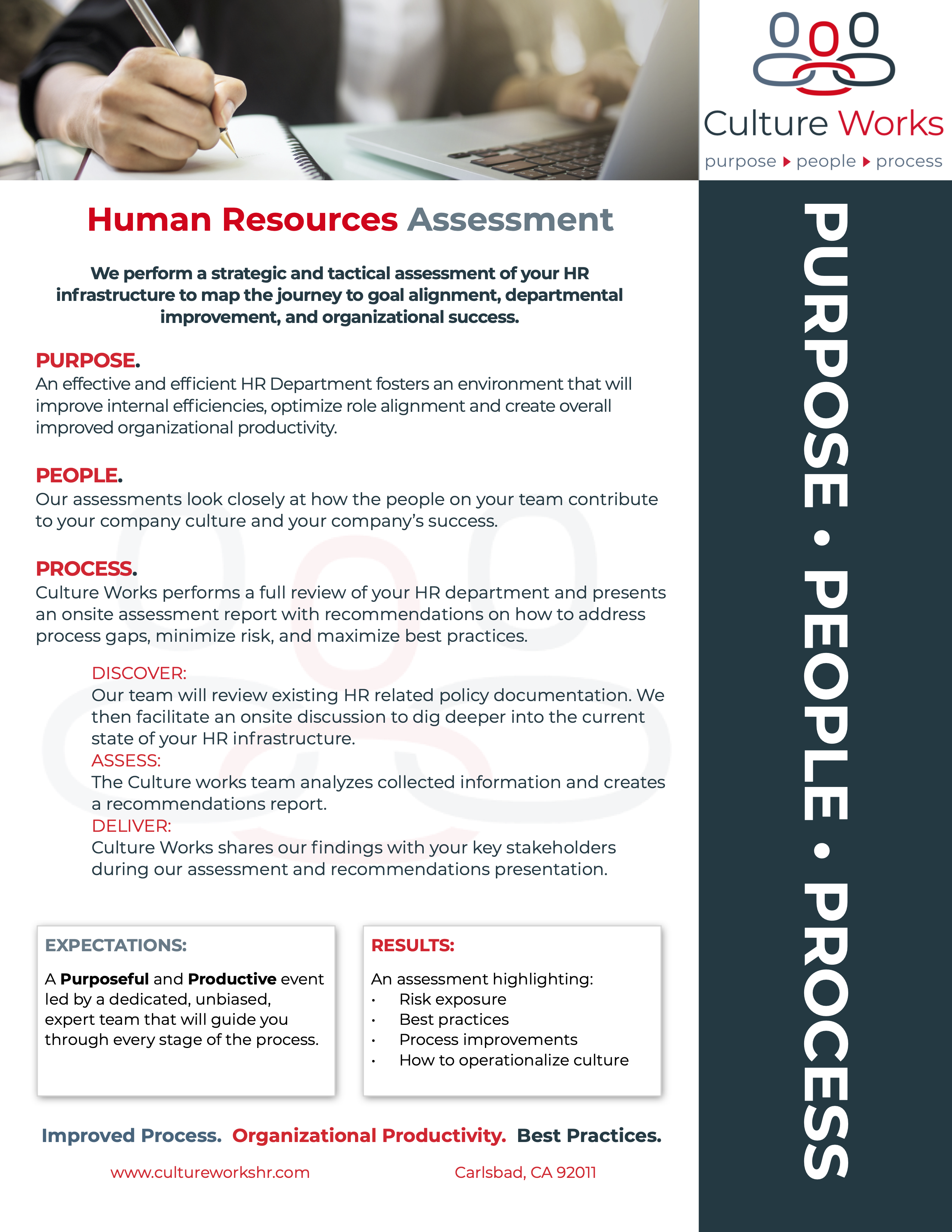
At Culture Works, we provide the processes to operationalize the culture and EQ you want in your company. Our services include culture, talent and HR assessments, culture operations, recruiting, and consulting.

Read on to learn more about us and why we do what we do.

Count me in!

Practical steps you can take to make your company culture (and yourself) even better.

Signup for our newsletter below to stay up-to-date on our latest HR news & insights!

LINKS

CONTACT

(760) 334-4094

info@cultureworkshr.com

29970 Technology Drive
Murrieta, CA 92563

HOURS

Mon-Fri: 7:00-4:00
Sat: Closed
Sun: Closed

CONNECT WITH US!

© 2026 Culture Works – all rights reserved

site design by digitalstoryteller.io

© 2024 Culture Works – all rights reserved
site design by digitalstoryteller.io