Unlocking Success: How Consistent Hiring Processes Lead to Role and Value Alignment

In today’s job market, finding the right talent for your organization requires more than just assessing skills and experience. Cultural fit and cultural add have emerged as crucial factors in creating a thriving workplace.
In this blog post, we will explore the distinction between cultural fit and cultural add and discuss how Fractional HR can assist you in finding role alignment that leads to a vibrant, productive and successful work environment.
Cultural Fit and Cultural Add: What Exactly is the Difference?
When it comes to hiring, cultural fit and cultural add are two essential concepts that shape the dynamics and success of an organization. Cultural fit refers to the alignment between a candidate’s values, beliefs, and behaviors and those of the organization. It ensures that individuals seamlessly integrate into the existing company culture and share common values, work ethics, and goals. Cultural fit is crucial for building a cohesive and harmonious team, where employees feel a sense of belonging and work towards a shared vision.
On the other hand, cultural add focuses on the unique perspectives, experiences, and qualities that candidates bring to enhance the organization’s culture. It recognizes the value of diversity and seeks individuals who can contribute fresh ideas, innovative thinking, and different viewpoints. Cultural add embraces the notion that a diverse workforce brings forth a wider range of strengths, skills, backgrounds, and expertise, leading to increased creativity, adaptability, and problem-solving capabilities within the organization.
How to Find the Balance Between Culture Fit and Culture Add
Finding the right balance between cultural fit and cultural add is crucial for creating a dynamic and inclusive work environment. Here are some strategies to help you navigate this balancing act:
Define your organizational values and culture: Start by clearly defining your organization’s core values, mission, and desired culture. This serves as a foundation for evaluating both cultural fit and cultural add. Consider the behaviors, attitudes, and work styles that align with your values and contribute to a positive workplace culture.
Conduct Fair Practices with a Consistent Hiring Process: Recognize the importance of cultural add in fostering an inclusive, collaborative and strengths based company culture. Create a recruitment strategy that seeks candidates from various backgrounds, industries, and environments who can bring unique perspectives, experiences, and skills to your organization. After the recruitment strategy is created, it’s important to create a solid hiring process where every stage in the process conducts fair and consistent practices. .
Assess cultural fit during the hiring process: Incorporate cultural fit assessment into your hiring process. Develop interview questions that delve into candidates’ values, beliefs, and preferred work environments. Look for alignment between their individual values and your organization’s values. Consider their past experiences and how they have demonstrated behaviors that align with your desired culture.
Identify Performance Trends: Performance accountability and the success of doing it well can be measured! Performance expectations and how people operate to be accountable should align with both cultural add and cultural fit components. Understanding past or current performance trends can identify highly transferable skills between industries and roles which bring a great ROI to the organization. It’s equally important to identify the type of motivation and performance accountability required for each individual as well as the organization as it relates to its own company goals. Define company goals, performance expectations, KPIs and individual ROI anticipated to ensure every level is purpose driven and can align the impact of their role to the value within the organization. This is true Role Alignment!
Conduct behavioral and situational interviews: Use behavioral and situational interview techniques to assess both cultural fit and cultural add. Ask candidates to provide examples of how they have contributed to a positive culture in previous roles or how they have embraced diversity and brought innovative ideas to the table. This allows you to evaluate their potential contributions to your organization’s culture.
Involve current employees in the hiring process: Include current employees, especially those who will work closely with the new hire, in the interview and evaluation process. Their insights and perspectives can provide valuable input on whether a candidate will fit well within the existing team dynamics and contribute to the organization’s culture positively.
Provide cultural orientation and onboarding: Once you have hired candidates who demonstrate both cultural fit and cultural add, ensure they receive proper cultural orientation and onboarding. This includes introducing them to your organization’s values, norms, and work practices. Help them understand the expectations and behaviors that contribute to a thriving workplace culture.
Foster open communication and feedback: Create a culture of open communication where employees feel comfortable providing feedback and sharing their perspectives. Encourage dialogue about cultural fit and cultural add within the organization. Regularly check in with employees to gauge their satisfaction and ensure that the work environment remains inclusive and supportive.
Continuously evolve your culture: Recognize that culture is not static and should evolve as your organization grows and adapts. Regularly assess your culture and make adjustments as needed. Embrace new ideas and encourage employees to challenge the status quo, fostering a culture of innovation and continuous improvement.
By implementing these strategies, you can find the right balance between cultural fit and cultural add. This will help you build a thriving workplace where employees feel a sense of belonging, contribute their unique perspectives, and work towards a shared vision of success.
Achieving Role Alignment: The Key to Building a Thriving Workplace Culture with Cultural Fit and Cultural Add
Beyond technical skills and experience, role alignment is crucial for long-term success. Role alignment ensures that an employee’s values, goals, and working style align with the specific requirements and expectations of the position. When employees are well-aligned with their roles, they are more engaged, productive, and likely to thrive within the organization. Role alignment sets the foundation for a high-performing and cohesive team.
The Role of Fractional HR in Finding Role Alignment
Fractional HR professionals possess the expertise to evaluate candidates for cultural fit, analyzing their values, attitudes, and compatibility with the existing company culture. They take a proactive approach in identifying candidates who bring diverse perspectives and can contribute to the organization’s growth and innovation. Fractional HR works closely with hiring managers to develop customized strategies that align job requirements with the desired cultural fit and cultural add, ensuring a comprehensive evaluation process.
Strategies for Finding Role Alignment
To achieve role alignment, organizations can implement several strategies. First, it is essential to define and communicate company values clearly. This helps attract candidates who resonate with the culture and are likely to align with the desired role. Conducting behavioral interviews enables organizations to assess how candidates have demonstrated values and behaviors relevant to the position, providing insights into their potential fit. Additionally, involving multiple stakeholders, including Fractional HR professionals, in the hiring process ensures a well-rounded assessment and increases the chances of finding the right fit.
The Benefits of Role Alignment
Prioritizing role alignment yields numerous benefits for both employees and organizations. When employees feel a strong alignment between their values and their role, they are more motivated, engaged, and committed to their work. Role alignment also fosters synergy and collaboration within teams, as individuals understand and appreciate each other’s contributions, leading to a harmonious and productive work environment. Ultimately, by focusing on role alignment, organizations can optimize talent utilization, drive innovation, and achieve better overall performance.
Final Notes
Finding the right talent goes beyond assessing skills and experience. Cultural fit and cultural add, along with role alignment, play critical roles in creating a thriving workplace. Fractional HR professionals bring the expertise needed to evaluate and facilitate role alignment, ensuring a perfect match for your organization.
By prioritizing role alignment, organizations can foster a vibrant and successful workplace where employees thrive, contribute their best, and drive collective success. Embrace the power of cultural fit, cultural add, and role alignment to create an environment where both individuals and organizations can flourish.
Need a Little Help Hiring in a Competitive Market?
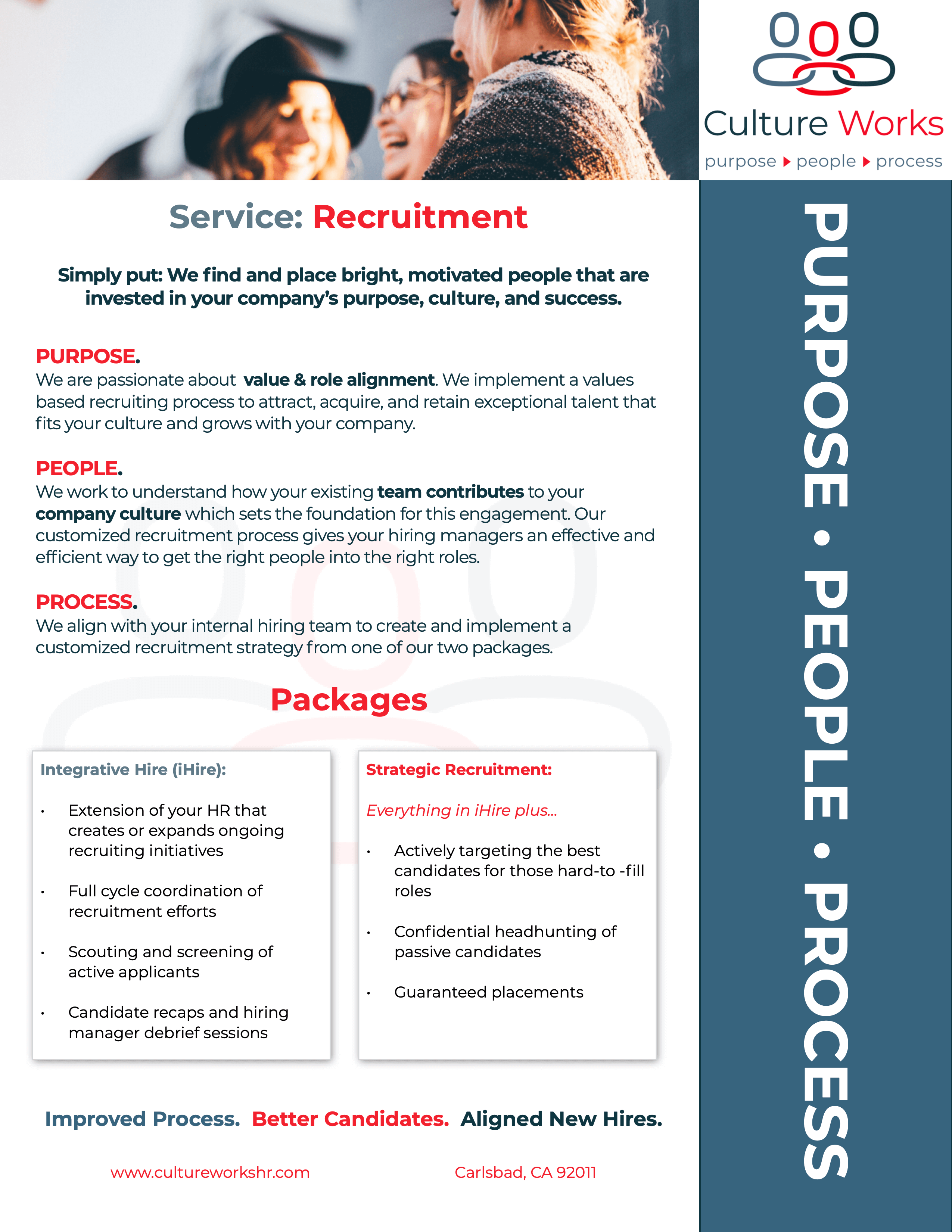
Taking the time to hire the right people will have a host of benefits in the long run. Finding the best fit may not be as easy as a gut feeling and a round of interviews. Luckily, Culture Works is here to help.At Culture Works, our team is focused on value and role alignment. Our team creates processes for your hiring manager to implement, that make the hiring process efficient and effective. We carefully review and screen each candidate, administer customized assessments, and deliver value and role-aligned people to fit your needs.Read on to learn more about what we do. Then, read on to learn why hiring the right people can lead your business to success in a recession.