Inland Empire Guide to HR Roles and Responsibilities

As HR leaders serving the Inland Empire region, we know how important it is for businesses to stay ahead of both operational demands and cultural shifts. With the unique dynamics of the Inland Empire, spanning Riverside County and San Bernardino County, and the increased regulatory scrutiny in California, HR functions are no longer simply administrative, but strategic, culture-driving, and compliance-aware.
Key HR Roles and Responsibilities
When HR is responsible for the level of compliance as well as recruitment and retention that is placed upon the role, especially in California, knowing the roles and responsibilities can help alleviate confusion about whose job it is to take care of what part of the ever-increasing job description of HR.
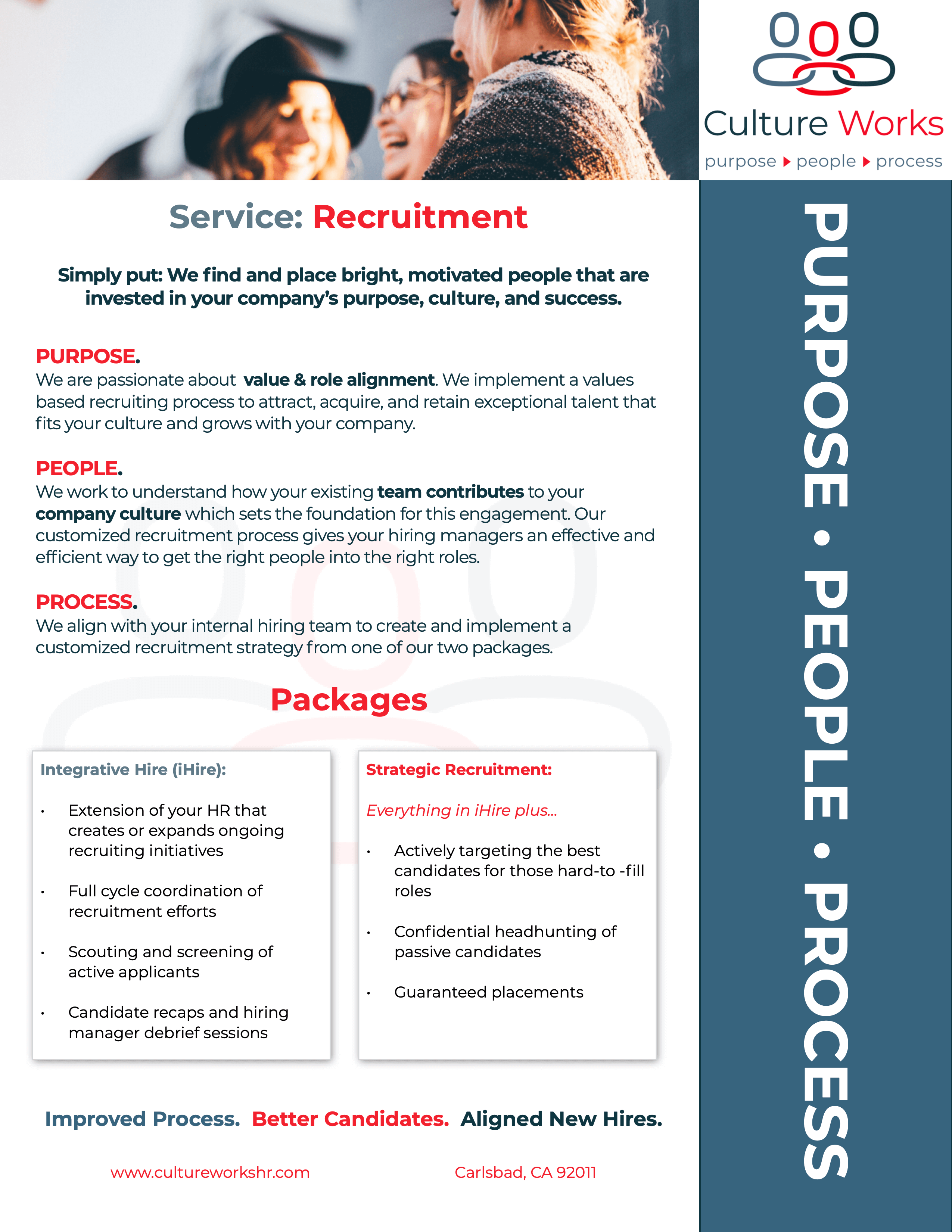
1. Recruitment and Talent Acquisition
- Compliance with California’s Fair Chance Act (“Ban the Box”): HR teams must avoid pre-employing inquiries into criminal history in early stages of screening. Enforcement has increased, especially in manufacturing/logistics sectors.
- Identifying and Attracting Talent: HR professionals build compelling employer branding, design targeted job descriptions, leverage online boards and regional career fairs to appeal to the Inland Empire’s talent pool.
- Screening and Interviewing Candidates: Effective screening, structured interviews, and alignment with hiring managers ensure the best cultural and role fit.
- Onboarding New Employees: The onboarding process must include not just paperwork but culture integration, role clarity, training, and early feedback loops to set the stage for retention.
2. Employee Relations and Engagement
- Indoor & Outdoor Heat Illness Prevention (Cal/OSHA Indoor Rule): As of July 23 2024, the new indoor heat illness prevention standard (Title 8, §3396) is effective. It applies when indoor temperature reaches 82°F or higher and mandates a written plan, cool-down areas, water access, training, and additional protocols if the temperature or heat index reaches 87°F or higher.
- Fostering a Positive Work Environment: HR must develop inclusive policies, open communication channels, grievance procedures, and build trust between management and staff.
- Employee Engagement Initiatives: To keep the workforce motivated and committed, particularly in logistics/manufacturing sectors, HR should design recognition, wellness programs, team-building, and meaningful career conversations.
- Conflict Resolution: HR mediates interpersonal issues, performance problems, disciplinary processes, and ensures fairness and transparency throughout.
3. Training and Development
- Assessing Training Needs: HR must diagnose skill gaps, leadership readiness, operational compliance needs and soft-skills deficiencies.
- Organizing Training Programs: Whether in-house or outsourced, training must be tracked for effectiveness and updated regularly.
- Career Development: Offering clear career paths, mentorship, internal mobility, and development resources is vital for retention in high-turnover sectors like logistics and manufacturing.
4. Compensation and Benefits
- Minimum Wage & Local Ordinances (2025): California’s statewide minimum wage rose to $16.50/hr as of January 1, 2025, and many localities in the Inland Empire may have higher rates. HR must monitor state and municipal changes to stay compliant.
- Designing Competitive Compensation Packages: HR must benchmark salaries, structure performance-based incentives, and align pay with market demands and regional cost factors.
- Administering Benefits Programs: HR oversees health insurance, retirement plans, PTO, and ensures offerings meet legal requirements and employee expectations.
- Payroll Management: Accurate, timely processing, tax withholdings, wage/hour compliance, local pay ordinances, is a core HR operational responsibility.
5. Compliance and Legal Responsibilities
- Workplace Violence Prevention (Senate Bill 553): Effective July 1 2024, most California employers must implement a written Workplace Violence Prevention Plan (WVPP), maintain a violent-incident log, involve employees in hazard assessments, and provide annual training.
- Ensuring Legal Compliance: HR must track federal, state, local laws, including pay transparency, drug testing (cannabis protections), heat illness, and algorithmic fairness in HR tech.
- Developing and Enforcing Policies: Employee handbooks, codes of conduct, disciplinary procedures, IIPP integration, all fall under HR.
- Handling Employee Records: Maintaining confidential personnel files, performance reviews, disciplinary actions, and ensuring data integrity and retention compliance.
6. Performance Management
- Setting Performance Standards: HR partners with managers to define job descriptions, expectations, and measurable metrics aligned with business goals.
- Conducting Performance Reviews: Regular evaluations, feedback mechanisms, and linking performance to development discussions.
- Implementing Improvement Plans: Where performance issues arise, HR helps build corrective action plans, coaching, monitoring, and follow-up.
7. Strategic HR Planning
- AI and HR Automation: As companies adopt AI for recruitment, scheduling, performance tracking, HR must manage algorithmic fairness, transparency, and ethical deployment of technology.
- Aligning HR Strategy with Business Goals: Workforce planning, succession planning, talent pipeline development, all must support the company’s growth trajectory in sectors such as logistics, manufacturing and technology in the Inland Empire.
- Data-Driven Decision Making: HR must analyze turnover rates, engagement survey data, productivity metrics and use them to steer strategy.
- Promoting Organizational Development: Driving change management, innovation culture, continuous improvement, especially in areas where culture has historically been afterthought (e.g., manufacturing/distribution).
CultureWorks’ Industry Expertise Focused on the Inland Empire
With our base in the Inland Empire, we understand the unique HR needs across critical sectors:
- Logistics & Distribution: Workforce efficiency, warehouse operations, shift scheduling, compliance with heat illness and wage laws.
- Manufacturing: Production floor dynamics, skills training, compliance for industrial operations, retention of trade-talent.
- Technology & Innovation: Attracting tech-savvy talent, building agile HR practices, culture that supports rapid change and scale.
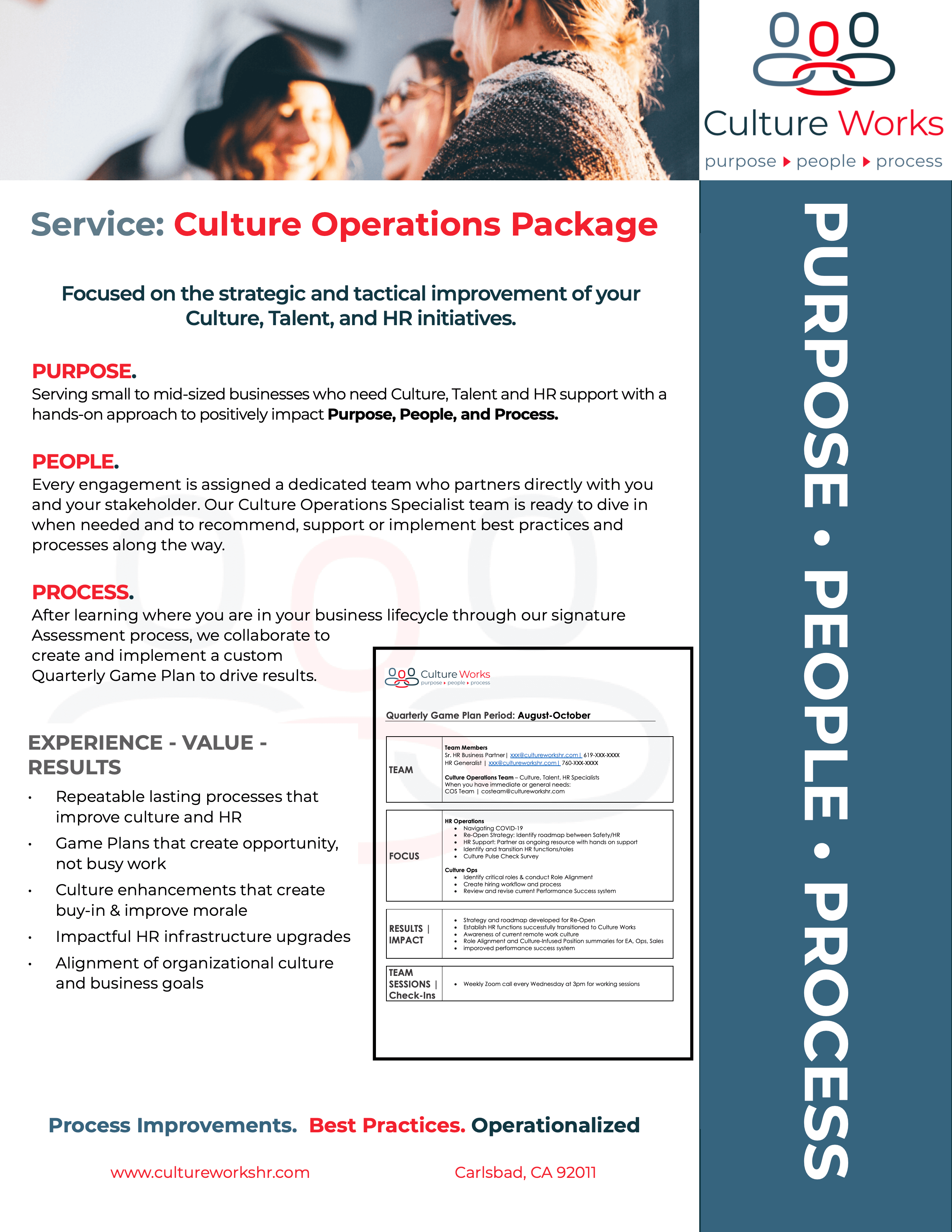
At Culture Works, our mission is to help you align company culture with purpose, empower your people, and streamline processes for operational and cultural success.
2025 – 2026 Regulatory Update Summary
- California’s indoor heat illness prevention standard (Title 8 §3396) took effect July 23 2024 and applies when indoor temperature reaches 82°F or higher, with added requirements at 87°F.
- Senate Bill 553 (effective July 1 2024) requires nearly all California employers to maintain a written workplace violence prevention plan, keep incident logs, involve employees, train annually, and review plans yearly.
- Minimum wage increased to $16.50/hour statewide as of January 1, 2025; local ordinances may impose higher rates. (Employers in the Inland Empire must monitor city/county wage laws.)
- For companies using AI in HR functions, emerging regulatory risk around algorithmic fairness, transparency and data ethics is increasing, HR must evaluate tools, vendor practices and documentation.
- Continued enforcement of heat illness (outdoor and indoor) in manufacturing/logistics sectors, given the Inland Empire’s climate and facility types, this is a high-risk compliance area.
- Pay transparency obligations (job-ad pay scales, internal pay ranges) remain in force under California law (e.g., SB 1162) and should be integrated into your hiring/compensation practices.
Frequently Asked Questions (FAQ)
What does HR do for companies in the Inland Empire?
HR in the Inland Empire manages talent acquisition, employee relations, compliance, performance, training, compensation, strategic planning and culture-building. It ensures your workforce is effective, aligned with values, and protected under California labor law.
Why is HR important for Inland Empire businesses?
Because of rapid growth, a diversified economy (manufacturing, logistics, education, tech) and heavy regulatory burdens in California, HR is not optional, it is a strategic enabler. Strong HR drives both compliance and culture in one package.
How does HR help with compliance in California?
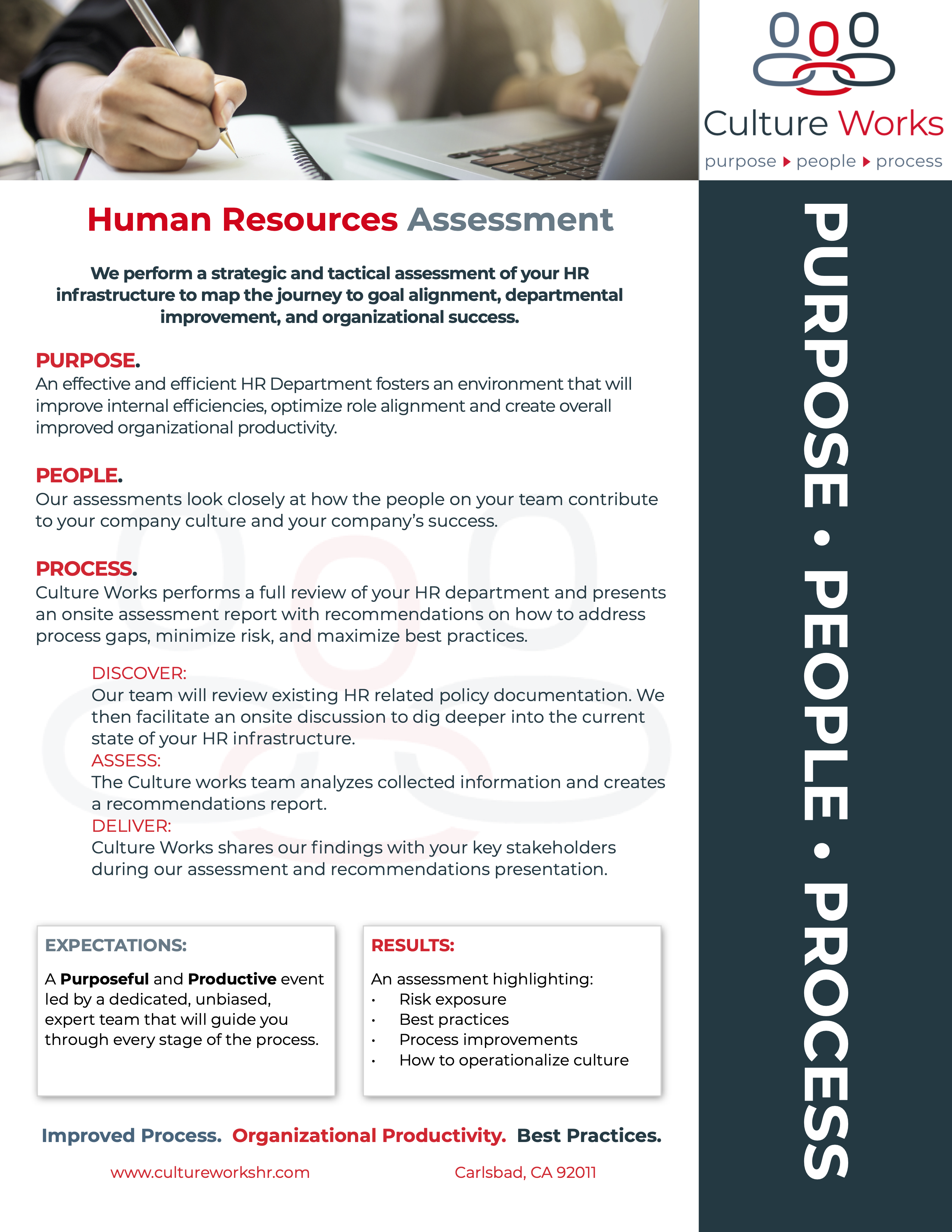
HR professionals monitor and enforce state and local labor laws (wages, safety, benefits), manage policies and training (e.g., indoor heat illness plans, workplace violence prevention under SB 553), maintain records and mitigate risk.
What industries benefit most from HR services in the Inland Empire?
Manufacturing, logistics/distribution and technology sectors are particularly dependent on effective HR. These sectors face high turnover, complex compliance, skills shortages, and culture challenges, areas where strategic HR adds measurable value.
How can HR improve employee retention and engagement?
By aligning roles with company values, offering growth and development pathways, building meaningful recognition, fostering open communication, and embedding culture into operations, not just perks.
What HR challenges are unique to the Inland Empire?
Rapid expansion, logistics/manufacturing facilities in high-heat environments, competition for talent, regional wage pressures, and evolving regulation (indoor heat, AI in hiring) all make HR in the Inland Empire especially dynamic and demanding.
How can Culture Works support HR for Inland Empire businesses?
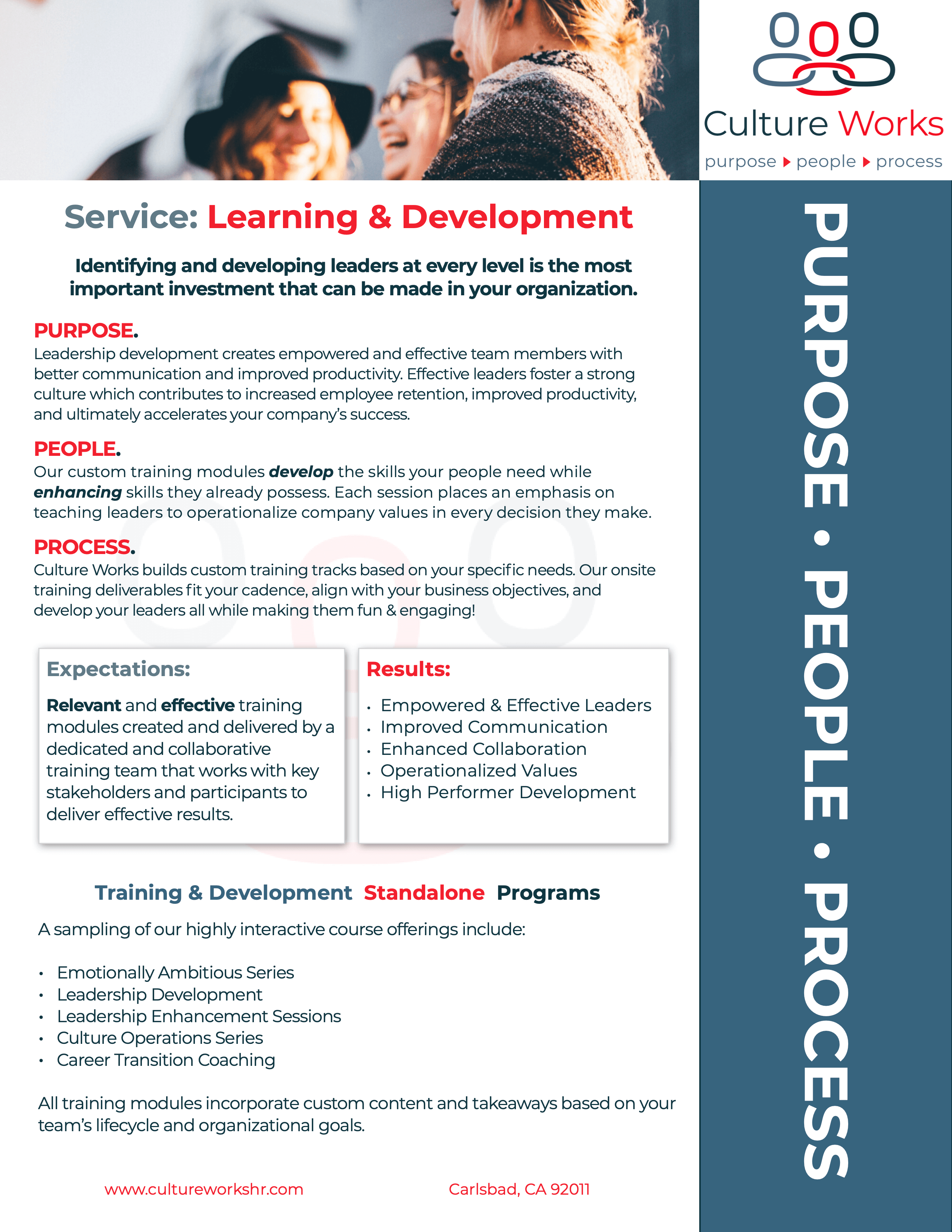
Culture Works brings local expertise, compliance acuity, and culture-first orientation. We deliver tailored HR systems, leadership training, culture-alignment programs and operations support for Inland Empire firms seeking scalable, sustainable HR and culture practices.
The Value of Fractional HR for Inland Empire Businesses
Business leaders in the Inland Empire need to shift the view of outsourced or fractional HR not as a cost center, but as a strategic business partner. When recruitment, compliance, training, compensation, performance and culture are managed intentionally, HR becomes an engine of growth and retention.
Particularly in sectors where culture has been secondary (logistics, manufacturing, distribution), operationalizing culture through HR is a competitive advantage. The regulatory landscape in California is evolving rapidly, so partnering with an HR organization that understands both compliance and human-centered culture is essential.
If your organization needs help making HR operational, culture-driven and compliant in the Inland Empire, let’s talk.