OUR CLIENTS.
Select Partnerships.

Culture works for businesses, culture works for employees, culture works internally in companies to facilitate organizational change, stop churn and make productivity soar.
We solve the problem of churn, lack of productivity and inefficient or noncompliant internal processes. We are experts at implementing organization-wide value and role alignment. We are not like other HR companies. We think and live outside the box. Our team fits into your culture.
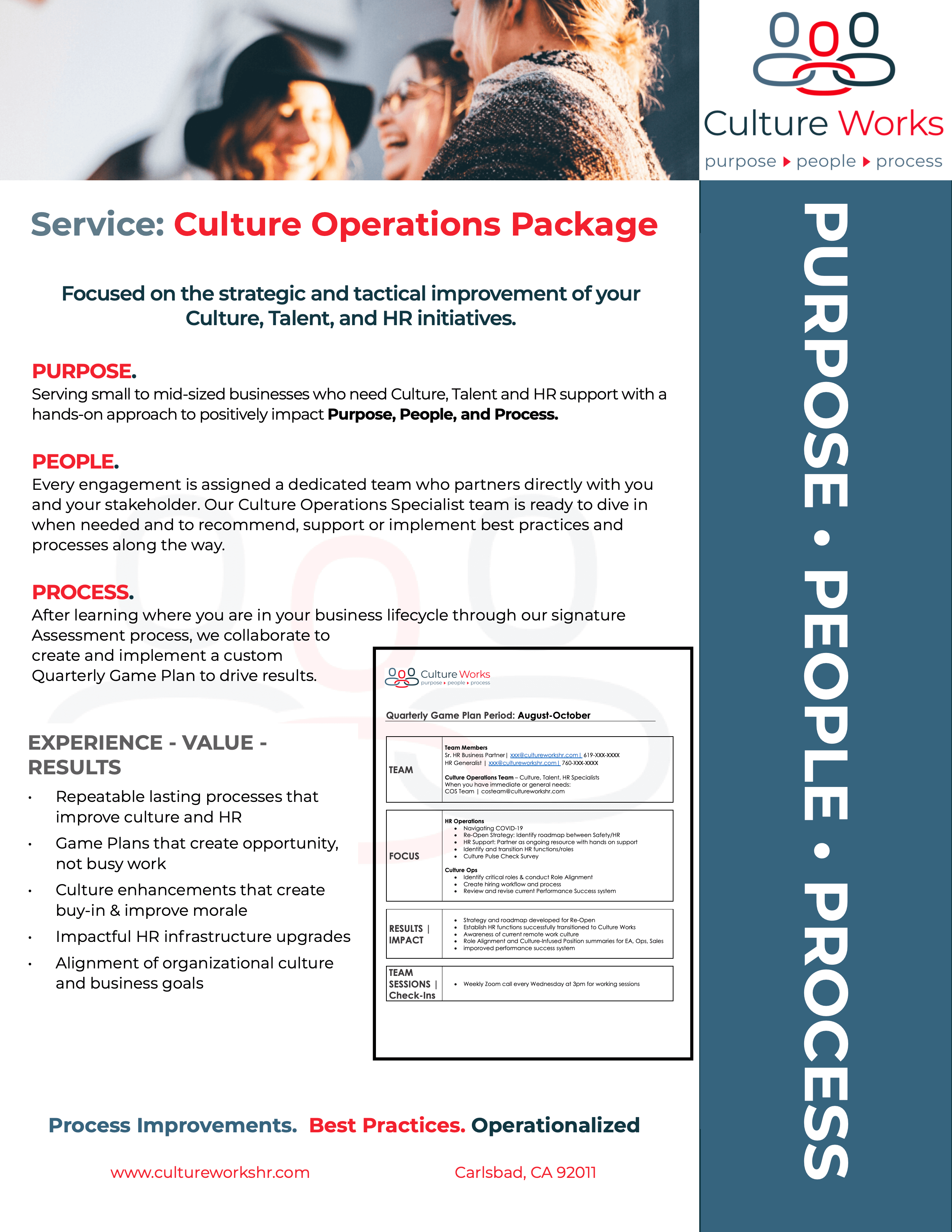
Your purpose creates our success. Our focus is culture infused QGPs. Our team impacts culture & talent by aligning & integrating people and processes.
Our team transforms role alignment which in turn increases engagement, creating an operationalized culture, aligned values and most importantly… RESULTS.

Top HR Challenges in Construction: How Culture Assessments Can Lead to Lasting Improvements
NewsTop HR Challenges in Construction: How Culture Assessments Can Lead to Lasting Improvements
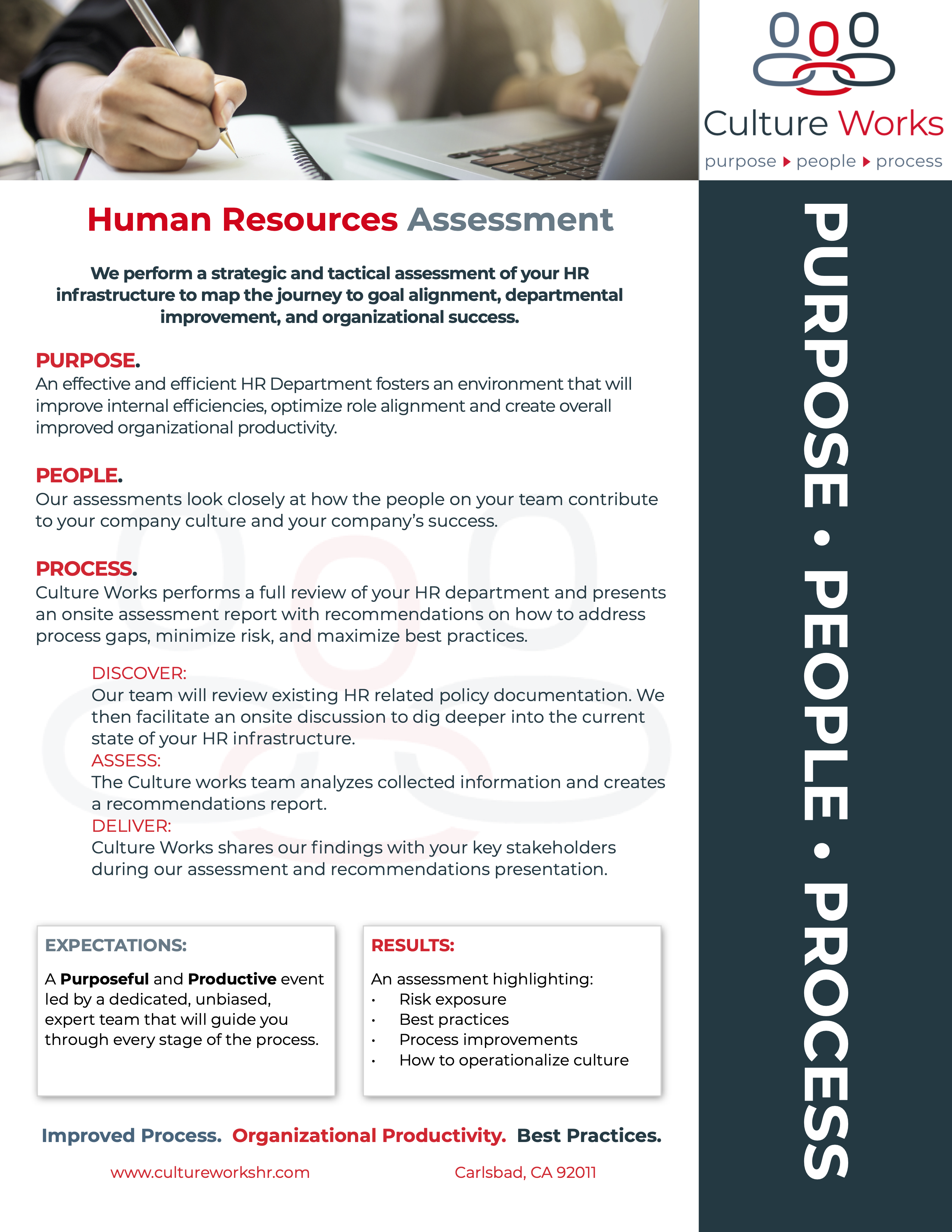
The construction industry is a dynamic field, with its own set of unique challenges, especially when it comes to managing people. If you’re in HR, you know that navigating compliance, ensuring role alignment, and fostering a positive workplace culture aren’t just boxes to tick—they’re ongoing battles that can make or break a company. But what if there was a way to turn these challenges into opportunities for growth? Enter culture assessments.
In this blog, we’ll dive into the most pressing HR challenges in construction and explore how culture assessments can help you not only address these issues but also drive lasting improvements in your organization.
1. Role Alignment: Getting the Right People in the Right Roles
In construction, role alignment is crucial. Each project relies on a team of skilled professionals, from project managers to laborers, each with a specific role to play. But what happens when someone’s skills aren’t fully aligned with their job? Misalignment can lead to inefficiencies, mistakes, and low morale—none of which are conducive to a successful project.
How Culture Assessments Help: A culture assessment digs into the nuances of your team’s dynamics. Are employees clear on their roles? Do they feel their talents are being utilized effectively? By gathering this feedback, you can realign roles, ensure that everyone is playing to their strengths, and even identify opportunities for upskilling or professional development. The result? A more engaged, efficient workforce that’s better equipped to tackle the demands of the job.
2. Retention and Engagement: Building a Culture That Keeps Talent
The construction industry is notorious for its high turnover rates. With skilled labor in high demand, retaining top talent can feel like an uphill battle. But high turnover isn’t just a headache—it’s costly, both in terms of money and time. The key to solving this problem lies in creating a culture that employees want to be a part of.
How Culture Assessments Help: Culture assessments give you a clear picture of what’s working and what’s not from your employees’ perspective. Are they engaged? Do they feel valued? By addressing these questions, you can make data-driven decisions to improve job satisfaction, boost engagement, and ultimately, increase retention. Whether it’s introducing new perks, revisiting your leadership style, or enhancing work-life balance, the insights gained from a culture assessment can guide your efforts to create a workplace where people want to stay.
3. Communication: Bridging the Gap Between the Field and the Office
Construction projects often suffer from a communication gap between the office and the field. Miscommunication can lead to delays, safety issues, and frustration on both sides. Ensuring everyone is on the same page is easier said than done, especially when you’re juggling multiple sites, teams, and deadlines.
How Culture Assessments Help: By evaluating how communication flows within your organization, culture assessments can highlight where breakdowns are happening and why. Maybe field workers feel left out of critical decisions, or perhaps office staff aren’t getting the feedback they need from the field. Understanding these pain points allows you to implement strategies that enhance communication, whether it’s through better technology, more frequent check-ins, or training managers to be more effective communicators.
How Fractional HR Works in Construction Companies
Fractional HR involves collaborating with external HR professionals, often through specialized consulting firms, to handle various HR functions on an as-needed basis. Here’s a closer look at how fractional HR operates within the dynamic realm of construction:
Tailored to Project Phases and Needs
Construction projects go through distinct phases, each with its own set of HR requirements. Fractional HR allows construction companies to customize their HR support according to these phases.
Flexible Scalability
One of the standout advantages of fractional HR is its flexibility. Construction projects often experience fluctuations in workforce demands. Fractional HR providers can quickly scale up or down their support to align with these changes.
Expertise Where It Counts
Construction HR encompasses a diverse range of functions, from recruitment and training to compliance management and safety protocols. Fractional HR brings specialized expertise to the table. External HR professionals well-versed in the intricacies of the construction industry can provide insights, strategies, and best practices that directly address the unique challenges this sector faces. This expertise not only ensures smoother operations but also minimizes risks associated with regulatory non-compliance and workforce management.
Cost-Effective Solution
Fractional HR offers construction companies an economical alternative to hiring full-time, in-house HR staff. The overhead costs of maintaining an HR department—such as salaries, benefits, and training—can be significantly reduced with fractional HR. Construction businesses can channel their financial resources into core operations, while still benefiting from top-tier HR support on demand.
Integration with Technology
In today’s digital age, technology plays a crucial role in HR management. Fractional HR often leverages advanced HR software and tools to streamline processes, improve communication, and enhance data management. These technologies facilitate seamless collaboration between the construction company, the fractional HR provider, and the workforce, ensuring that crucial information is accessible and up to date.
A Collaborative Partnership
Successful implementation of fractional HR hinges on effective collaboration between the construction company and the external HR provider. Open communication, defined roles, and a clear understanding of expectations are vital. Regular updates, feedback loops, and the ability to adjust strategies as project dynamics change are integral to a productive partnership.
How Culture Assessments Can Solve Top HR Challenges in Construction Across CA: Central Valley, Riverside, and Inland Empire
The construction industry in regions like California’s Central Valley, Riverside, and Inland Empire is booming, but with growth comes HR challenges that can disrupt operations. From managing compliance with local regulations to ensuring role alignment across diverse teams, these hurdles can significantly impact a company’s productivity and bottom line. However, culture assessments provide a powerful tool for identifying gaps and opportunities within your organization.
In areas such as Florida, Texas, and Chicago, companies have found that culture assessments help bridge the communication gap between the office and field, improve safety compliance, and retain top talent. By evaluating the current workplace culture, businesses can pinpoint where employees feel disconnected, overlooked, or misaligned with company values. These insights allow HR professionals to implement targeted strategies that enhance engagement, reduce turnover, and foster a more inclusive, productive workforce.
In construction hotspots like Arizona, New York City, and Seattle, leveraging culture assessments has also proven effective in promoting diversity and inclusion, building a workforce that reflects a variety of backgrounds, skills, and perspectives. This not only boosts innovation but also positions companies to attract top-tier talent in a competitive market.
By embracing culture assessments, companies in the construction sector across California and other key regions can tackle HR challenges head-on, transforming their workforce and fostering long-term growth.
Final Notes: Turning Challenges into Opportunities
HR challenges in construction are complex, but they’re not insurmountable. By leveraging culture assessments, you can gain a deeper understanding of the issues at hand and develop strategies that lead to real, lasting improvements. Whether it’s enhancing compliance, improving role alignment, boosting retention, bridging communication gaps, or advancing diversity and inclusion, culture assessments offer a roadmap for turning your biggest challenges into your greatest strengths.
Are you ready to take your HR strategy to the next level? Consider starting with a culture assessment—it might just be the key to unlocking your team’s full potential.
Learn More About Culture Works
At Culture Works, our values make us who we are.
We are a trusted resource working with companies to improve their processes, operationalize their company culture, invest in their people through leadership training, and bring purpose into everything they do.
Our services provide the processes to operationalize culture in your organization:
Read on to learn how people partners are the new HR.
What Does Role Alignment Mean as an Employee?
NewsWhen we think about job satisfaction, it’s not just about having the right qualifications or a great paycheck. One of the biggest factors in feeling happy and successful at work is something called role alignment — how well your strengths, values, and goals match your position.
As an employee, role alignment means being in a job that fits who you are, not just what’s on your resume. But why does this matter, and how can you know if you’re aligned with your role?
Let’s dive in.
L
Why Role Alignment Matters for You
Imagine going to work every day feeling like your role is an extension of your natural strengths and interests. You’d likely feel more motivated, engaged, and less stressed. That’s what happens when you’re in a role that aligns with your personal and professional values.
When there’s role alignment, work doesn’t just feel like a series of tasks — it becomes more fulfilling because it connects to what’s important to you. You’re more likely to enjoy your job, perform well, and feel like you’re growing in your career when there’s this kind of match.
But when the alignment is off, even a high-paying job or a role that looks great on paper can feel draining and unfulfilling. You might feel out of place or find yourself questioning whether this is the right fit for you.
How Do You Know If You’re Aligned with Your Role?
It’s important to reflect on whether your current role matches who you are and what you need from your job. Here are some questions you can ask yourself:
If your answers to these questions leave you uncertain or unsatisfied, it could mean your role alignment is off — and that might explain why you’re feeling less engaged at work.
How Role Alignment Benefits You as an Employee
When you’re in a role that’s aligned with your strengths, values, and long-term goals, the benefits are clear:
Taking Steps to Realign Your Role
If you feel like something’s off in your current position, it’s worth talking to your manager or HR department about your concerns. Sometimes, small adjustments to your responsibilities or even a shift in how you approach your work can make a big difference in realigning your role.
At Culture Works, we encourage companies to focus on role alignment for every hire, but it’s just as important for you as an employee to advocate for yourself. Know what you need to thrive, and don’t be afraid to seek out the role or work environment that allows you to do your best work.
Final Thoughts
Role alignment is about much more than simply “fitting the job.” It’s about finding a position where your values, strengths, and career goals come together in a meaningful way. As an employee, being in an aligned role will lead to greater fulfillment, better performance, and long-term satisfaction.
If you’re not feeling aligned in your role, it might be time to explore your options and figure out where you can truly thrive.
Read on to learn more about what we do. Then, read on to learn how to build trust with your employees.
For more fun tips on communication, culture, and HR, follow us on social media.
What is a Culture Success Roadmap?
NewsToday, building a strong company culture is just as important as hitting sales targets or managing day-to-day operations. But how do you ensure that your culture grows and thrives over time? That’s where a Culture Success Roadmap comes in.
A Culture Success Roadmap is a strategic tool designed to guide your company’s HR and culture initiatives over the next 1, 2, or 3 years. This roadmap helps your organization focus on key areas that need improvement and sets specific, actionable goals to ensure long-term success.
Why Do You Need a Culture Success Roadmap?
You wouldn’t drive across the country without a map or GPS, right? The same logic applies to building a successful company culture. Without a clear plan in place, it’s easy to get lost or sidetracked. A Culture Success Roadmap helps your company stay focused and aligned with its goals, ensuring that your culture remains a priority even as your business grows and changes.
What Does a Culture Success Roadmap Include?
The roadmap lays out a step-by-step plan for the next few years, focusing on specific areas like:
Proactive and Purposeful Change
A Culture Success Roadmap isn’t just about reacting to current challenges. It’s also about planning for the future. By setting clear objectives for the next 1 to 3 years, your company can take proactive steps toward meaningful change. This means you’re not just fixing problems as they come up—you’re actively working to improve your organization’s culture, operations, and overall employee experience.
The Benefits of a Culture Success Roadmap
How Culture Works Can Help
At Culture Works, we specialize in helping companies create and implement a Culture Success Roadmap tailored to their unique needs. We work closely with your internal stakeholders to identify areas of improvement, set strategic goals, and create a clear path forward. Our team provides both proactive and reactive support, so whether you’re planning for the future or dealing with immediate issues, we’ve got you covered.
Final Thoughts
A Culture Success Roadmap is more than just a plan—it’s a powerful tool that helps your company stay focused on building a positive, thriving workplace. By addressing HR operations, culture initiatives, and accountability, you ensure that your company grows in the right direction over time. If you’re ready to take the next step in fostering a strong company culture, our team to learn more about how we can help.
What is a Game Plan?
NewsAt Culture Works, we understand how important it is for companies to balance their day-to-day operations while building and maintaining a positive company culture. That’s where our Game Plan comes in.
A Game Plan is a partnership between your company’s key people and our Culture Works team. Together, we create a strategy for the quarter that helps you with both proactive planning and any unexpected challenges that come up. We focus on three main areas: HR operations, culture operations, and culture accountability.
What’s in a Game Plan?
HR operations might sound technical, but it’s simply about making sure your company is following the right rules and procedures. This includes things like hiring, employee handbooks, benefits, and making sure everything is legally compliant. We help you set up clear policies so your company runs smoothly and stays protected from risks.
Company culture isn’t just about having a mission statement. It’s about living your values every day. In the Game Plan, we help bring your company culture to life by embedding it into daily work. Whether it’s improving employee engagement or creating an inclusive environment, we make sure your culture isn’t just talked about, but truly felt throughout the company.
Once your culture is in place, how do you keep it strong? That’s where culture accountability comes in. We set up systems that hold everyone – from leadership to employees – accountable to your company’s values. This ensures that your culture stays consistent and grows over time, even as your company changes.
Proactive and Reactive Support
The Game Plan doesn’t just focus on the future. We’re here to help with any immediate issues too. This means we provide proactive support, like planning for upcoming changes, and reactive support, for when unexpected problems arise. With this dual approach, your company will always have the guidance it needs to navigate both planned and surprise challenges.
Why Does Your Company Need a Game Plan?
Having a clear Game Plan helps your company stay focused and organized. It aligns your team’s efforts, makes sure you’re following important rules, and brings your company culture to life in a way that everyone can experience. Plus, it helps keep everyone accountable to the same values.
If you’re looking for a way to streamline your HR operations and build a strong company culture that lasts, a Game Plan is the perfect solution. Our team at Culture Works will work with you to create a plan that fits your company’s unique needs and goals.
Final Notes
At Culture Works, we believe that every business deserves a Game Plan that helps them grow and succeed. With the right strategy in place, we’ll help you stay on track with both HR and company culture, while offering support every step of the way. Whether you’re planning ahead or handling something unexpected, we’re here to help you succeed.
Interested in learning more? Chat with our team today!
Developing Managers into Leaders: A Friendly Guide to Learning, Training, and Growth
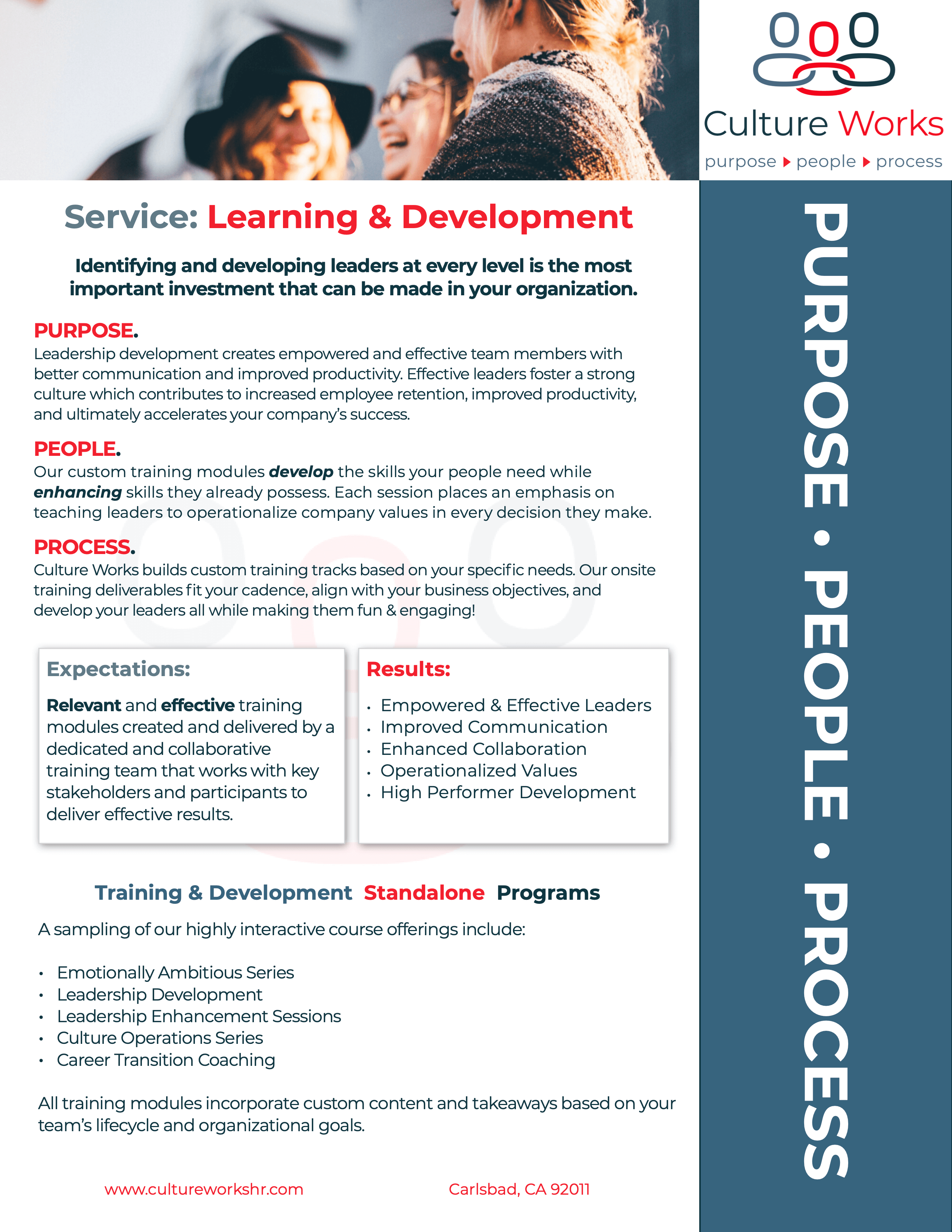
NewsTransforming managers into leaders involves more than just technical skills; it’s about nurturing their ability to inspire, communicate, and drive meaningful change. While managers focus on processes and tasks, leaders bring vision and motivation to the table. They build strong relationships, foster a supportive environment, and steer their teams toward success.
So, how can you help your managers evolve into impactful leaders? Let’s explore practical strategies to guide them on this transformative journey (hint: it’s not just about sending them to a conference.)
Key Areas for Development
To effectively turn managers into leaders, focus on three critical areas: cultivating leadership skills, enhancing communication, and building strong team dynamics. Each area plays a vital role in developing the qualities necessary for leadership.
1. Cultivating Leadership Skills
Developing leadership skills is essential for managers to step up as leaders. Here’s how to get started:
2. Enhancing Communication
Effective communication is a cornerstone of good leadership. Here’s what to focus on:
3. Building Team Dynamics
A great leader knows how to build and maintain a cohesive team. Here’s how to strengthen team dynamics:
With the key areas of development in mind, let’s shift our focus to some essential leadership fundamentals.
Practical Tips for Effective Leadership
Avoiding Burnout
Burnout is a significant concern for leaders, and it can affect their performance and well-being. Here’s how to manage it:
Managing Projects Successfully
Effective project management is a key aspect of leadership. Here’s how to excel:
Building a Cohesive Team
A high-performing team is built with:
Boosting Productivity
To maximize productivity:
Final Notes
Transforming managers into leaders is a journey that involves developing various skills and strategies. By focusing on leadership fundamentals, effective learning and training, and fostering a supportive culture, you can guide your managers toward becoming impactful leaders. Embrace these approaches, and you’ll see your team grow and thrive, driving success and innovation in your organization.
Remember, developing leaders is an ongoing process that requires commitment and support. Invest in your managers’ growth, and they will, in turn, drive the success of your organization.
Learn More About Culture Works
At Culture Works, we want to partner with your company to create success for your team– whatever that looks like for your specific company. Our passionate HR team has the experience you need in culture ops and hospitality to create success. Our approach is centered upon the importance of humanizing, customizing, and simplifying. We believe in what we do, and we want to help your company operationalize culture, talent, and HR to create ongoing success. Read on to learn more about what we do.
What Should Business Owners and Managers Consider If They Want to Stay Competitive for Talent Acquisition?
NewsIn today’s job market, attracting and retaining top talent requires more than offering competitive salaries. Business owners and managers need to consider a holistic approach that focuses on flexibility, adaptability, inclusivity, and a strong company culture.
If you want to stand out and appeal to the best candidates, here are key factors to consider:
1. Prioritize Flexibility
One of the biggest shifts in the workforce is the demand for flexibility. Whether it’s flexible work hours or remote working options, today’s employees value having control over their schedules. Offering flexibility shows that your company respects work-life balance, which can be a major draw for potential hires.
What you can do:
2. Adaptability is Key
The business world is constantly changing, and your ability to adapt to new trends or challenges will reflect positively on your company. Being open to change and showing that your organization is willing to evolve demonstrates resilience and innovation—qualities that attract top talent.
What you can do:
3. Value Inclusivity and Diversity
Creating an inclusive work environment is more important than ever. Candidates are not only looking at what you offer but also at your company culture and values. A workplace that embraces diversity and inclusivity shows that you are committed to fair and equal treatment for all employees.
What you can do:
4. Show You Care About Your Employees
Employees want to feel valued, not just as workers, but as individuals. Business owners and managers need to demonstrate genuine care for their team members by fostering a supportive environment. When employees feel appreciated, they’re more likely to stay and recommend your company to others.
What you can do:
5. Build a Strong Company Culture
A company’s culture plays a huge role in attracting talent. Prospective employees are looking for a place where they feel they can thrive both personally and professionally. A positive, engaging, and collaborative culture is a major selling point for any company.
What you can do:
6. Offer Meaningful Benefits and Perks
Aside from competitive pay, the benefits and perks you offer can make a huge difference in your ability to attract top talent. Consider what benefits your potential employees will truly value—whether that’s health insurance, retirement plans, or more unique offerings like wellness programs or mental health days.
What you can do:
Final Notes
Staying competitive in talent acquisition requires more than simply offering a job. Today’s top talent is looking for companies that are flexible, adaptable, inclusive, and genuinely care about their employees. By focusing on these key areas, you can build a workplace that not only attracts the best candidates but also keeps them engaged and motivated.
Is your business ready to stand out in the talent market? Implementing these strategies will help you stay competitive and create an environment where both your employees and your business can thrive.
Need a Little Help Hiring the Right People?
Taking the time to hire the right people will have a host of benefits in the long run. Finding the best fit may not be as easy as a gut feeling and a round of interviews. Luckily, Culture Works is here to help.
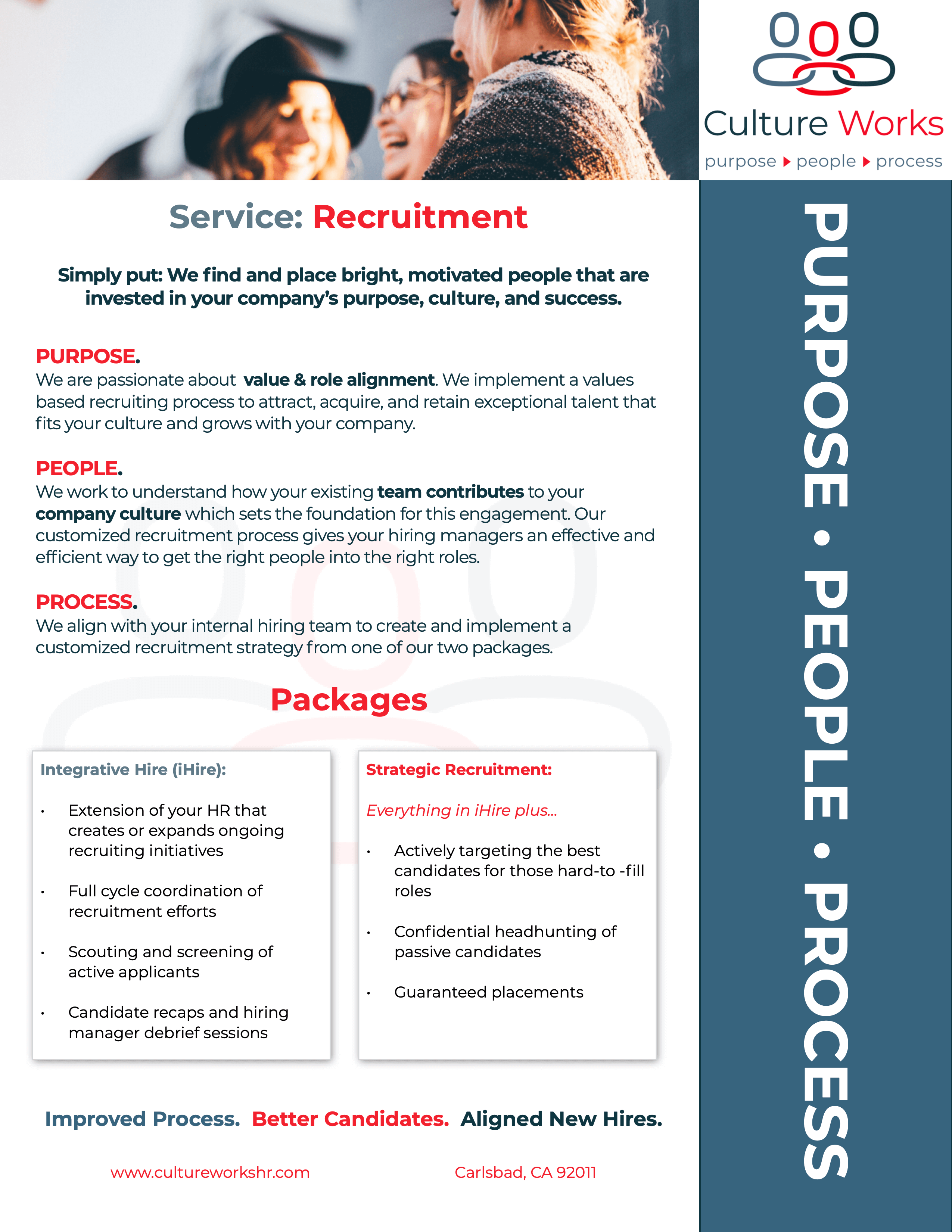
At Culture Works, our team is focused on value and role alignment. Our team creates processes for your hiring manager to implement that make the hiring process efficient and effective. We carefully review and screen each candidate, administer customized assessments, and deliver value and role-aligned people to fit your needs.
Read on to learn more about what we do. Then, read on to learn how to build trust with your employees.
When Does Fractional HR Make Sense?
NewsIf you’ve ever felt like your company is too small to have a full-time HR person but still needs help with things like hiring, managing employees, or staying compliant, Fractional HR might be the solution you’re looking for. In our latest video, we explain when Fractional HR makes the most sense and how it can help businesses like yours.
But let’s break it down in simple terms: What is Fractional HR, and when should you consider it for your business?
What Is Fractional HR?
Fractional HR gives you access to an HR expert on a part-time or project basis. Instead of hiring someone full-time, you bring in an experienced HR professional only when you need them. It’s like having an HR department “on call” for your business.
When Does Fractional HR Make Sense?
Here are a few situations where Fractional HR could be a good fit:
As your business grows, handling HR tasks like hiring and employee management can get overwhelming. If you don’t need a full-time HR person yet, but you still need help, Fractional HR can step in to take care of these responsibilities.
Not every business needs HR help all the time. You might only need support during busy periods, like when you’re hiring or doing performance reviews. Fractional HR allows you to bring in help when you need it and pause when you don’t.
Hiring a full-time HR professional can be expensive, especially if you don’t need them all the time. Fractional HR is a cost-effective way to get the expertise you need without the full-time cost.
If you want professional HR advice but don’t have enough work for a full-time hire, Fractional HR gives you access to experienced HR professionals who can help you with things like employee relations, compliance, and other tricky situations.
Why Choose Fractional HR?
Here’s why more companies are choosing Fractional HR:
Is Fractional HR Right for Your Business?
If your company isn’t quite big enough for a full-time HR team but still needs help managing employees, staying compliant, and handling other HR tasks, Fractional HR might be the perfect fit. It’s a flexible and affordable way to get professional HR support.Interested in learning more? Read on to learn more about when to hire a fractional HR team.
How to Turn Supervisors into Managers: A Practical Guide
NewsTurning supervisors into effective managers is a crucial step for any organization aiming for growth and innovation. But let’s face it: this transition is more than just a change in title. It’s about giving supervisors the tools and mindset they need to lead with confidence and drive team success.
Now, let’s dive into the practical steps and strategies that can help supervisors transition smoothly into their new managerial roles, ensuring they have the skills and confidence to lead their teams effectively.
1. Understanding Processes and Purpose
Clarity is Key: New managers need to understand the core processes within your organization. This involves breaking down the company’s mission, values, and objectives so they can see how their role fits into the bigger picture. This understanding fosters a sense of purpose and direction, which is essential for motivating and guiding their teams effectively.
2. Effective Onboarding and Integration
Smooth Transitions: Ensure that new managers are smoothly onboarded and integrated into their roles. This means providing a structured onboarding process that includes comprehensive training, introductions to key team members, and clear explanations of their responsibilities. Effective onboarding helps managers hit the ground running and reduces the adjustment period.
3. Financial Acumen
Finance Basics: Equip your managers with a solid understanding of financial basics. Training should cover how to read financial statements, manage budgets, and understand financial forecasts. Financial literacy enables managers to make informed decisions that drive the success of their teams and the organization. Managers who are comfortable with financial data can better allocate resources, plan for the future, and justify their decisions to stakeholders.
4. Performance Accountability
Setting Expectations: Clear expectations lead to great performance. Teach managers how to set measurable goals and hold their teams accountable. This includes developing key performance indicators (KPIs) and regularly reviewing performance against these metrics. Accountability ensures that everyone knows what is expected of them and how their performance contributes to the team and the organization’s success.
5. Navigating Office Politics
Office Dynamics: Office politics can be tricky. Provide managers with strategies to navigate these dynamics gracefully, fostering a positive and productive work environment. This includes understanding the informal networks within the organization, building alliances, and maintaining professionalism. Managers who can effectively manage office politics can influence positive outcomes and mitigate conflicts.
6. Conflict Resolution
Constructive Solutions: Conflicts are inevitable. Equip managers with effective conflict resolution techniques to handle disputes constructively, promoting team harmony and collaboration. Training should focus on active listening, empathy, and negotiation skills. Managers who can resolve conflicts effectively create a more cohesive and cooperative team environment.
7. Developing a Manager Mindset
Strategic Thinking: Shifting from a supervisor to a manager requires a mindset change. Help supervisors develop strategic thinking, emphasizing leadership, decision-making, and the ability to inspire their teams. Encourage them to think beyond day-to-day tasks and consider long-term goals and strategies. This mindset shift is crucial for managers to lead with vision and purpose.
8. Emotional Intelligence (EQ)
Enhancing EQ: Emotional intelligence is crucial for managing people. Teach managers to enhance their self-awareness, empathy, and interpersonal skills. High EQ helps managers build strong relationships, handle stress, and navigate social complexities within the workplace. Managers with high emotional intelligence can better understand and motivate their team members.
9. Effective Communication
Communication Skills: Good communication is the backbone of effective management. Provide tools and techniques to improve communication skills, ensuring clarity, transparency, and engagement. This includes active listening, clear articulation of ideas, and effective feedback mechanisms. Managers who communicate well can foster an open and inclusive work environment.
10. Compliance and Risk Management
Stay Compliant: Managers must navigate legal and regulatory requirements. Cover compliance best practices and risk management strategies, helping managers uphold standards and protect the company. This includes understanding labor laws, health and safety regulations, and data protection policies. Well-informed managers can mitigate legal risks and ensure a safe and compliant workplace.
11. Time Management
Prioritize Tasks: Time management is essential. Offer practical techniques to help managers prioritize tasks, meet deadlines, and maintain a healthy work-life balance. Teach them to identify urgent versus important tasks, delegate effectively, and use time management tools. Effective time management helps managers to be more productive and reduces stress.
12. Recruiting and Retaining Talent
Interview Techniques: Recruiting top talent starts with effective interviewing. Train managers in interview techniques that attract, assess, and hire the best candidates for their teams. This includes behavioral interview questions, understanding job requirements, and cultural fit. Effective hiring practices ensure that managers build strong, capable teams.
13. Providing Feedback and Having Difficult Conversations
Constructive Feedback: Mastering the art of delivering constructive feedback is essential. Teach managers how to navigate difficult conversations with courage and empathy. This involves using specific, actionable feedback, focusing on behaviors rather than personal traits, and encouraging two-way dialogue. A culture of constructive feedback promotes continuous improvement and professional growth.
14. Ongoing Learning and Development
Continuous Improvement: Encourage managers to continuously develop their skills and knowledge. Provide opportunities for learning and growth through workshops, training sessions, and mentorship programs. Lifelong learning helps managers stay current with industry trends and best practices, fostering innovation and excellence within the team.
Need Some Help Turning Supervisors into Managers?
At Culture Works, we specialize in transforming supervisors into effective managers through our Culture Operations Series. Our comprehensive program covers all the essential skills and knowledge needed to succeed in managerial roles. From emotional intelligence to compliance and risk management, our training equips managers with the tools they need to lead confidently and effectively.
Contact us to learn more about how our customizable programs can support your organization’s growth and success.
Implementing Effective Performance Success Systems in High-Growth Industries
NewsIn rapidly expanding sectors, implementing robust performance success systems is not just a good practice—it’s essential for fostering employee growth, satisfaction, and retention. These systems go beyond mere performance management; they serve as strategic tools that align individual and organizational goals, driving overall success.
Why It Matters
Industries experiencing rapid growth often grapple with the dual challenge of attracting top talent and ensuring their retention. As companies scale, the need intensifies to establish frameworks that not only attract skilled professionals but also provide them with clear pathways for career advancement and personal development.
Performance success systems are pivotal in addressing these needs by setting clear expectations, fostering a culture of accountability, and guiding employees towards impactful contributions that align with organizational objectives.
The Role of HR
Human Resources (HR) plays a key role in setting up and running performance success systems. HR teams work with company leaders to define Key Performance Indicators (KPIs) that reflect important business goals. These KPIs help measure how well employees are doing and how their work aligns with the company’s objectives. By doing this, HR helps keep the company on track and running smoothly.
Working with Leaders
HR partners with business leaders to ensure performance management systems match the company’s goals. This means having ongoing talks with leadership to understand the company’s needs and adjusting performance systems as needed.
Engaging Employees
HR also makes sure employees understand and engage with the performance management system. This includes explaining the system’s benefits and training employees on how to use it effectively.
Customizing KPIs
KPIs should be tailored to fit the specific needs of the industry and company. This ensures the performance metrics are relevant and drive the right behaviors.
Regular Updates
KPIs should be reviewed and updated regularly to stay relevant. This helps keep everyone focused on current goals and aligned with the company’s changing priorities.
Giving Feedback Often
Instead of relying on annual reviews, effective performance success systems emphasize continuous feedback. Regular feedback helps managers recognize achievements, address challenges quickly, and make necessary adjustments. This approach not only improves individual performance but also promotes a culture of openness and teamwork.
Frequent Check-Ins
Regular check-ins between managers and employees help keep communication open. These meetings provide opportunities for feedback, recognition, and support.
Addressing Issues Early
Continuous feedback allows managers to address any problems early, preventing them from becoming bigger issues. This proactive approach helps maintain high performance and morale.
Training Managers
Managers play a crucial role in the success of performance systems. Training programs for managers focus on skills like effective communication, conflict resolution, performance coaching, and goal-setting. These programs help managers support their teams better and create a positive work environment.
Coaching Skills
Training managers in coaching skills helps them guide their teams effectively. Good coaching includes listening, providing constructive feedback, and helping employees set and achieve goals.
Conflict Resolution
Teaching managers conflict resolution skills helps them handle disagreements or issues within the team calmly and effectively. This keeps the team focused and productive.
Emerging Trends in Performance Management
New trends in performance management are changing how companies support employee growth. Real-time performance tracking, personalized development plans, and AI-driven insights are becoming popular. These tools help companies use data to improve employee performance and create a flexible, resilient workforce.
Real-Time Tracking
Real-time performance tracking provides immediate feedback, helping employees adjust their efforts quickly. This keeps performance levels high and aligned with company goals.
Personalized Plans
Personalized development plans cater to individual employee needs and aspirations, making them feel valued and motivated to grow within the company.
Final Notes
Implementing robust performance success systems in high-growth industries is not merely about managing performance—it’s about empowering employees to thrive and succeed.
By aligning individual aspirations with organizational goals, fostering a culture of continuous feedback, and equipping managers with the tools for effective leadership, companies can position themselves as employers of choice, attracting top talent and driving sustained business growth.
Learn More About Culture Works
At Culture Works, we want to partner with your company to create success for your team– whatever that looks like for your specific company. Our passionate HR team has the experience you need in culture ops and hospitality to create success. Our approach is centered upon the importance to humanize, customize, and simplify. We believe in what we do, and we want to help your company operationalize culture, talent, and HR to create ongoing success.
Read on to learn more about what we do. Then, read on to learn why hiring the right people can lead your business to success in a recession.